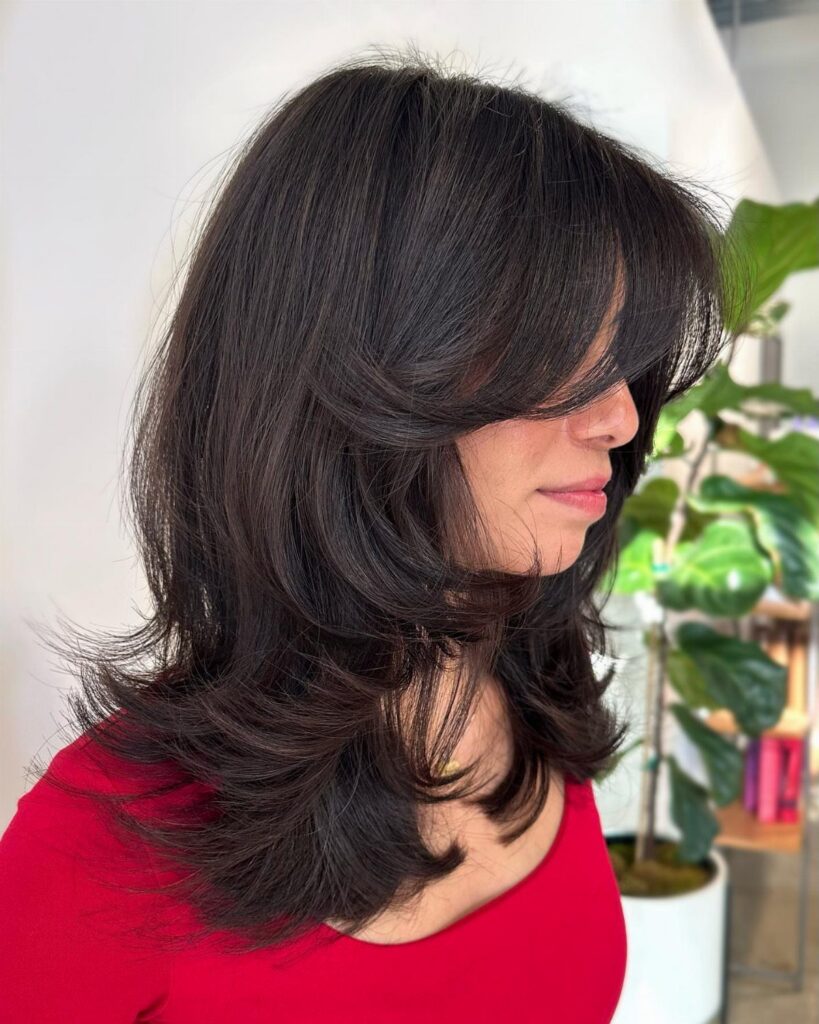
Medium length sits between chin and collarbone and gives you enough hair to tie back while keeping wash and dry times shorter than long hair.
The choice comes down to how much time you’ll spend styling each morning: a one-length lob or blunt cut needs less daily work than a shag or wolf cut with choppy layers, and anything with short bangs means trims every 4 to 6 weeks.
1. Shag Cut
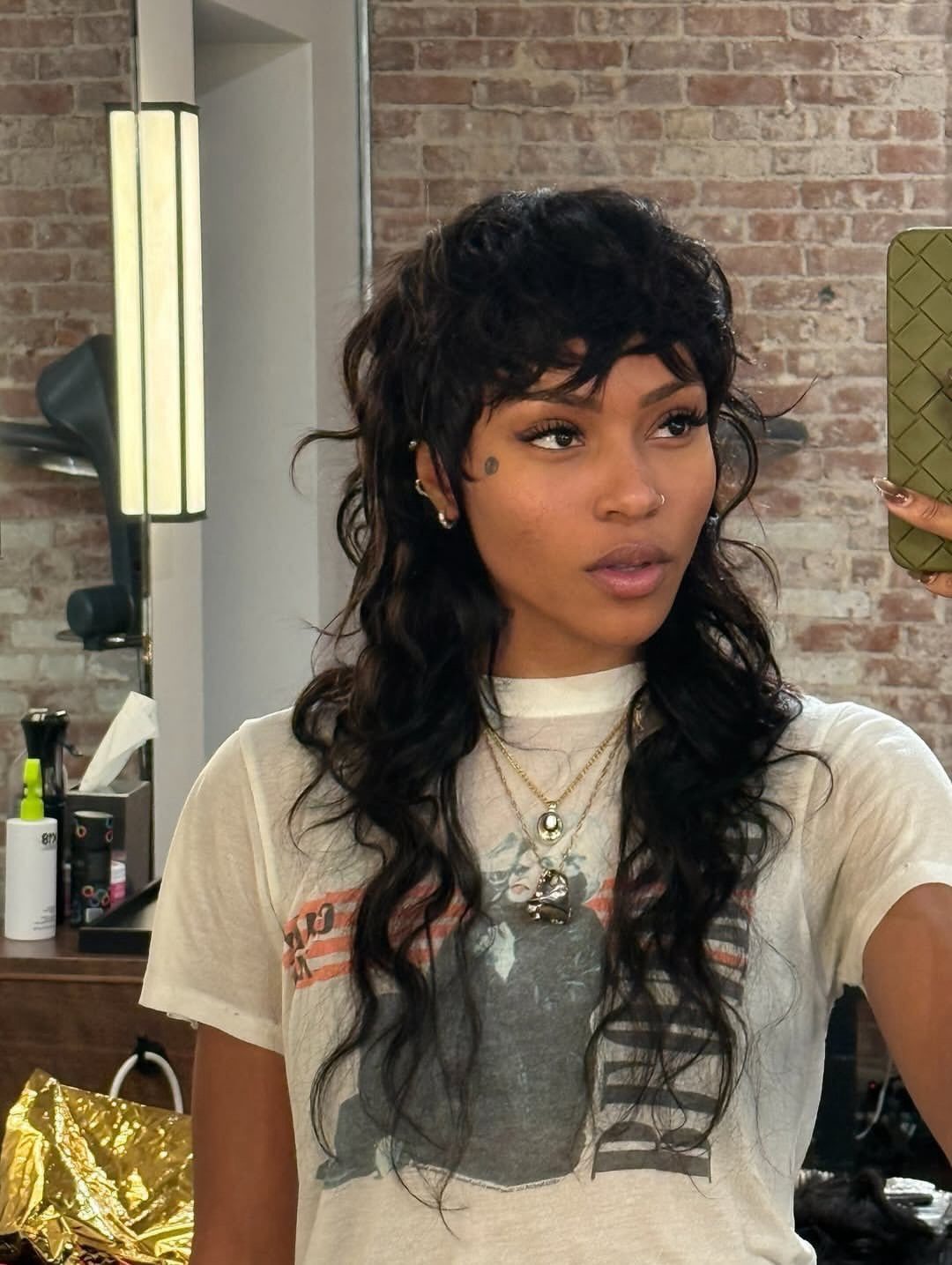
Choppy, uneven layers cut throughout give the shag its signature texture and movement. The cut works best when styled with fingers rather than a brush, letting the separated pieces fall where they want.
Straight hair shows every layer, wavy hair softens them, and loose curls take the shape without frizz.
The layers can be adjusted to add volume at the crown or take weight off thick hair. The shape grows out into something heavier without regular trims.
2. Blunt Cut

Every strand ends at the same line, with little layering inside. That solid baseline shows off shine and gives the cut a polished, deliberate look.
Straight hair keeps the edge sharp, gentle waves soften it slightly.
Coarser or curly textures may not hold the line as crisply. The blunt edge grows out visibly, so regular trims matter if you want the line to stay crisp.
3. Medium Hair with Textured Layers
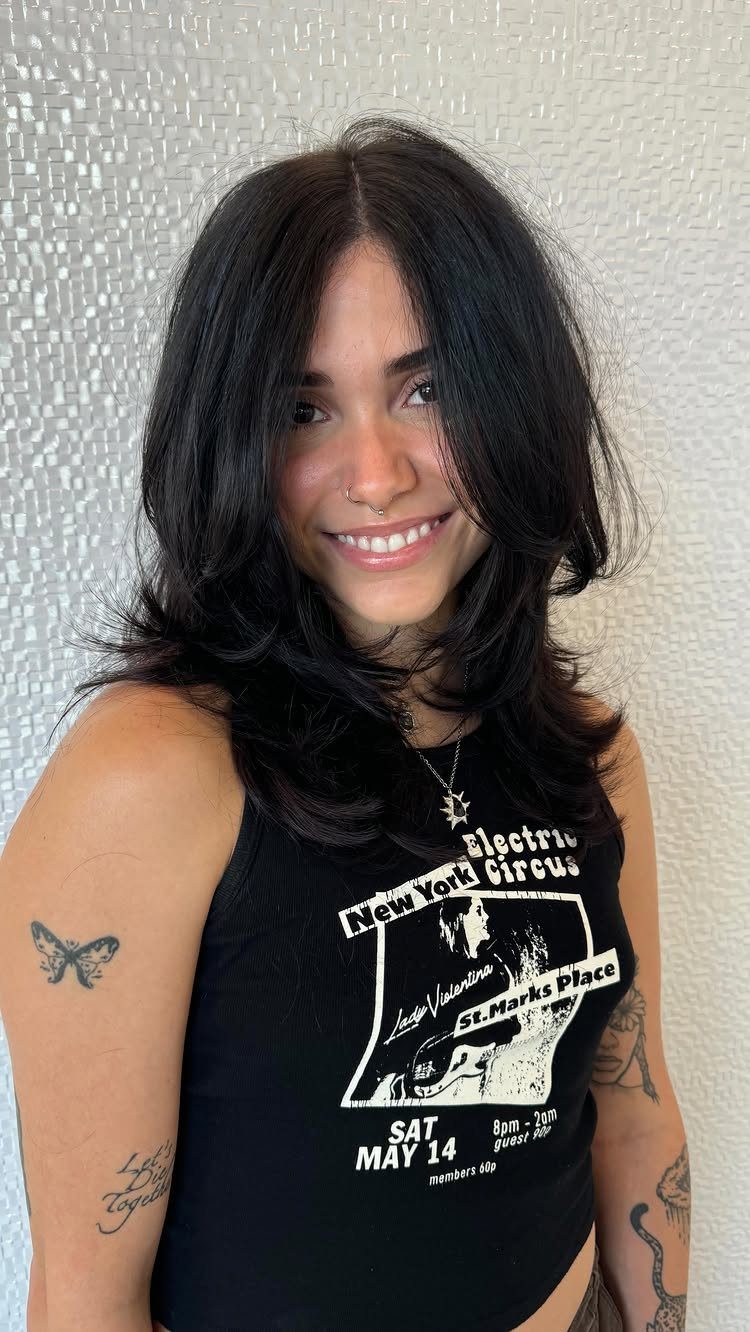
Layers cut through medium lengths give the hair separation and keep the ends from sitting in one thick line. The cut adds movement without the choppy, disconnected pieces of a shag.
Textured layers work across most hair types.
On finer hair, they add body; on thick hair, they remove weight. Ask for layers that start a few inches below the chin to keep enough length for a ponytail if you tie your hair back regularly.
4. Wavy Bob
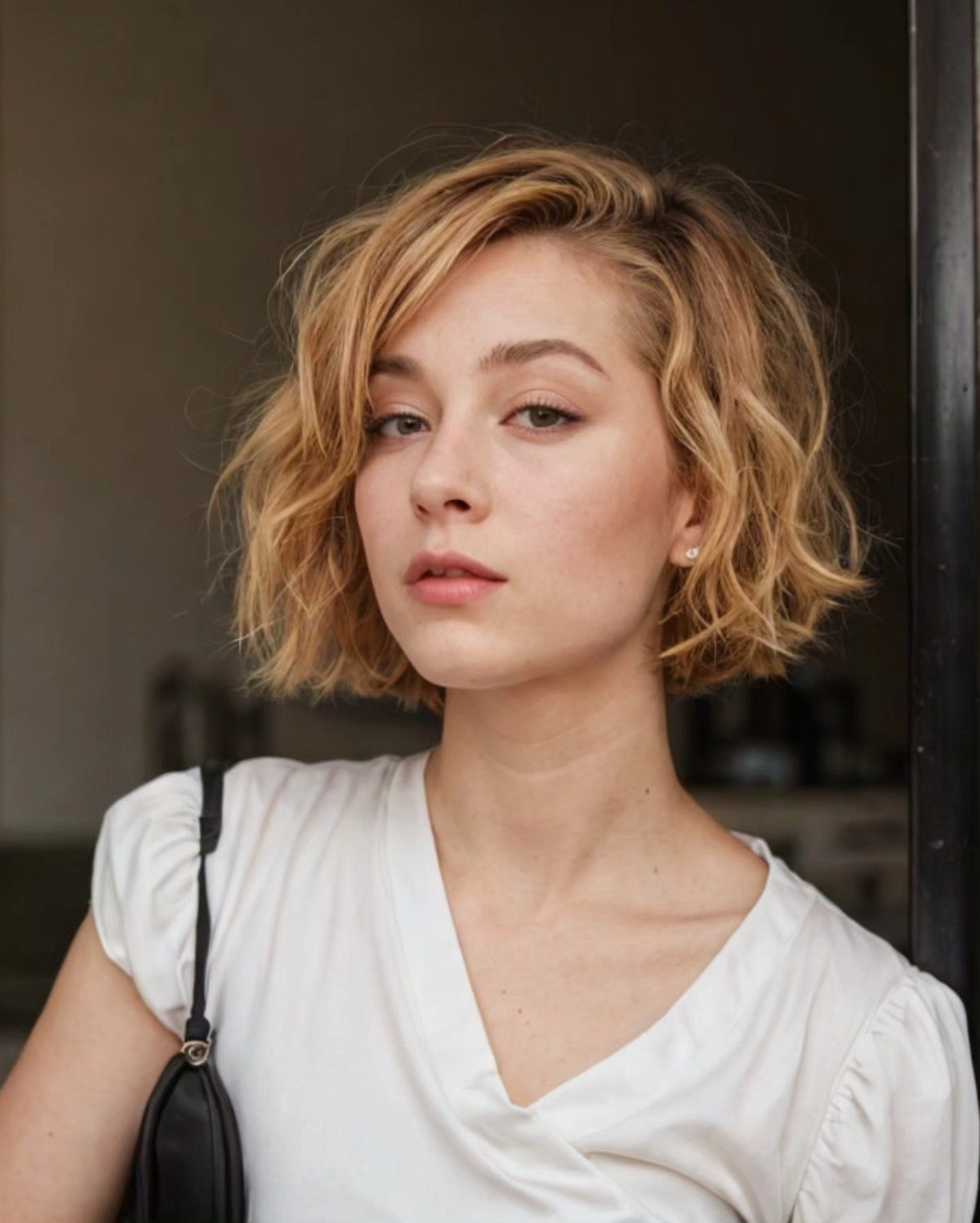
A bob cut to chin or jaw length and styled with loose, natural-looking waves gives you a shape that reads polished but not stiff.
The waves soften the blunt edge of the bob and add width, which balances longer face shapes.
This suits wavy or straight hair that holds a curl.
On straight hair, use a curling iron or wand and leave the last inch of each section straight. On wavy hair, scrunch in mousse while damp and air-dry.
5. Rooty Lob
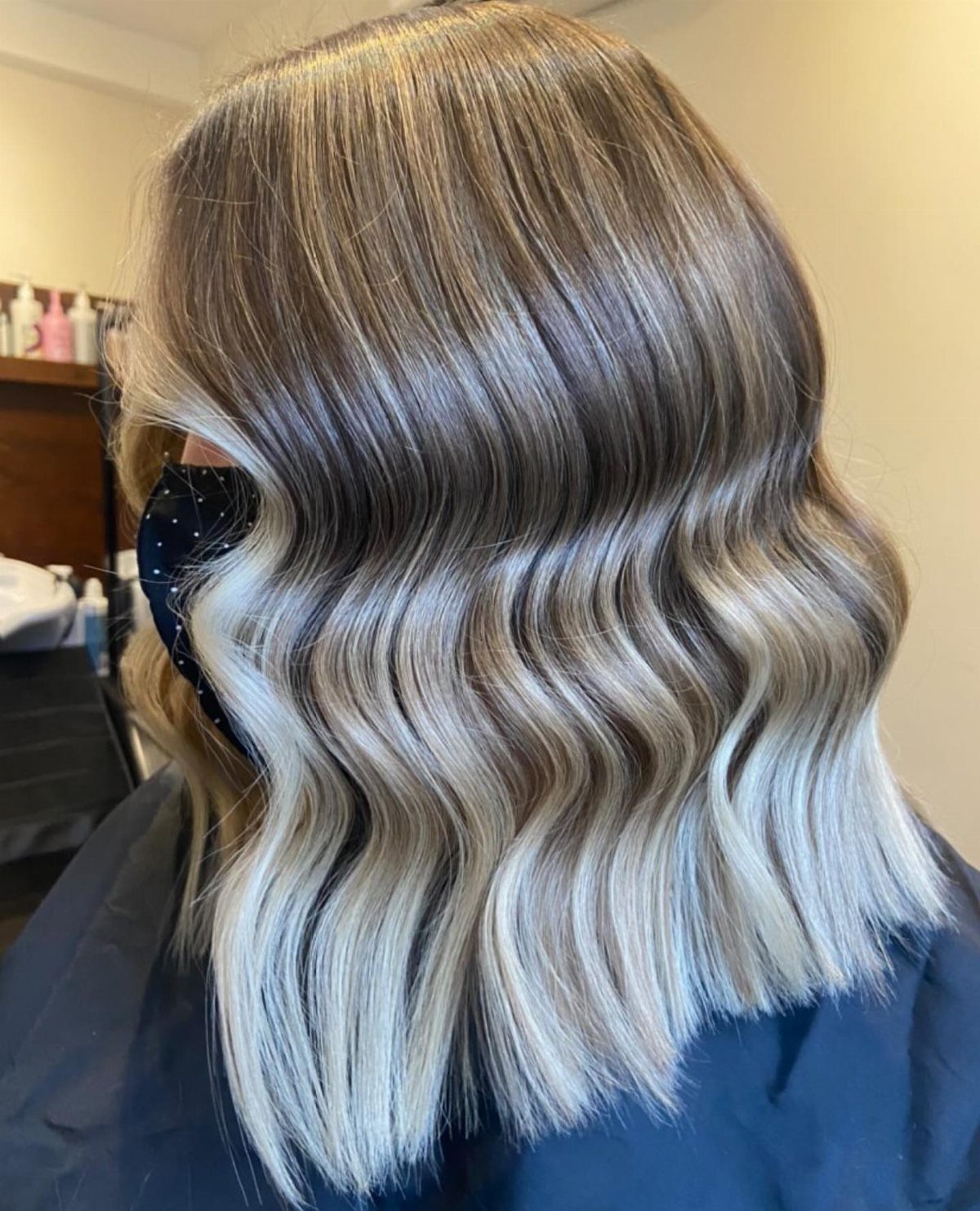
A lob cut to the collarbone or just past it, paired with roots left darker or shadowed intentionally, gives you a lived-in color that grows out gracefully.
The contrast between the root and the lighter lengths adds depth without a hard line.
This suits anyone who wants to stretch time between salon visits.
6. Face-Framing Layers
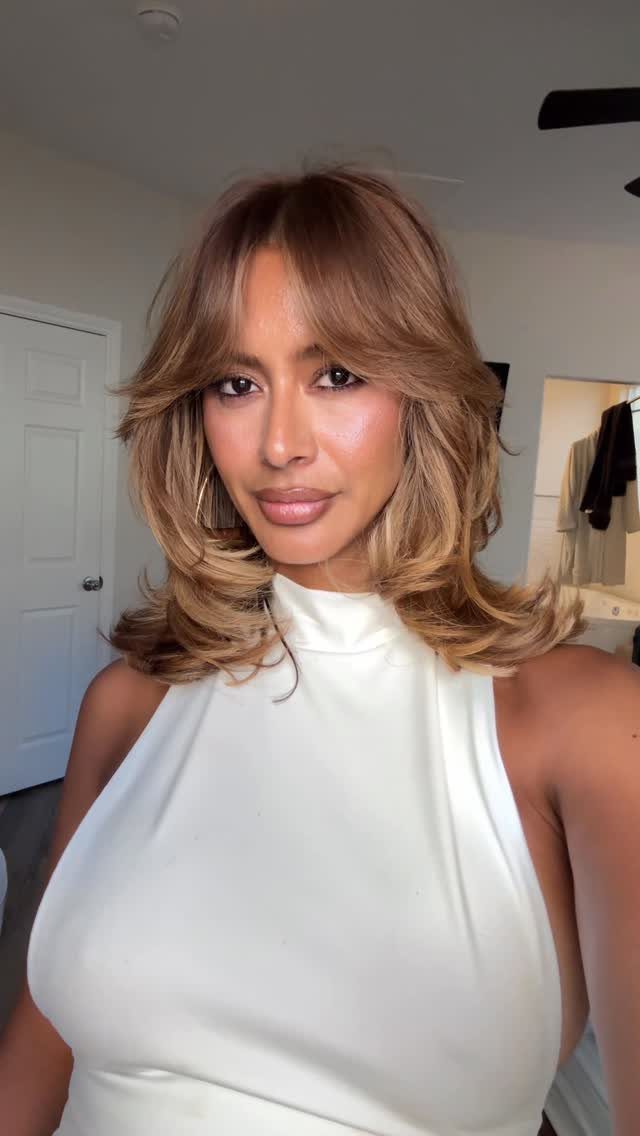
The shortest pieces sit near the face and lengthen gradually toward the back. The front layers typically start at the cheekbone or jaw and frame the face without creating a heavy curtain.
Face-framing layers suit most face shapes and add dimension to one-length hair. On rounder faces, keep the shortest layer at or below the chin to add length rather than width.
7. Curly Lob
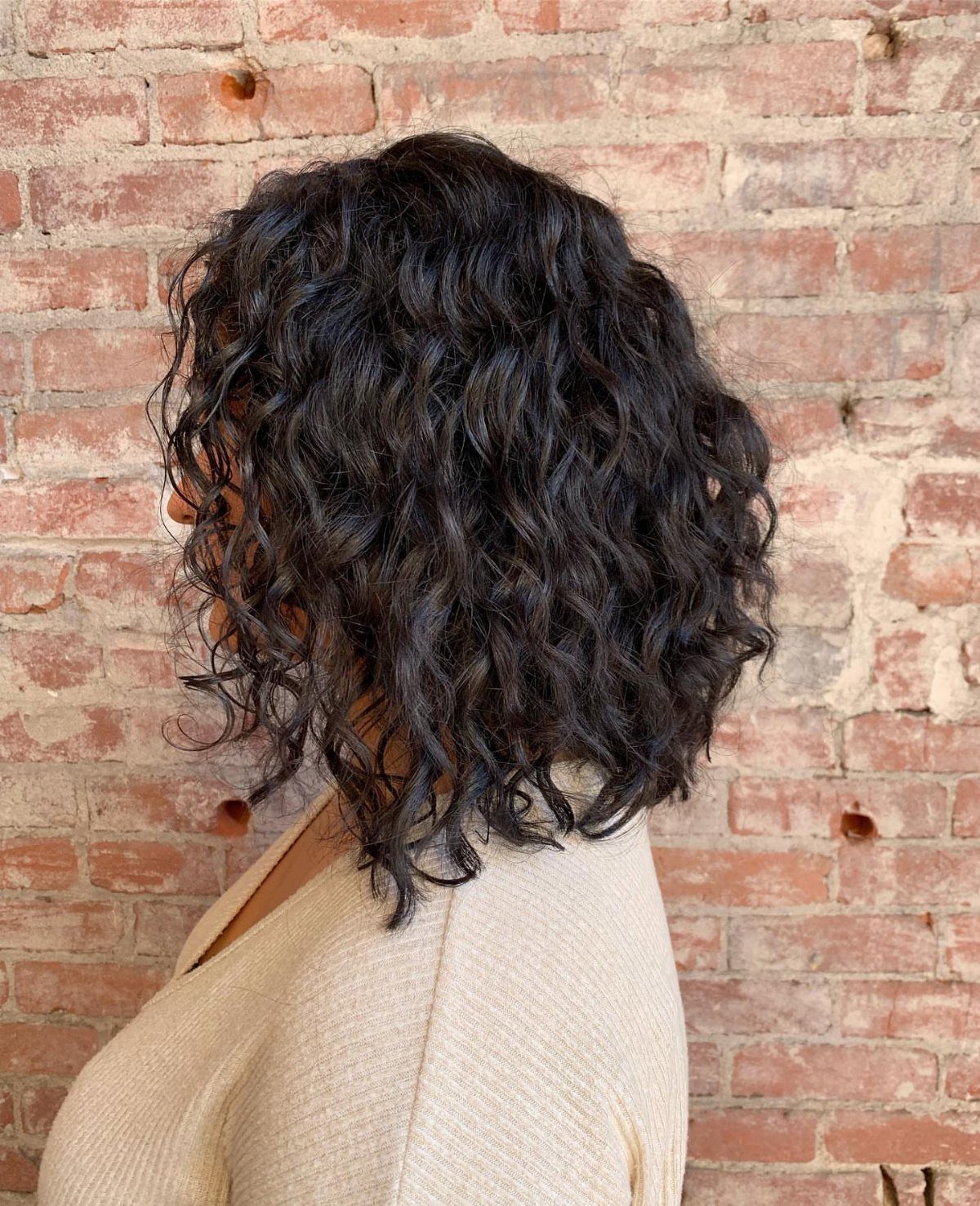
Curls cut to shoulder length form a rounded shape that sits close to the head at the top and fuller at the ends. The length keeps curls from pulling into tight spirals the way shorter cuts do.
This works best on naturally curly hair with enough density to hold volume.
Ask for a dry cut so the stylist can see where each curl sits and adjust the shape while it moves. The cut grows out gradually without losing its form.
8. Soft Layers
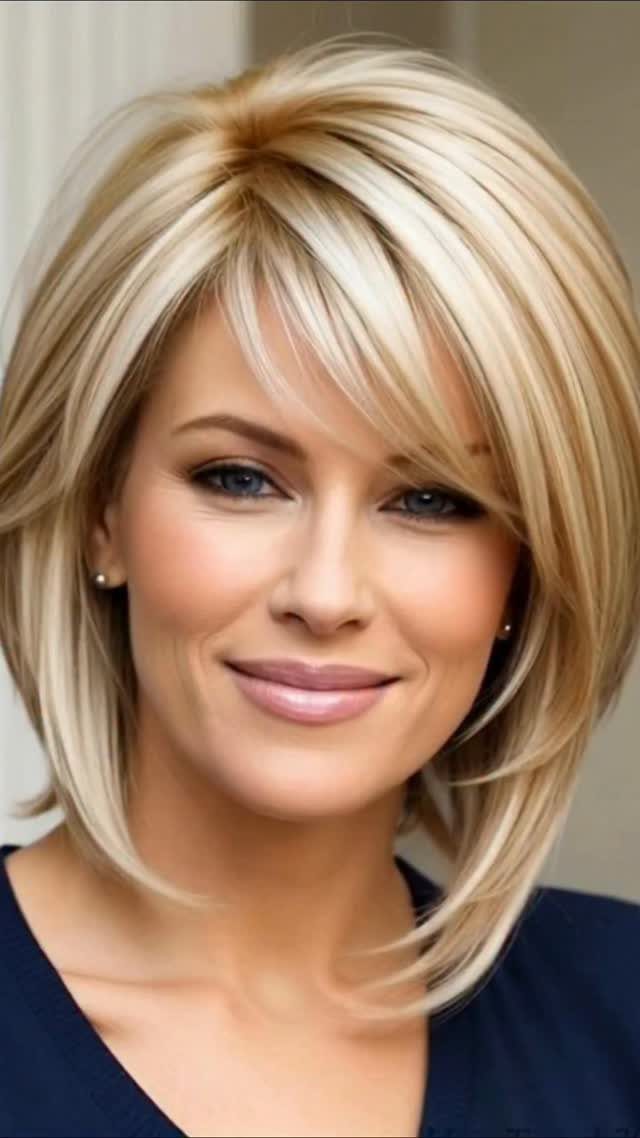
Layers cut with gentle transitions between lengths add movement without creating visible separation at the ends. The longest pieces stay close to one line, so the cut keeps most of its weight.
This suits anyone who wants dimension without losing thickness at the bottom.
The layers blend smoothly, so the cut reads polished with minimal styling. A round brush and blow-dryer will emphasize the movement; air-drying keeps it softer.
9. Birkin Bangs
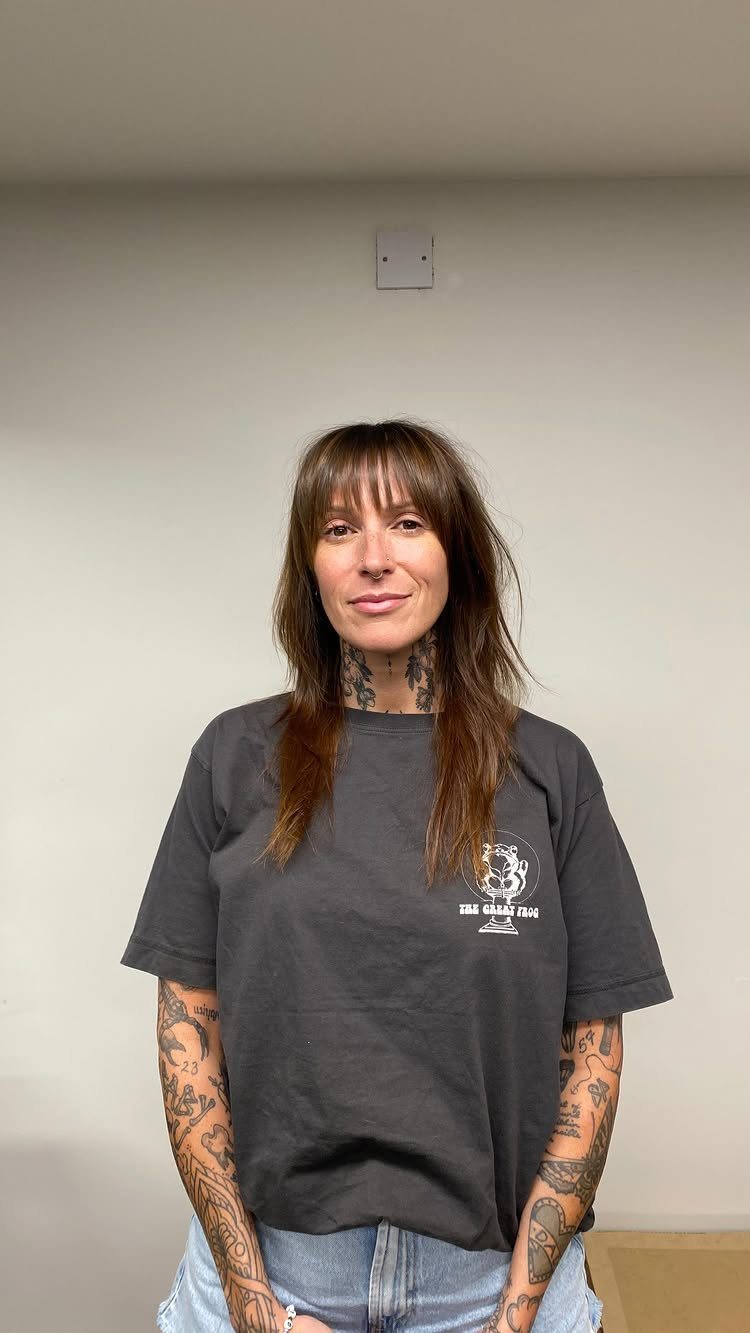
Wispy bangs cut to frame the cheekbones give shoulder-length hair an undone, slightly edgy finish. The fringe falls past eyebrow length and moves into the cut without a hard line.
These suit most face shapes and work across textures.
The length allows you to tuck them behind your ears or leave them loose. As they lengthen, they become face layers instead of orphaned short bits that stick out.
10. Wolf Cut
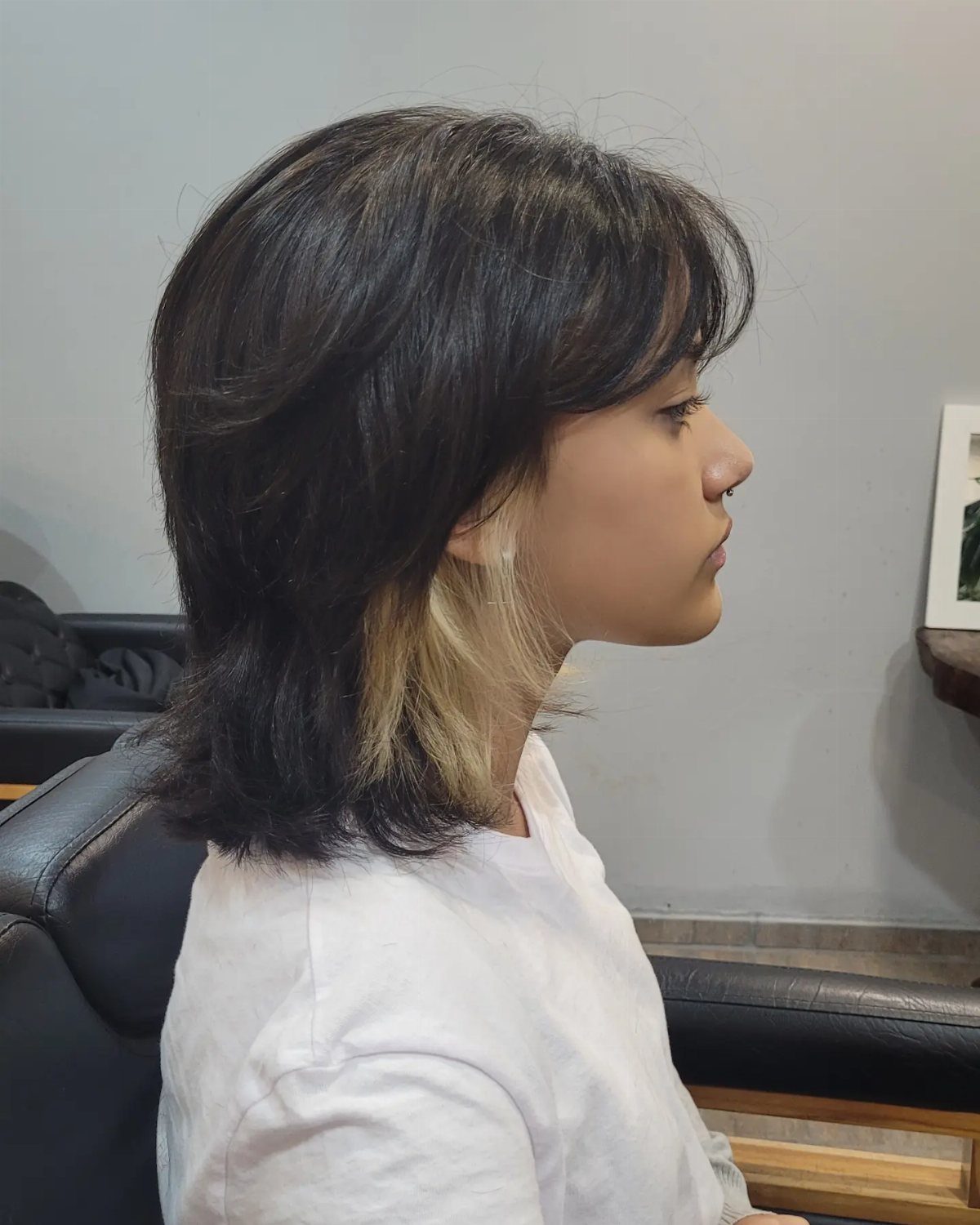
Choppy layers through the crown and face-framing pieces up front meet longer lengths in back, blending shag texture with mullet proportions. The result sits somewhere between structured and messy.
This cut adds volume at the top and removes weight from thick hair.
It suits straight to wavy textures; curly hair may shorten the layers more than expected. Styling takes little effort, most of the shape comes from the cut itself.
11. Rachel Cut
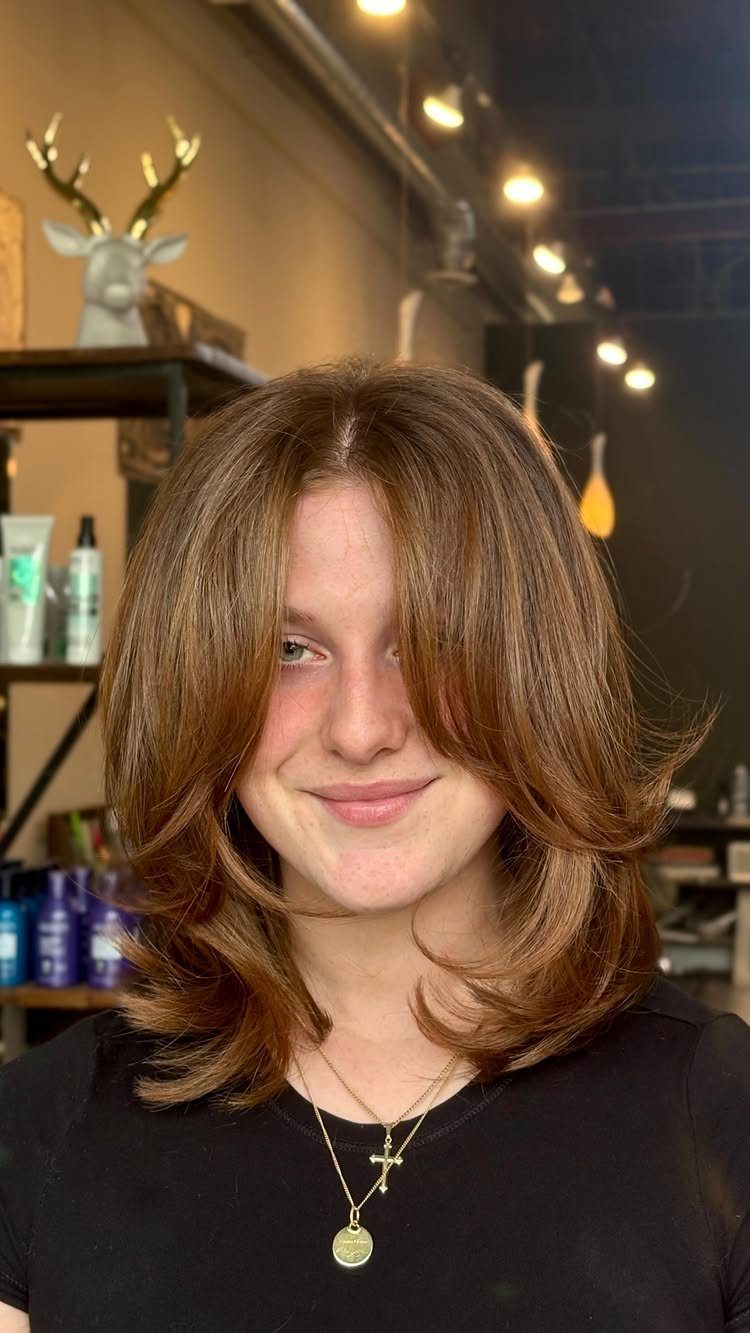
Layers that start near the chin and flip outward at the ends create a bouncy, voluminous shape around the face. The cut relies on styling to lift the layers and turn the ends under or out.
Use a round brush while blow-drying and curl the ends away from the face. The flip needs daily styling to stay in place, so skip this if you prefer wash-and-go routines.
12. Butterfly Cut
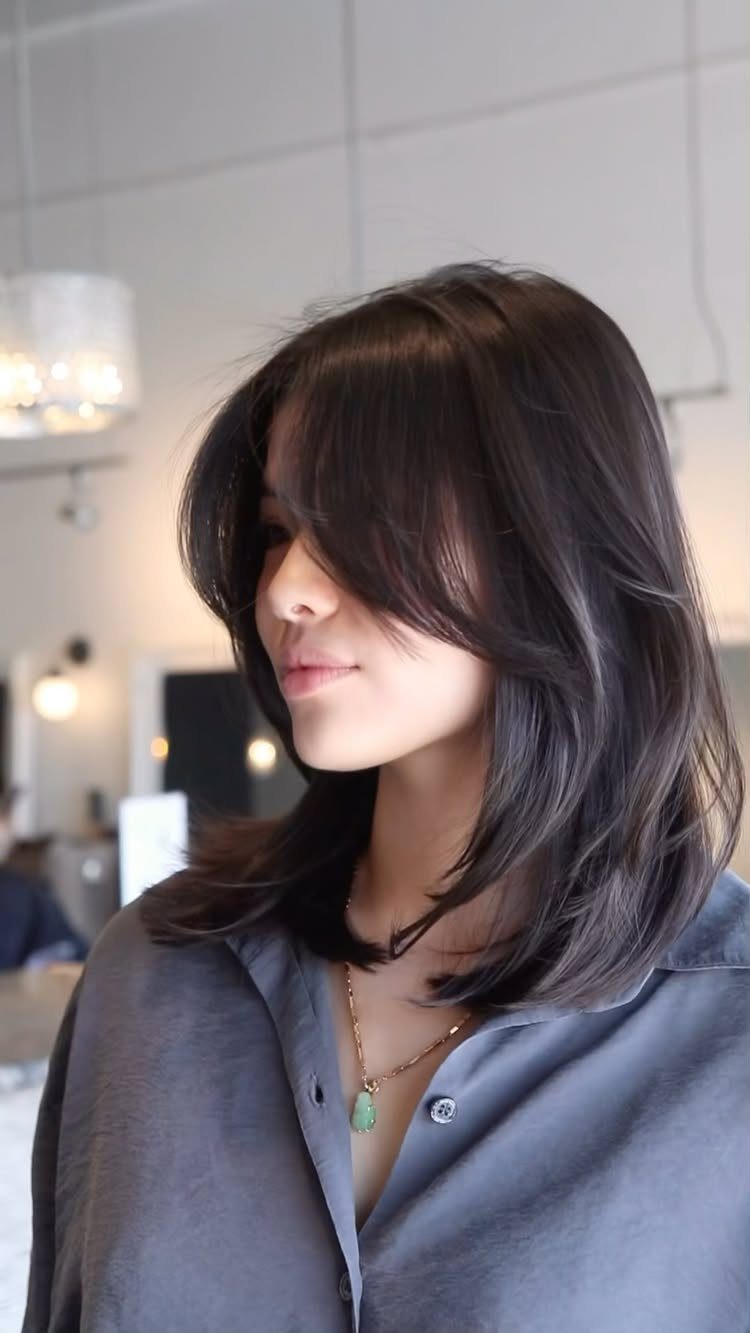
Short layers around the face create lift and separation, while the back stays longer and less layered. The contrast between the airy front and the heavier back gives the cut its shape.
Fine hair gets lift and the front gets textured layers while the back keeps its length.
The short face layers need more frequent trims to keep their shape. Style with a curling iron to emphasize the layered pieces, or leave it straight for a softer look.
13. Fairy Cut
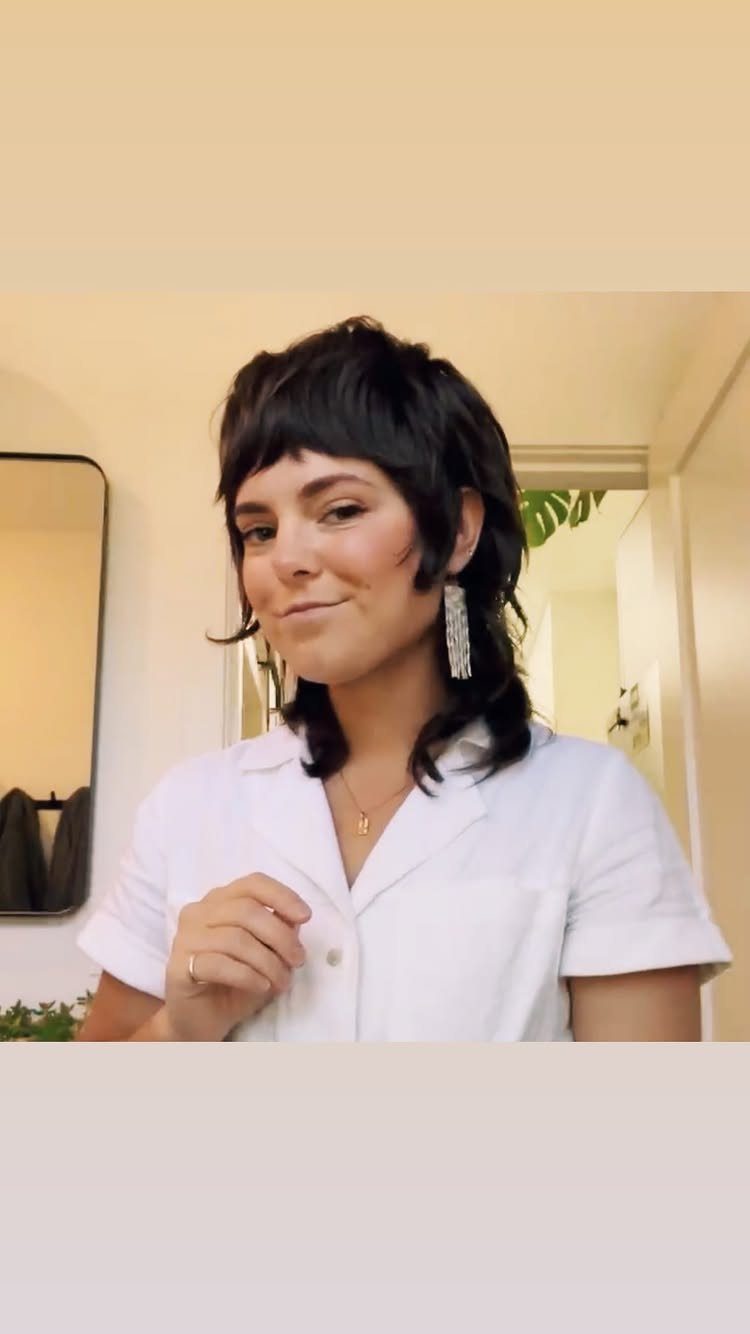
Heavy layers cut throughout add texture and lift without shortening the length too far. The bangs sit around eyebrow level and blend into the face layers, so nothing sits in one blunt line.
The irregular layers give lift at the crown and prevent blunt, heavy ends.
The layers work across most textures, though wavy hair will soften the choppy ends while straight hair keeps them sharp. Daily styling is minimal; the cut does most of the work once the layers are in.
14. Feathered Layers
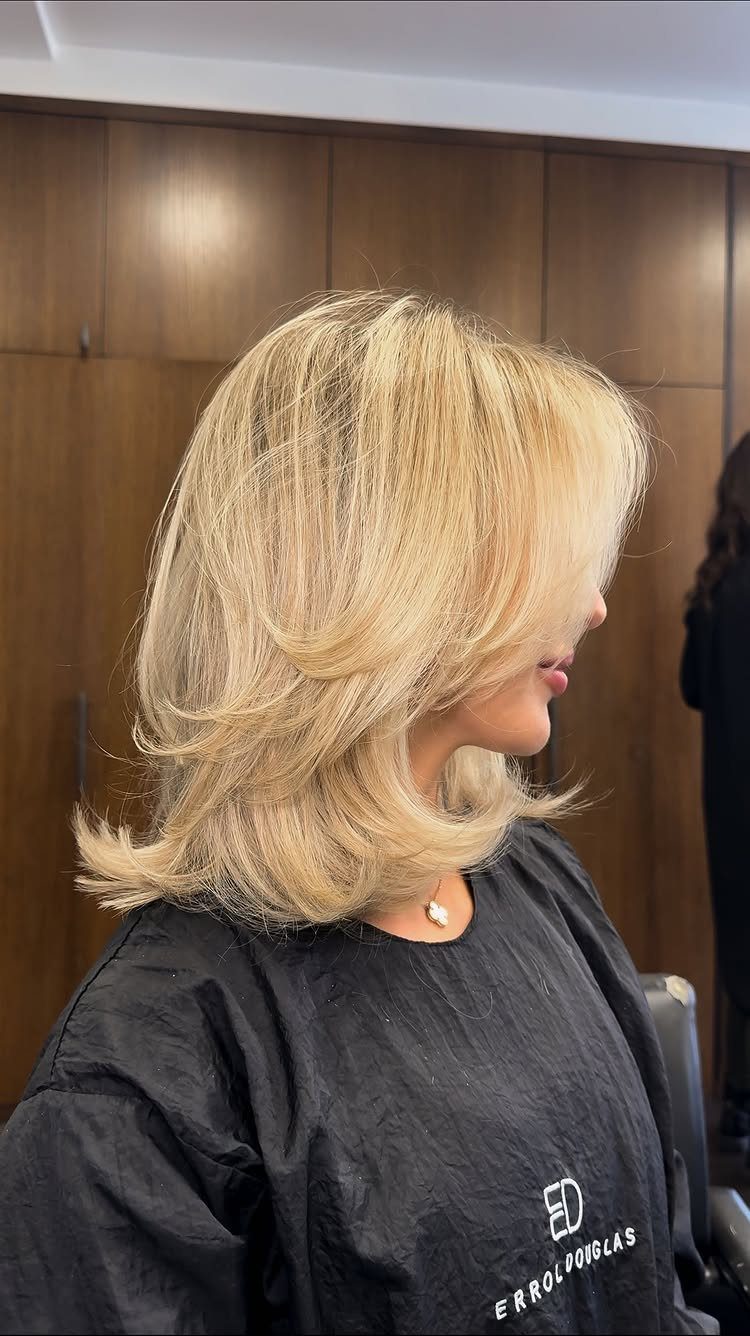
Thinned, tapered ends create soft separation that catches light and moves when you turn your head. The layers are cut with a razor or thinning shears to remove bulk and give each piece a feathery finish.
Fine hair looks fuller with this cut because the tapered ends sit apart rather than clumping. Thick hair lightens up without losing its body.
15. Hoyeon Jung’s Shoulder-Length Haircut
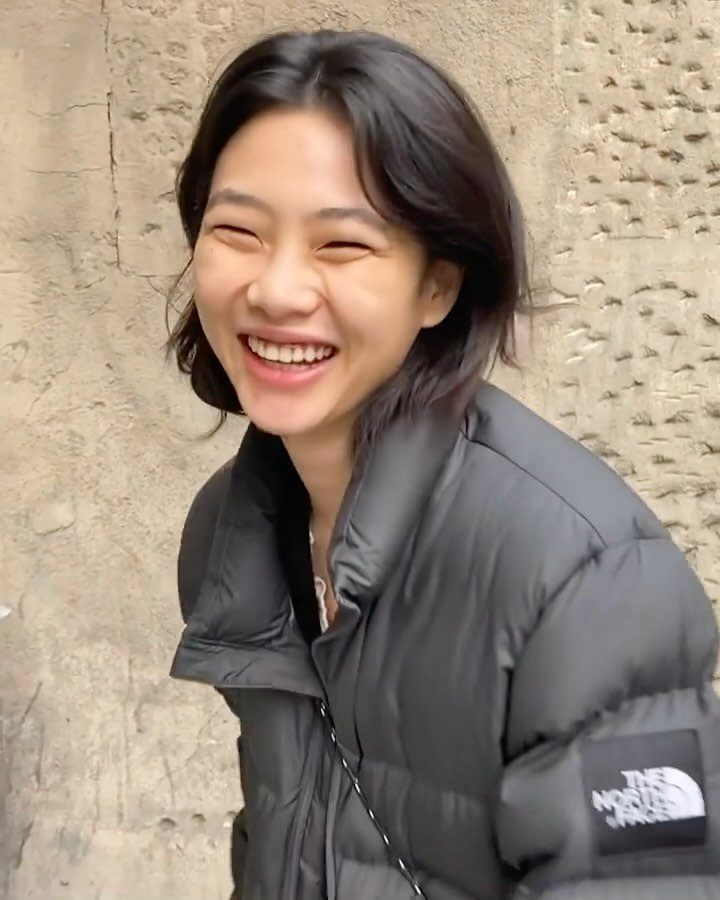
Subtle layers cut through shoulder-length hair remove weight while keeping enough length to tie back.
This suits anyone who wants to shorten long hair without committing to a bob.
The layers start a few inches below the chin, so the cut keeps its fullness and grows out gradually. Air-dry for a relaxed finish or blow-dry smooth for something more polished.
16. Messy Blonde Bob
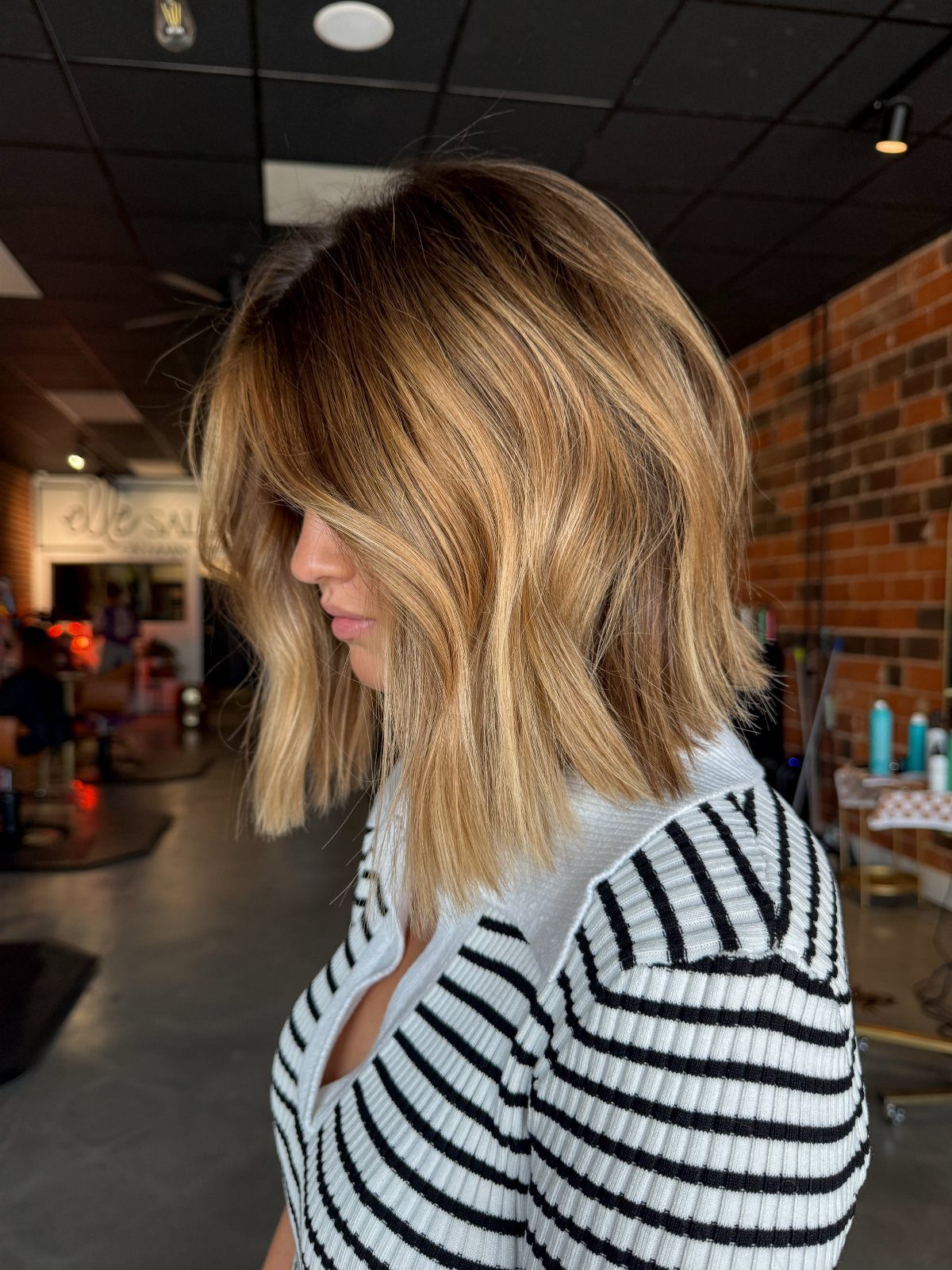
A bob cut to the shoulders and left unstyled, with darker roots left visible, gives you a tousled, undone look that reads casual rather than polished. Texture keeps the blunt line from looking too heavy or flat against the head.
The darker roots stretch time between color appointments, and the messy finish hides any unevenness as the cut grows out.
17. Soft-Structured Lob
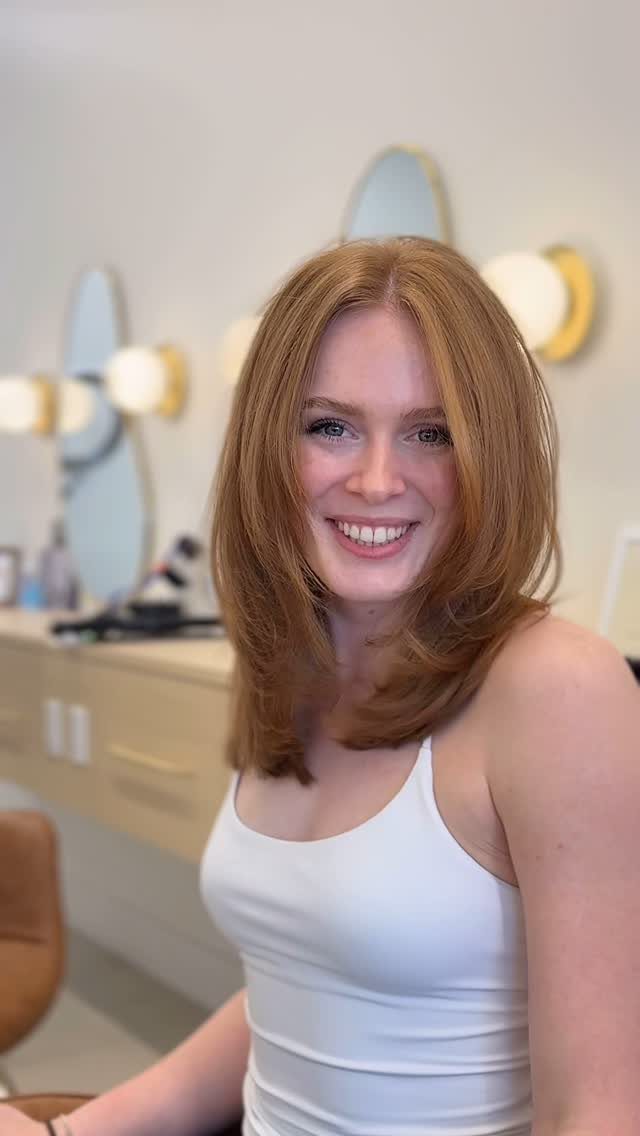
The ends are cut with slight internal layering and styled to curve under, so the lob keeps a rounded shape without a hard blunt line.
The length sits at the collarbone, and the curved ends give the cut a softer, more polished finish than a blunt lob.
Bend the last inch under with a round brush or flat iron to finish the ends. The curve grows out gradually, so the cut stays wearable between trims.
18. Happy Medium Haircut
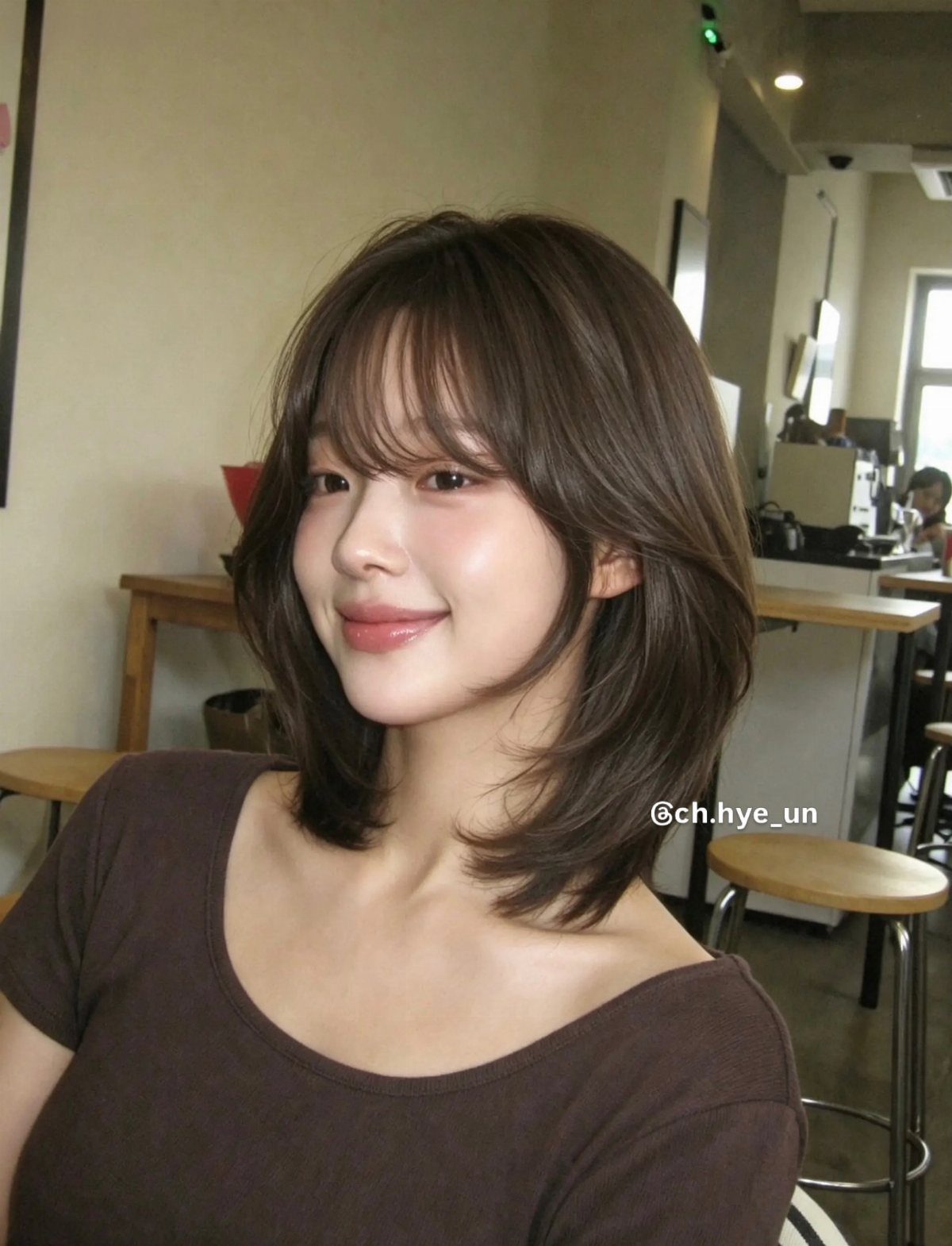
Shoulder-length hair with long layers in front and wispy bangs sits between short and long without committing to either.
The length allows for ponytails and braids, and the front layers add dimension.
The wispy bangs soften the face and can be worn forward or swept to the side. Regular trims keep the proportions clean as it grows.
19. Shullet
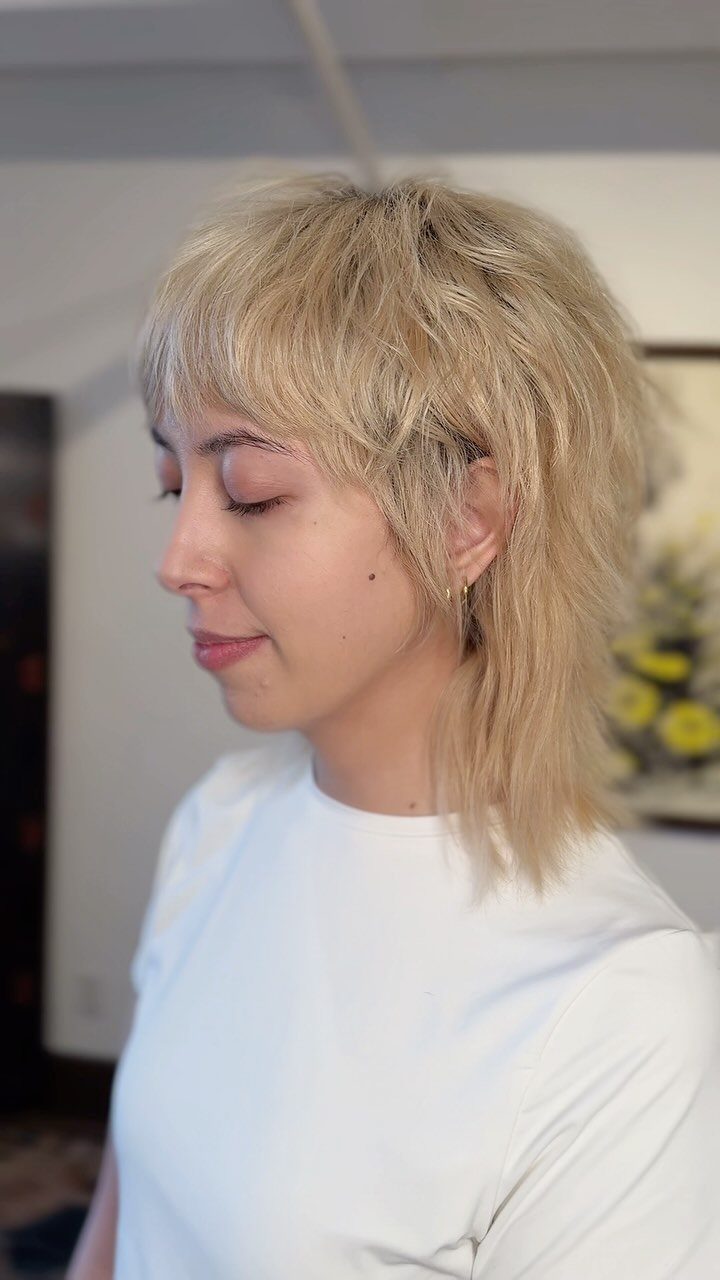
The front pieces fall around the face while the back extends past the shoulders.
The cut suits straight or wavy hair and works best when you want volume up top without losing length entirely. Style with fingers or leave it alone; the separation comes from the cut.
20. U-Shaped Cut
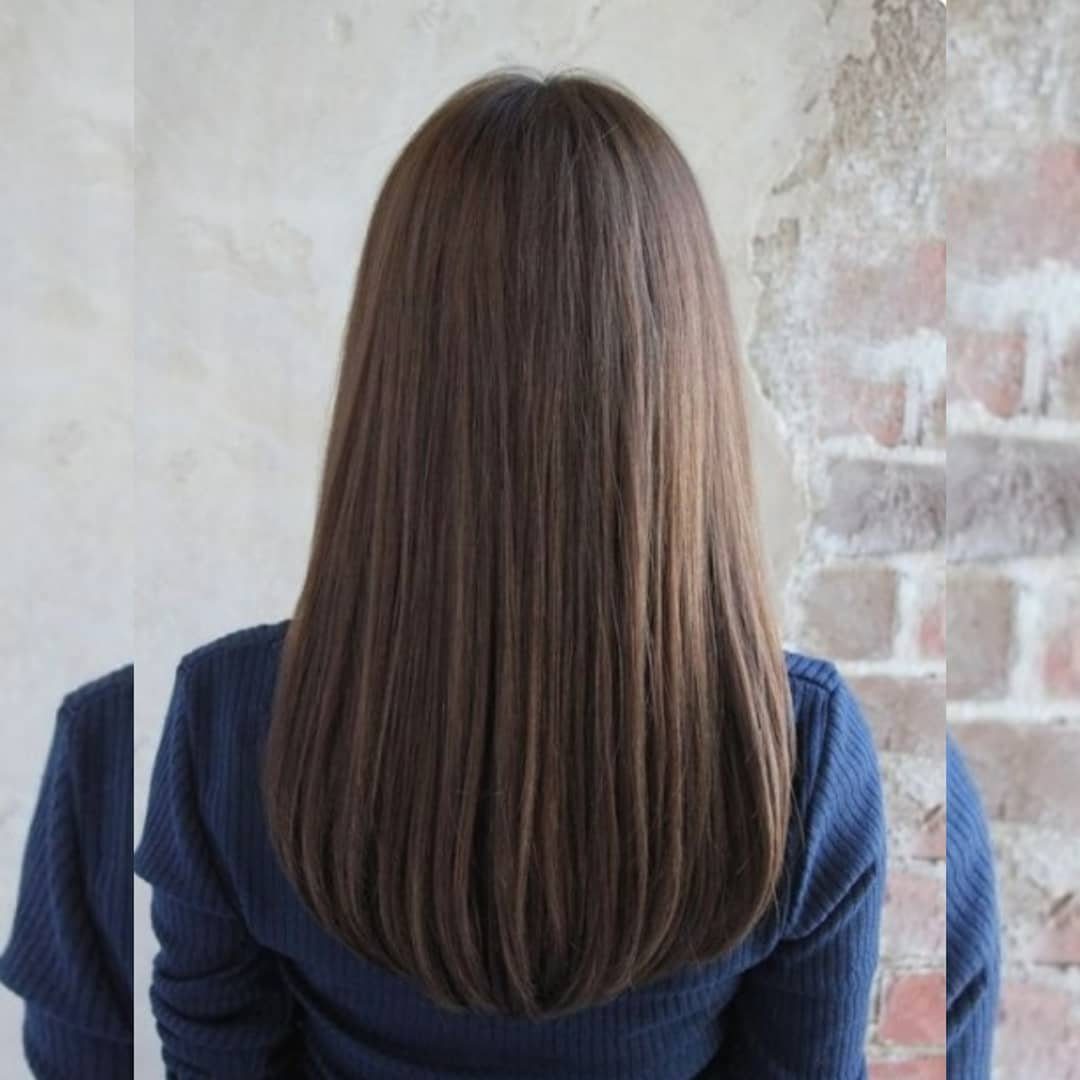
The ends form a soft U when viewed from behind, with the center falling slightly longer than the sides. The curve adds subtle shape to one-length hair without layering through the body.
The shape is easiest to see on straight hair; waves will soften the curve. Ask for a U-shape if you want more length in back than a blunt line gives you.
21. Medium Braids
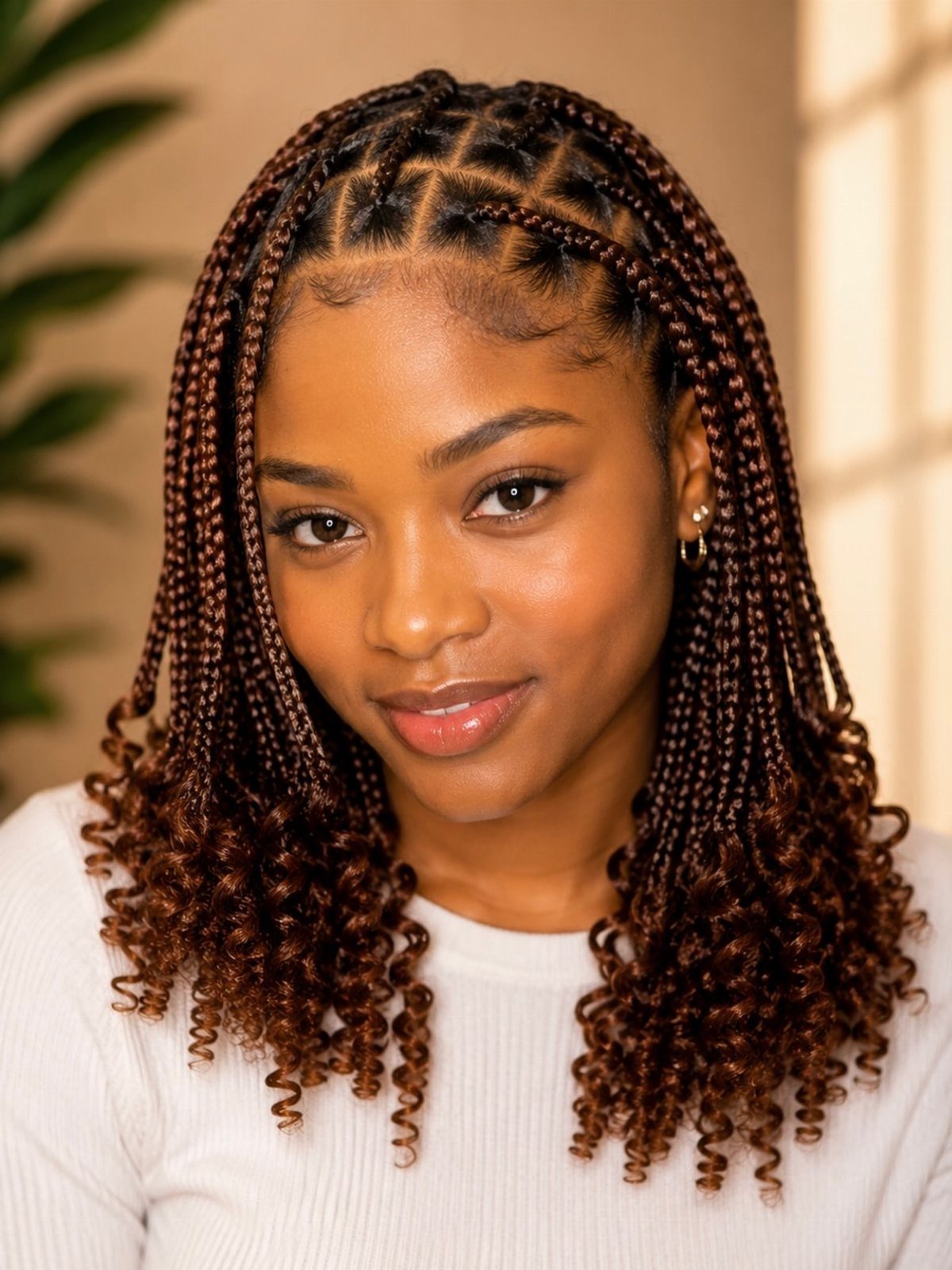
Box braids or individual plaits cut to shoulder length give you a protective style that stays off your face and neck without reaching past your shoulders. The shorter length keeps the braids lighter and faster to install than waist-length versions.
Medium braids suit natural hair and hold through several weeks of wear with proper care.
The ends can be left blunt, curled with hot water, or sealed with a lighter. Maintenance includes moisturizing the scalp and edges between installations.
22. Side Part
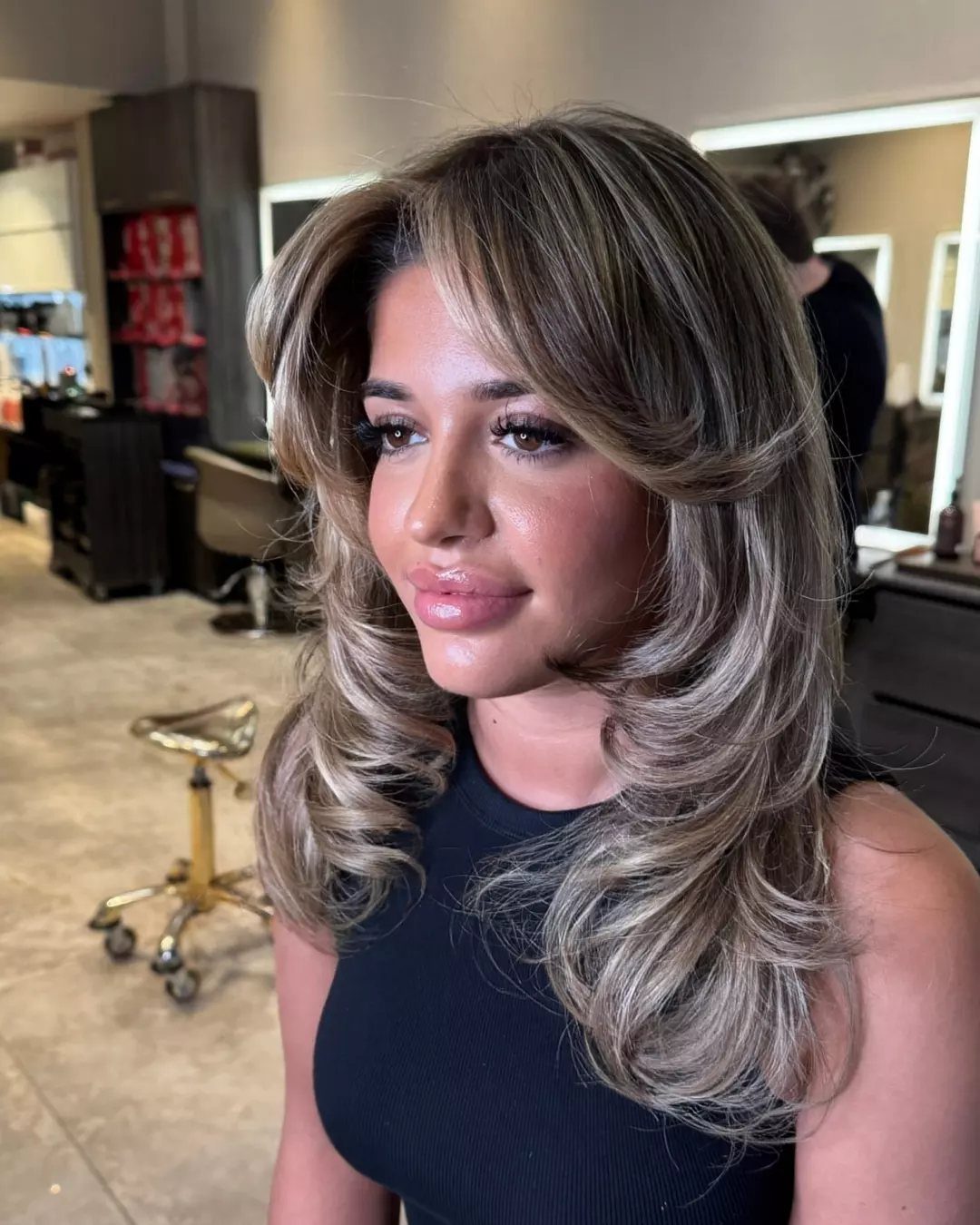
Parting hair off-center or several inches to one side lifts the roots on the heavier side and creates asymmetry across the face. The part changes how volume sits and which features the hair frames most.
A deep side part suits most face shapes and adds height without teasing or product.
Switch sides occasionally to avoid training the hair into one permanent direction. Use a comb or your fingers while hair is damp to set the part, then style as usual.
23. Side-Swept Bangs

Cut long enough to reach past the eyebrows and angled to one side, the fringe sits across the forehead and tucks behind the ear when needed. The bangs blend into longer layers rather than sitting as a separate, blunt piece.
This suits most face shapes and grows out without an awkward in-between stage.
Part the bangs to match your usual side part, or switch sides depending on the day. A round brush while blow-drying adds curve; air-drying leaves them softer.
Choosing by Hair Type
Too many short layers remove density and leave the cut looking thin at the bottom.
A textured lob or mid-length shag spreads the bulk through the hair instead of leaving it all stacked at the bottom.
Wavy and curly hair changes shape when dry, so plan for layers that give the curl room to form without pulling the length too short. Thoughtfully placed layers prevent weight from collecting at the bottom while letting the texture move.
Straight hair shows every line of a cut clearly. Blunt cuts read as sharp and deliberate, face-framing pieces and feathered ends give you motion.
Fine hair that won’t take a bend needs fewer, more focused layers near the face; anything longer pulls the shape flat.
Choosing by Face Shape
Shorter angles around the face emphasize cheekbones and balance longer face shapes.
Longer layers and side bangs create angles that add length to round faces. Curtain bangs suit round, oval and heart-shaped faces, while face-framing layers can soften round, heart-shaped or sharper features.
The shape holds up through a blowout or when you add a loose wave.
Low-maintenance Upkeep
A one-length lob or lightly layered shoulder cut takes less work each morning than a shag with choppy ends or anything involving bangs.
Medium hair dries and styles faster than longer hair, and cuts that work with your natural texture need even less effort.
Short bangs may need trimming every 4 to 6 weeks, while longer, grown-out fringe needs fewer trims and blends into the cut as it lengthens.
Tell your stylist you want something that grows out clean and works with what your hair does on its own. Longer layers and graduated shapes grow out gradually without losing their form or needing immediate correction.
Frequently Asked Questions
What is considered medium-length hair?
I count anything from chin to collarbone as mid-length, though some people stretch it a few inches past the shoulder.
The length sits between a bob and longer styles, offering enough length to tie back while drying and styling faster than hair past the shoulders.
What are some popular mid-length haircuts for 2026?
Shags with choppy layers, textured lobs with soft internal layering, and wolf cuts with volume at the crown remain popular choices.
Face-framing layers, blunt cuts that show off shine, and shoulder-length curly cuts that let curls form without pulling tight also continue to rank high.
Is a shoulder-length haircut good for every hair type and texture?
Shoulder-length cuts work across straight, wavy, and curly textures when the cut is adapted to what the hair does naturally.
Textured layers add body to fine hair, remove weight from thick hair, and let curls form without shortening too much when cut dry.
Do shoulder-length hairstyles work on every face shape?
Shoulder-length cuts can be tailored to suit most face shapes by adjusting where layers and angles sit.
Which face shapes suit medium-length hairstyles?
Oval faces suit most medium styles due to natural symmetry. Round faces benefit from side parts, longer layers, or asymmetrical cuts that add length, while heart-shaped faces look balanced with soft layers or curtain bangs that soften a wider forehead.
A square jaw softens with layers that break up the line instead of ending bluntly right at it.
What medium-length haircut is best for fine hair?
Fine hair holds more weight when the cut keeps a blunt or barely layered edge, so the ends still look dense.
How often should I have my medium-length cut trimmed?
Most cuts hold their shape for 6 to 8 weeks before they need a trim.
Can I put medium-length hair up?
Yes. Most shoulder-length cuts allow for ponytails, braids, half-up styles, and low buns with clips or ties.
Is medium-length hair easier to maintain than long hair?
Washing and drying take less time when there’s less hair to move water through.





