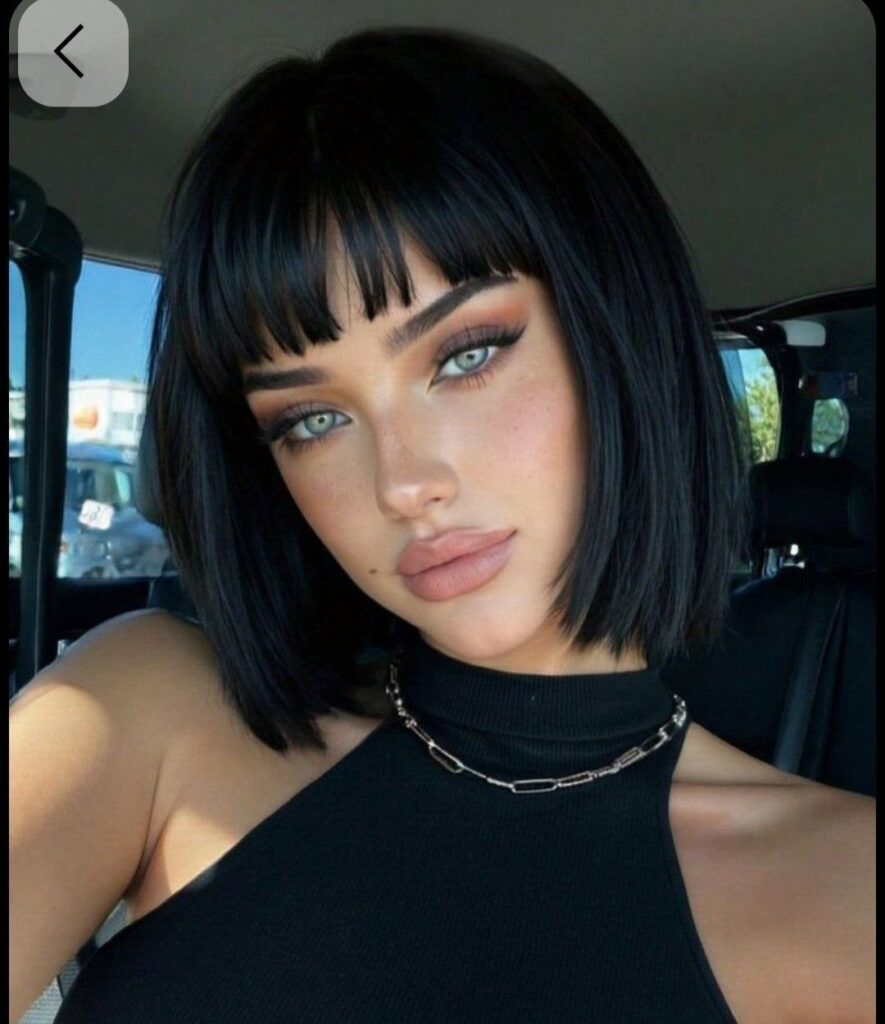
The cut can sit anywhere from an inch above the eyebrows to grazing the cheekbones, and the bob itself ranges from pixie-short to shoulder-length. Your face shape and how much forehead you want to show decide which version works.
Curtain bangs suit a round or square face because the center part creates vertical lines; blunt bangs across the forehead work when you can tolerate hair brushing your eyes between trims.
Bottleneck bangs fan out as they move toward the temples; micro bangs end an inch or more above the brow and grow out fast.
1. Edgy Short Bob
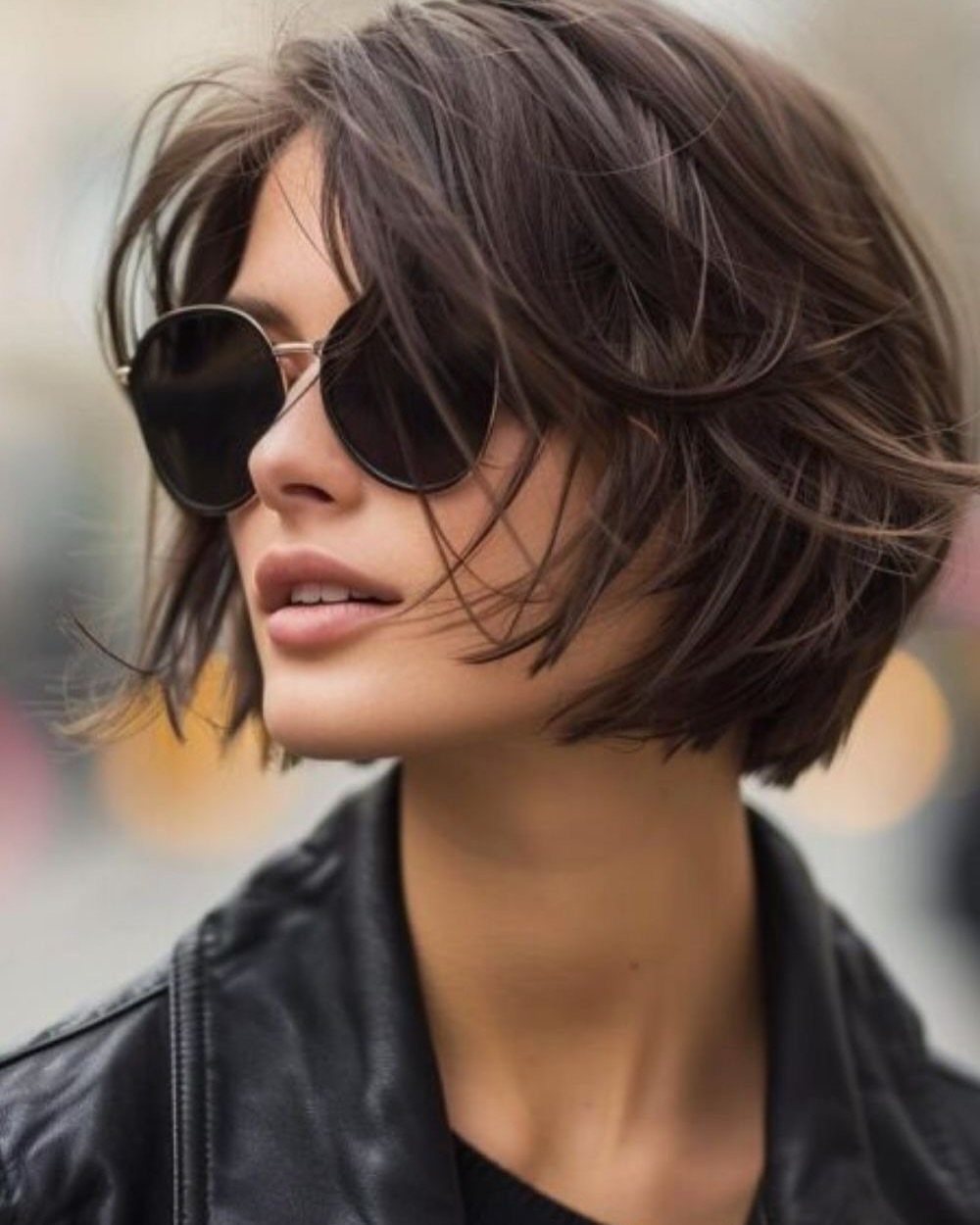
The cut ends above the chin with choppy, textured layers and a soft, piecey fringe that grazes the brows. The texture keeps it from looking too polished, which is the point.
It works on fine to medium hair that holds a bend without much effort.
Style by running a flat iron through random sections and leaving the roots alone. The bangs need regular trims to stay out of your eyes.
Pair it with a leather jacket and the whole thing reads Parisian without trying too hard.
2. Curly Bob with Curly Bangs
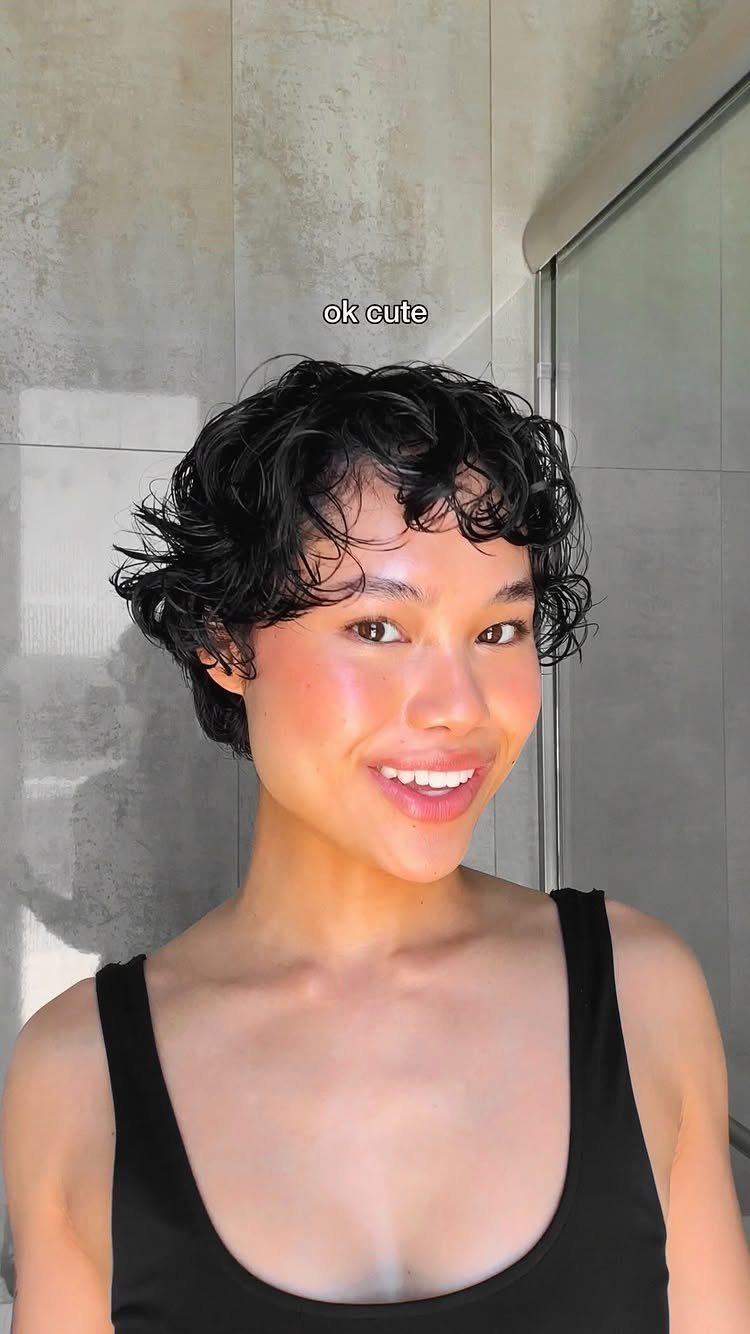
Curls stay curly all the way to the ends and across the forehead. The bangs fall in loose ringlets instead of being blown straight or pinned back, so the whole cut moves as one texture.
This works when your curl pattern is consistent from root to tip.
If your bangs dry tighter than the rest, you will fight them every morning. Cutting curly bangs while dry gives you the actual length you will see after they spring up.
Refresh day-old bangs with a spray bottle and a nickel-sized amount of curl cream.
3. Blunt Bob with Bangs
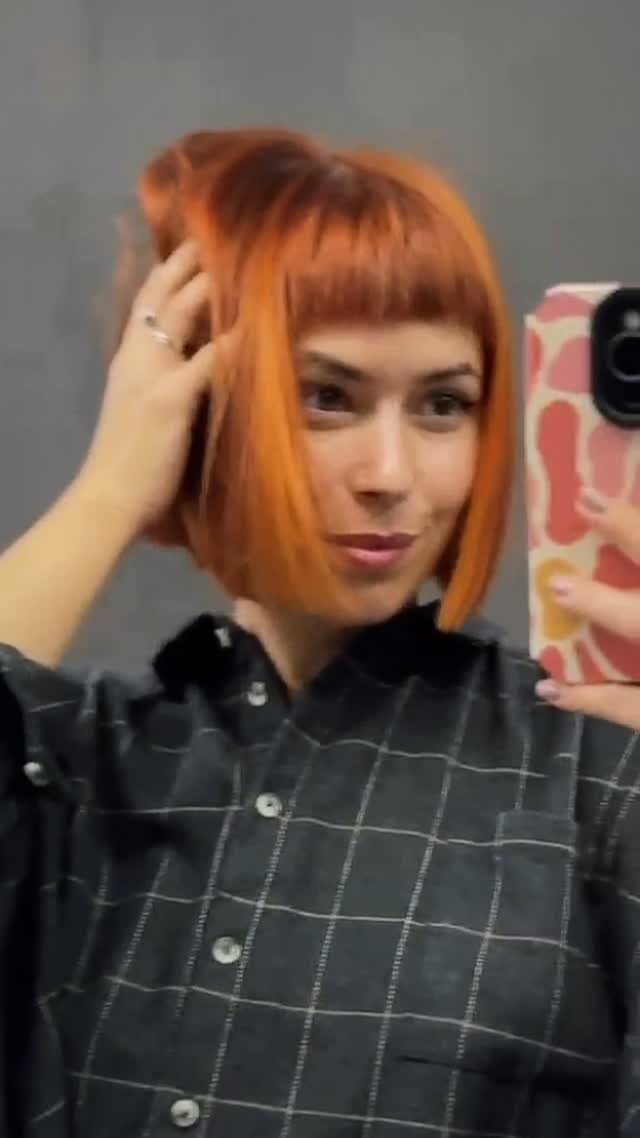
A blunt line at the chin and a blunt line across the forehead. Both edges are cut straight with no layering, so the shape depends on density and how well the hair sits flat.
This cut shows every uneven section, which means it needs a steady hand or a stylist you trust.
On thick, straight hair it holds the line without product. On fine hair it can look sparse at the ends unless you add a slight bevel with a flat iron.
Plan for regular trims to keep both lines sharp.
4. Blunt Bob with Micro Bangs
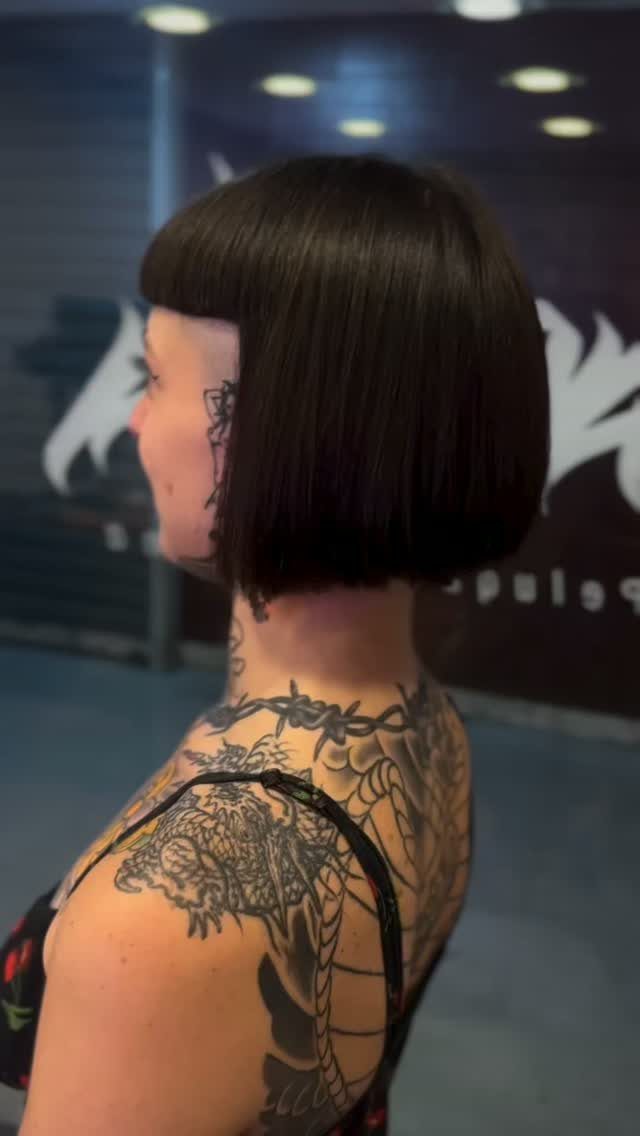
Micro bangs sit an inch above the eyebrows, and the bob ends just below the jaw. The contrast between the 2 lengths makes both look more intentional.
This cut needs confidence and a face you are comfortable showing in full. Micro bangs hide nothing, and they grow slowly enough that you are committed for a while before they reach a length you can blend or pin back.
Style the bob with a flat iron to match the sharpness of the bangs. The whole thing reads graphic, not soft.
5. Eye-skimming Blunt Bob
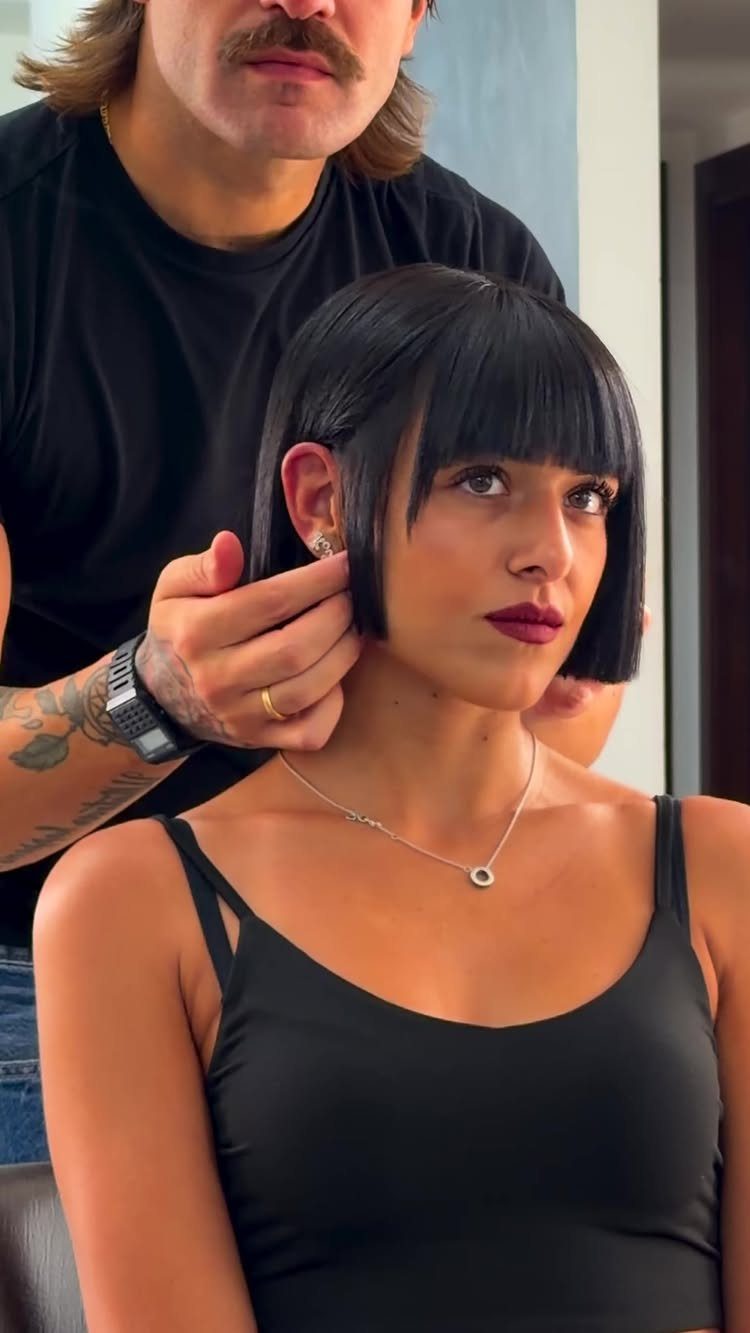
The bangs fall just past the eyebrows, close enough to skim your lashes when you look down. The bob itself is cut blunt at chin length with no layers, so the weight keeps everything smooth and straight.
This works when you want full coverage across the forehead and can tolerate hair brushing your eyes between trims. You will need to trim the bangs regularly or learn to do it yourself with sharp shears and a steady hand.
Blow the bangs forward with a round brush to keep them from separating into pieces.
6. Layered Bob with Layered Bangs
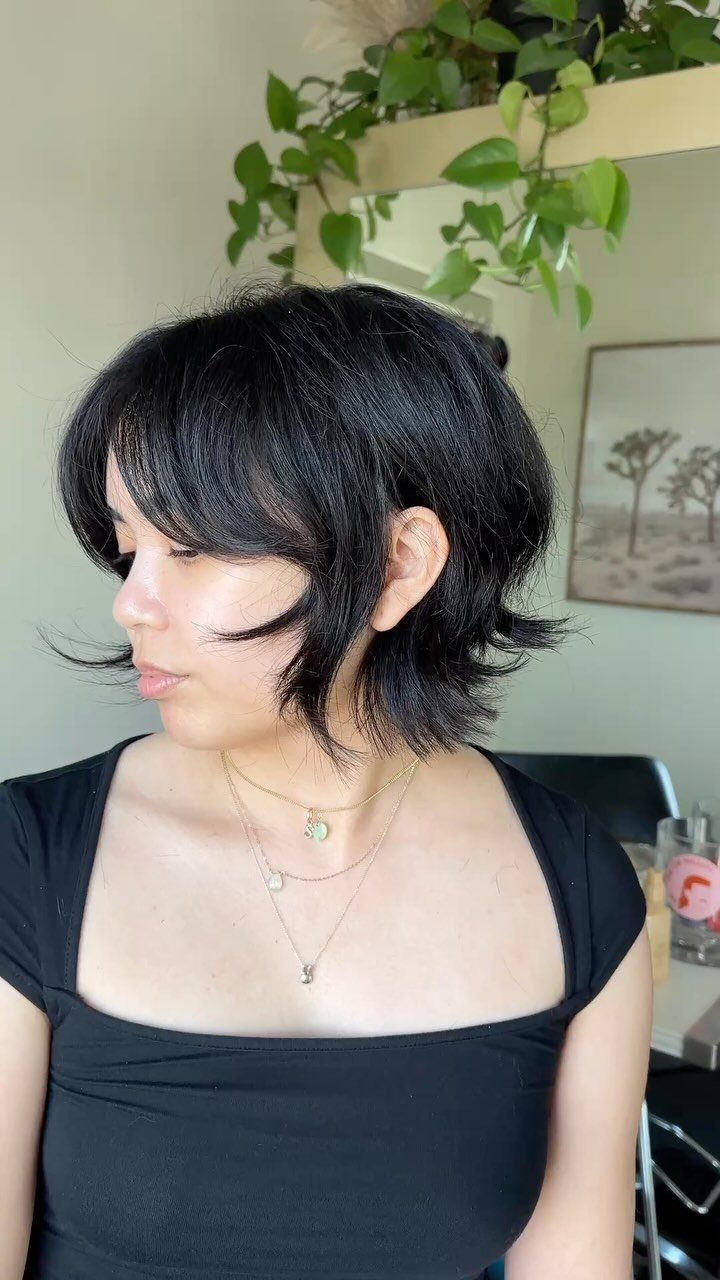
Layers cut through the ends of the bob and the bangs give both movement and a softer edge.
The bangs feather instead of sitting in one heavy line, and the ends of the bob flip out slightly instead of lying flat.
This cut suits thick hair that needs weight removed or fine hair that benefits from the illusion of texture.
Ask for point-cutting through the bangs so they blend into the rest of the cut instead of looking like a separate piece.
Style with a round brush and pull the ends outward as you dry them to keep the flip.
7. Wavy Bob with Bangs
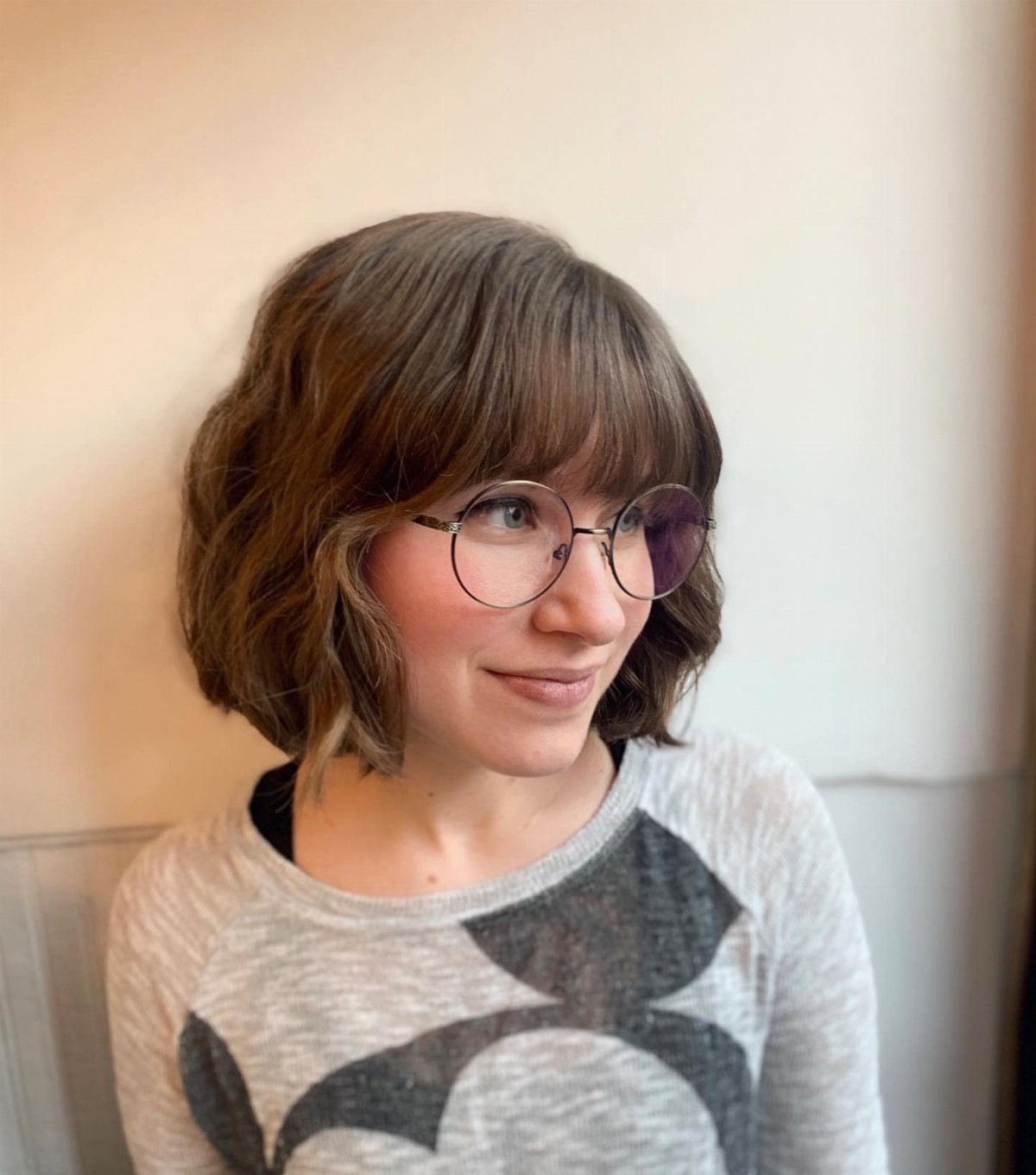
The waves run through the bob and the bangs both, so the whole cut moves together instead of looking like 2 separate pieces. The texture softens the edges and keeps the shape from reading too neat.
If your hair holds a natural wave, ask your stylist to cut it dry so they can see where the bends fall.
If you are adding the wave yourself, use a curling wand or braid damp hair overnight and let the bangs dry the same way.
Fine hair benefits from the added volume; thick hair needs layers to keep the weight from pulling the wave flat.
8. Bob with Curtain Bangs

Curtain bangs part in the center and sweep to each side, framing the face instead of covering the forehead. The bob itself can be blunt or layered; the bangs are what change the look.
This suits a round or square face because the parted bangs create vertical lines that lengthen. On a long face, keep the bangs shorter so they do not emphasize height.
Style by blow-drying the bangs away from your face with a round brush. They grow out more gracefully than full bangs because the length blends into the sides as it gets longer.
9. Blonde Bob with Choppy Full Bangs
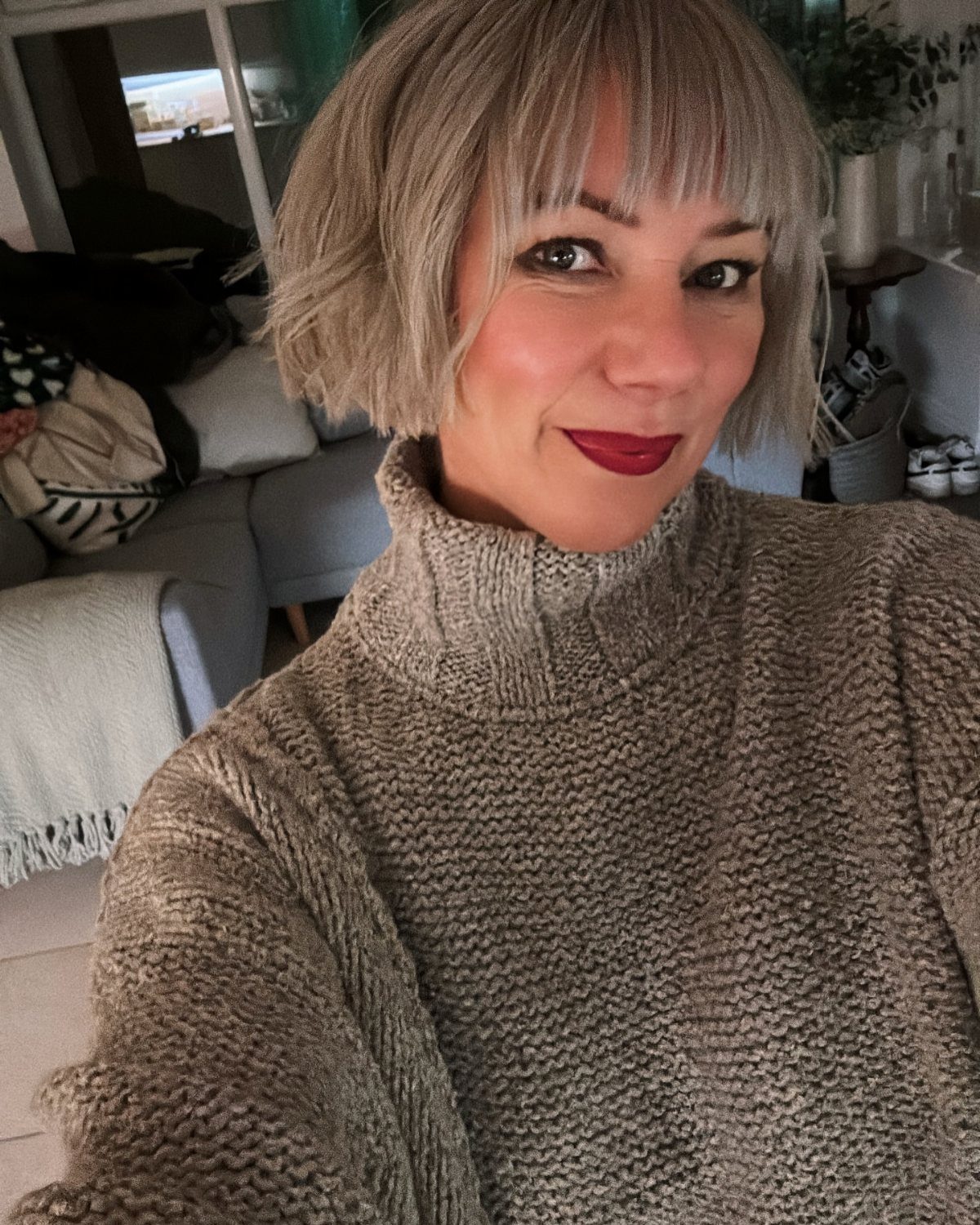
Choppy bangs sit across the forehead in separated pieces instead of one smooth line, and the blonde color shows every texture and shadow in the cut.
The bob itself can be any length; the bangs are textured with point-cutting or a razor.
Blonde shows root regrowth quickly, so plan for regular touch-ups if you are maintaining it. The choppy bangs need less precision than blunt ones, which makes them easier to trim at home between salon visits.
Dry the bangs with your fingers instead of a brush to keep the separated, piecey look.
10. Short Bob with Bangs
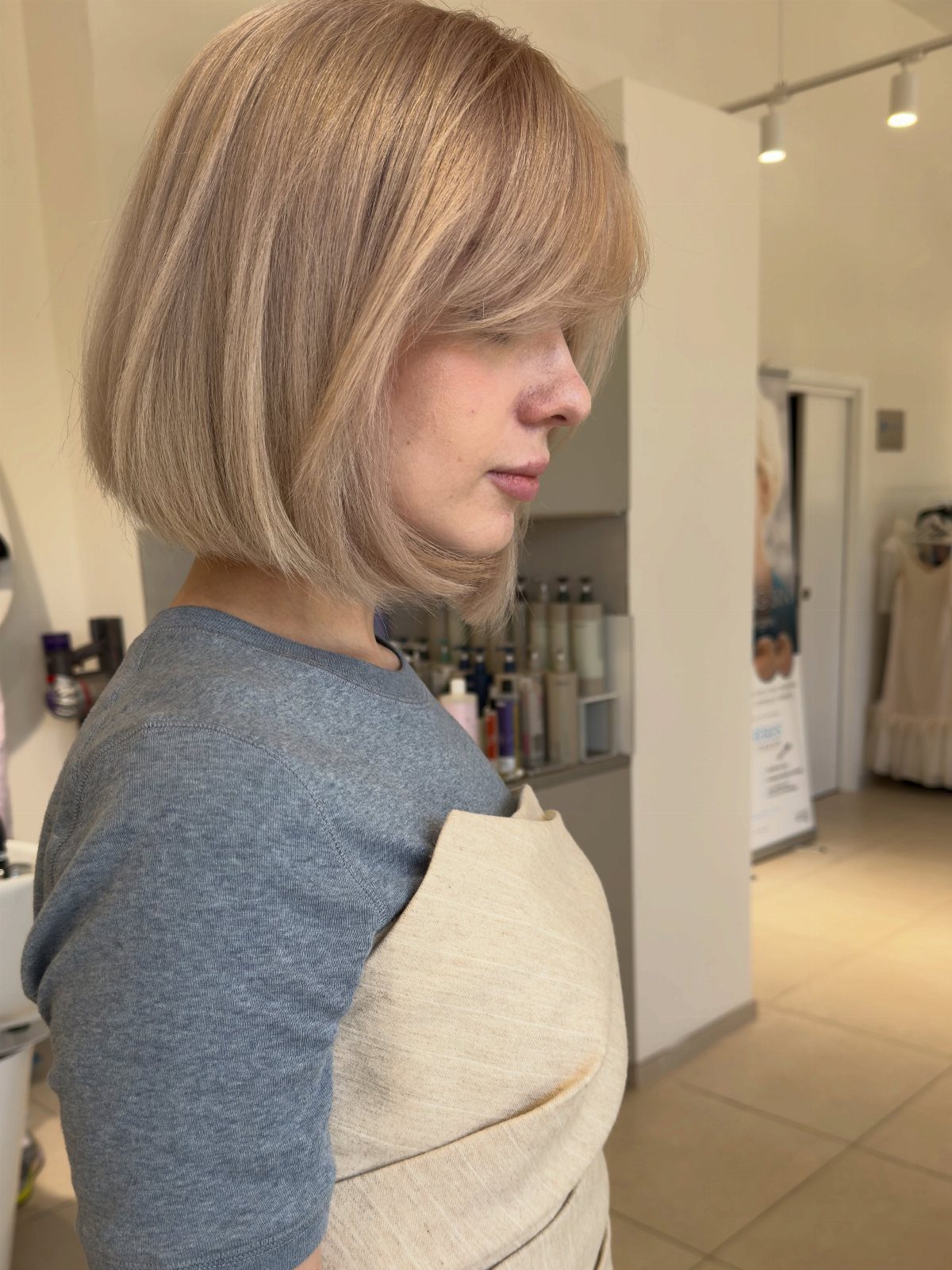
A short bob ends at or above the chin, and the bangs can be blunt, wispy, or side-swept depending on what suits your face. The shorter length makes the cut read sharper and draws attention to the jawline and neck.
This works well on fine hair because there is less length to weigh it down, so it holds volume more easily. Thick hair can look bulky at this length unless your stylist removes weight through the interior.
Plan to trim regularly to keep the shape from growing out into a longer bob you did not ask for.
11. Bottleneck Bangs
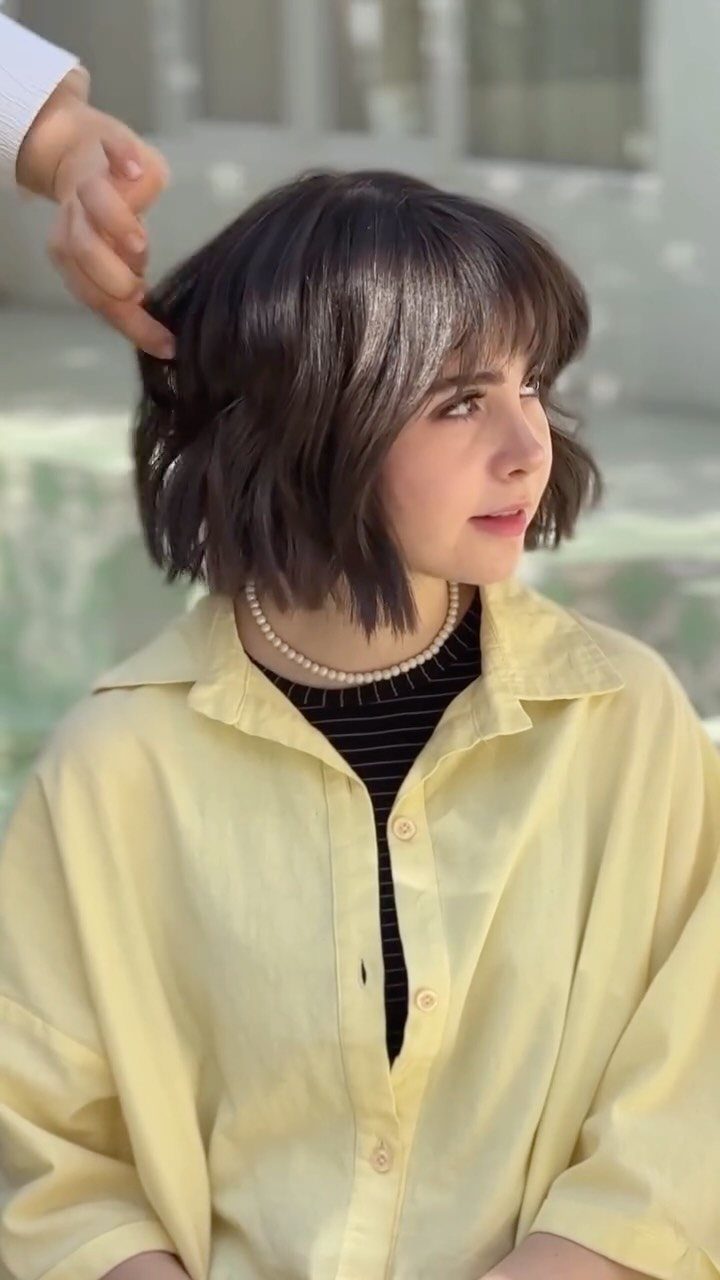
Bottleneck bangs taper from shorter in the center to longer at the sides, creating a rounded shape that widens as it reaches the cheekbones. The bob is usually choppy or textured to match the casual feel of the bangs.
This suits an oval or heart-shaped face because the wider sides balance a narrower chin. The taper also softens a strong forehead without the full commitment of straight-across bangs.
The longer side pieces can be tucked behind your ears or left to frame your face.
12. Micro Bangs
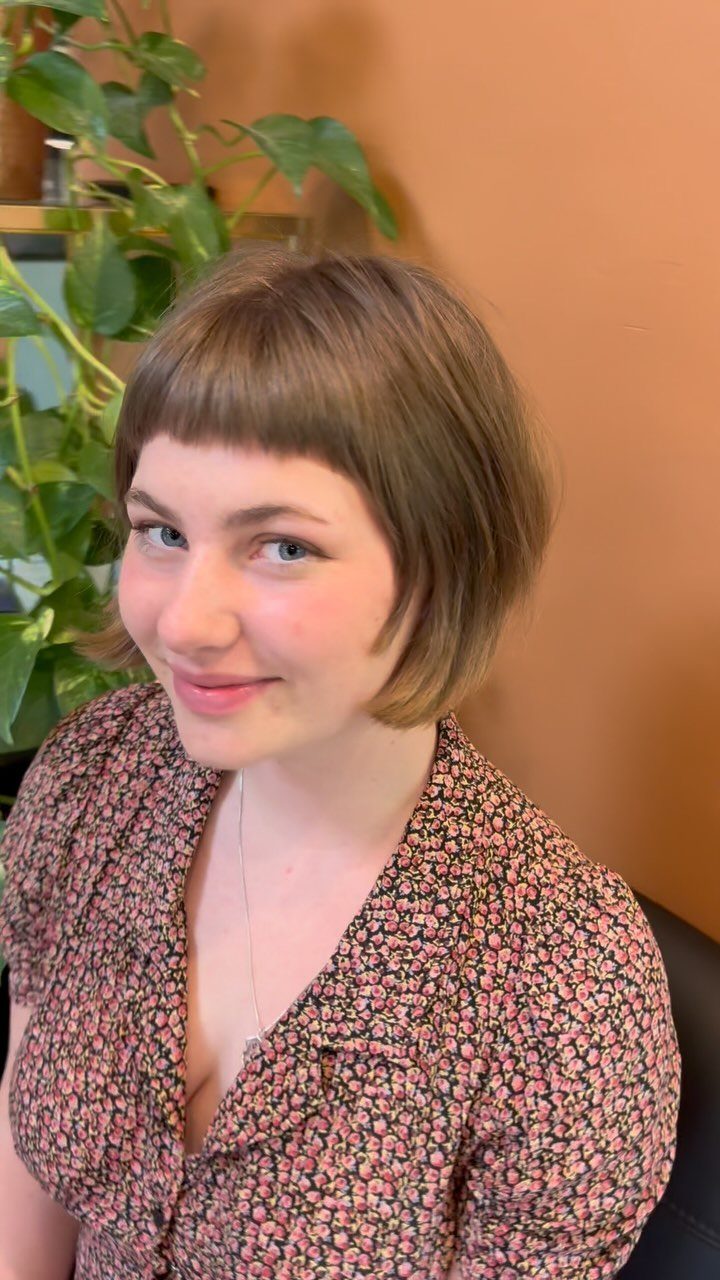
Micro bangs stop well above the eyebrows, leaving most of the forehead visible. Paired with a bob, they create a high-contrast look that feels intentional and a little bit punk.
This cut shows your whole face, so it suits someone comfortable with that level of exposure. It also works better on a smaller forehead; on a tall forehead, the bangs can make the expanse above them look even larger.
Trim micro bangs yourself with small scissors and cut less than you think you need to. They grow slowly, but once they are too short, you wait.
13. Long Bob
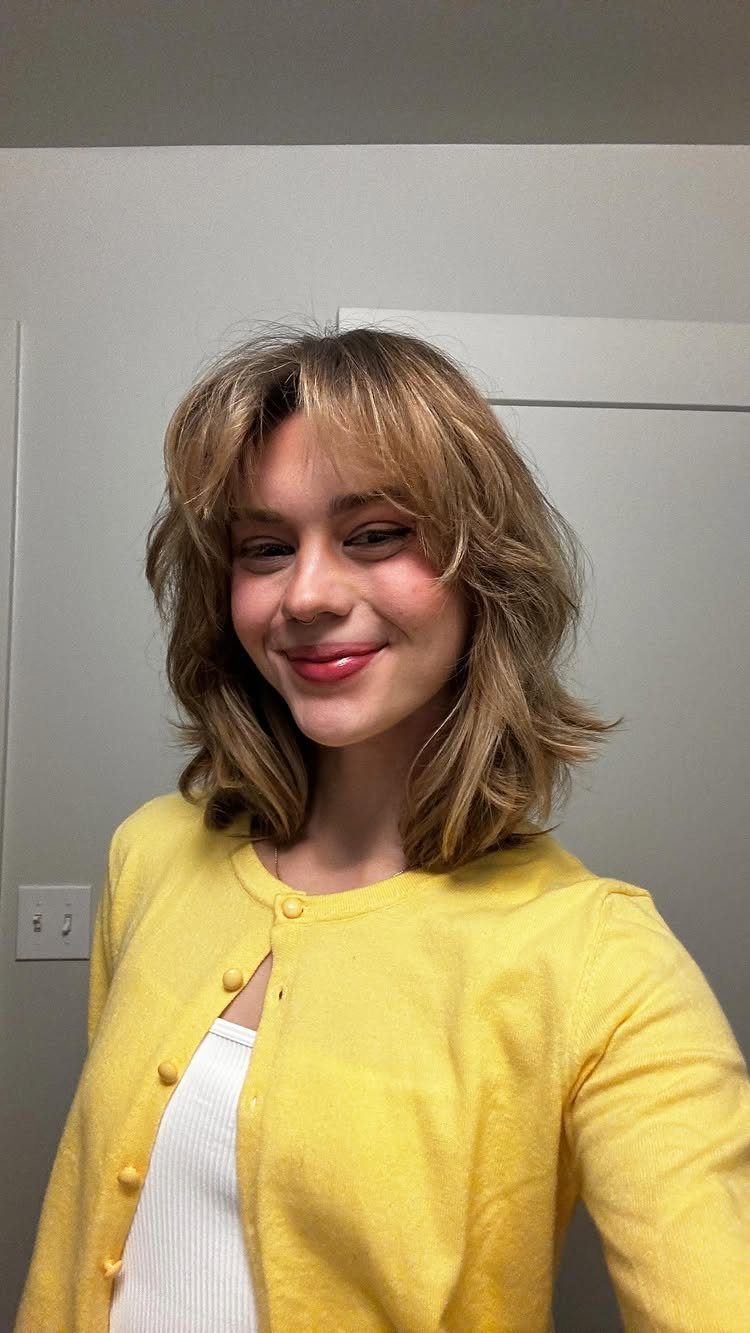
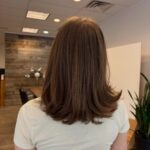
The bob ends at or just past the shoulders, and the bangs part to either side or sit softly across the forehead. The length gives you more styling options than a shorter bob without the commitment of truly long hair.
Most textures take to this length, and the grow-out stage looks intentional rather than neglected.
The longer length means you can pull it into a small ponytail or tuck it behind your ears when you need it out of your face.
Style with a flat iron for sleek or a curling wand for soft waves.
14. Rounded Bob with Wispy Bangs
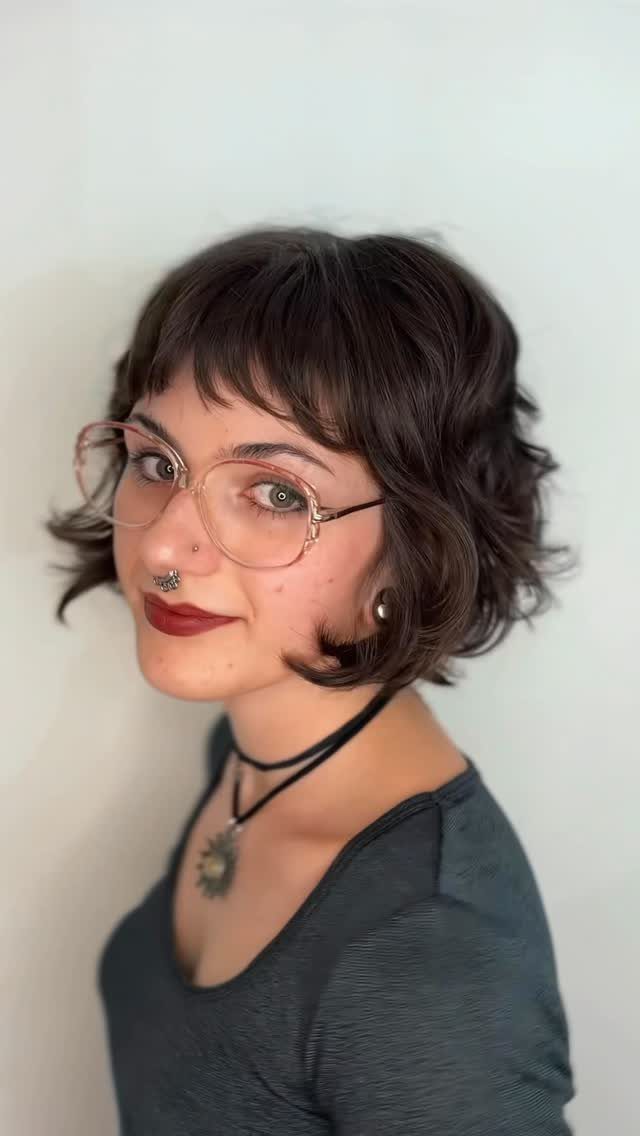
The bob curves under at the ends to create a rounded shape that follows the jawline. Wispy bangs sit lightly across the forehead without covering it completely, so the whole cut feels softer than a blunt version.
Thick hair may need internal layering to prevent the rounded shape from looking too heavy.
The wispy bangs are more forgiving than blunt ones if you trim them yourself between salon visits.
15. Face-framing Layered Bob
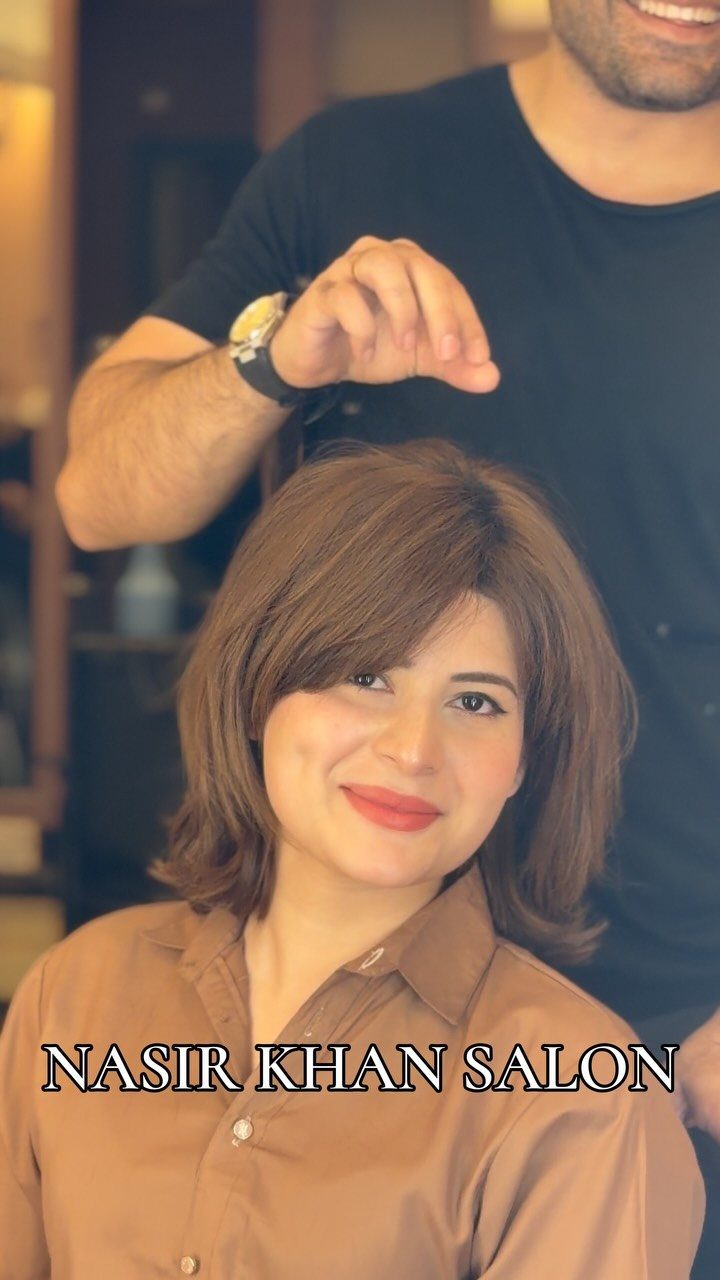
Layers cut shorter around the face and longer toward the back create a feathered effect that draws attention to the cheekbones. Side bangs sweep across the forehead and blend into the first layer.
This cut suits thick hair because the layers remove weight and let the ends move. On fine hair, ask your stylist to keep the layers subtle so you do not lose density at the tips.
16. Textured Side-swept Bob
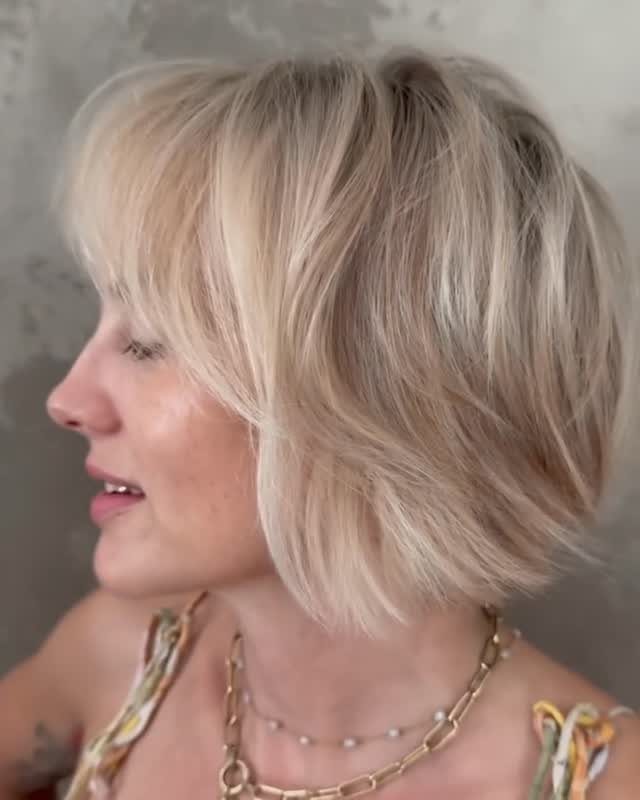
The bob sits at jaw length with texture cut through the ends, and the bangs sweep to one side instead of falling straight across.
The whole cut is styled to favor one direction, which gives it an asymmetric look even when the actual lengths are even.
Cutting with a razor instead of shears adds soft texture and a finish that looks less structured. Style by blow-drying everything to one side and letting the bangs fall naturally across your forehead.
17. Textured Ends Bob
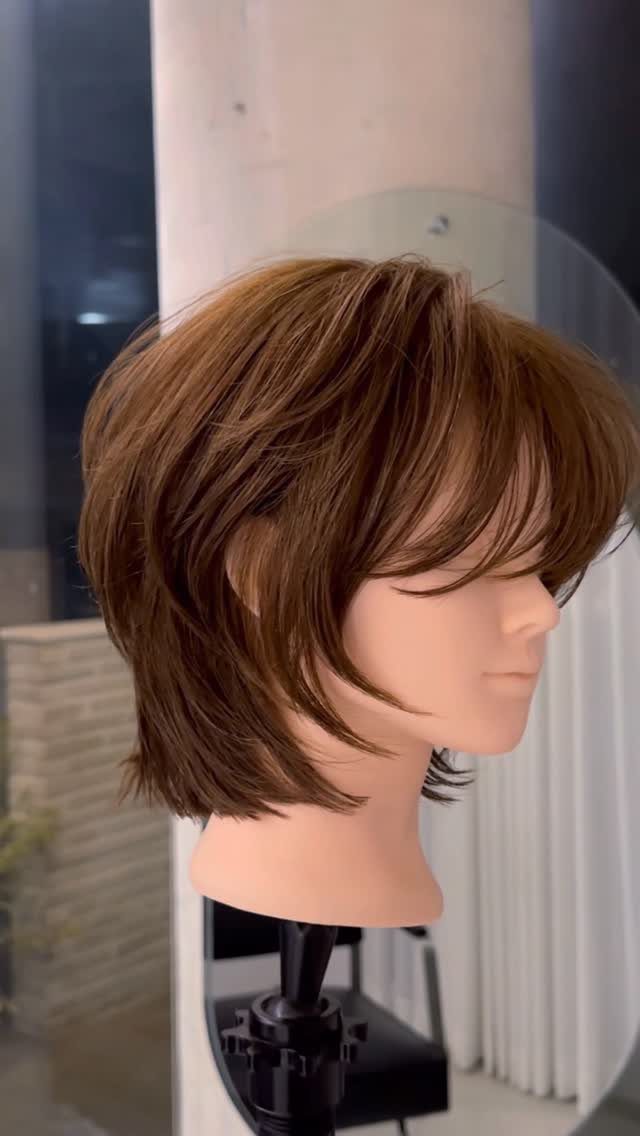
The ends are point-cut or razored to create separation and movement instead of sitting in one solid line. Feathered bangs match the texture of the bob so the whole cut reads as one piece.
This works on hair that tends to look heavy or blunt when cut straight across. The texture keeps the ends from clumping together and makes styling faster because you are not fighting for a smooth finish.
Dry with your fingers and scrunch the ends to bring out the texture.
18. Messy Textured Waves
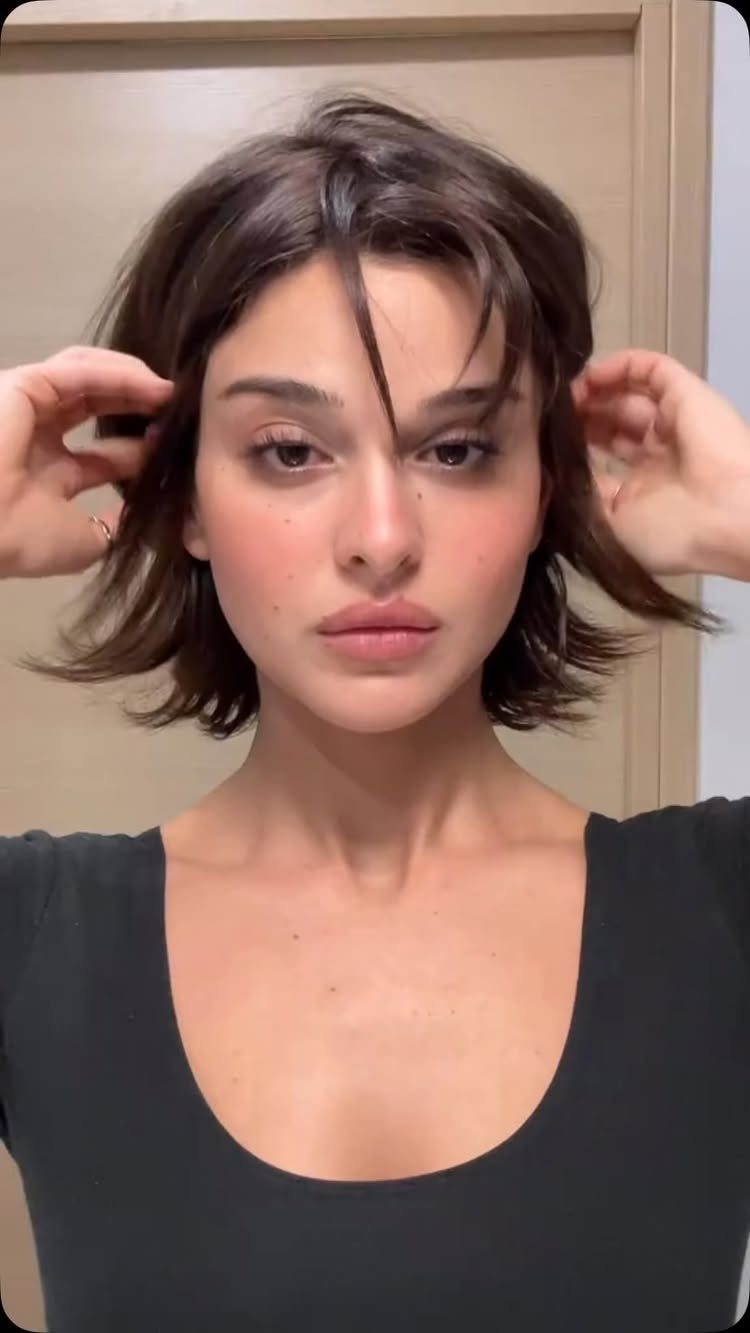
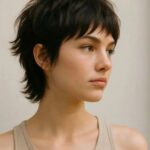
The bob is cut very short, often above the chin, and styled with texture and bend instead of being blown smooth. Wispy bangs are razored to match the undone feel of the rest of the cut.
This suits someone who wants a low-maintenance style that looks intentionally messy rather than polished. The waves can be natural or added with a curling iron, then tousled with your hands.
19. Shaggy Wolf Bob
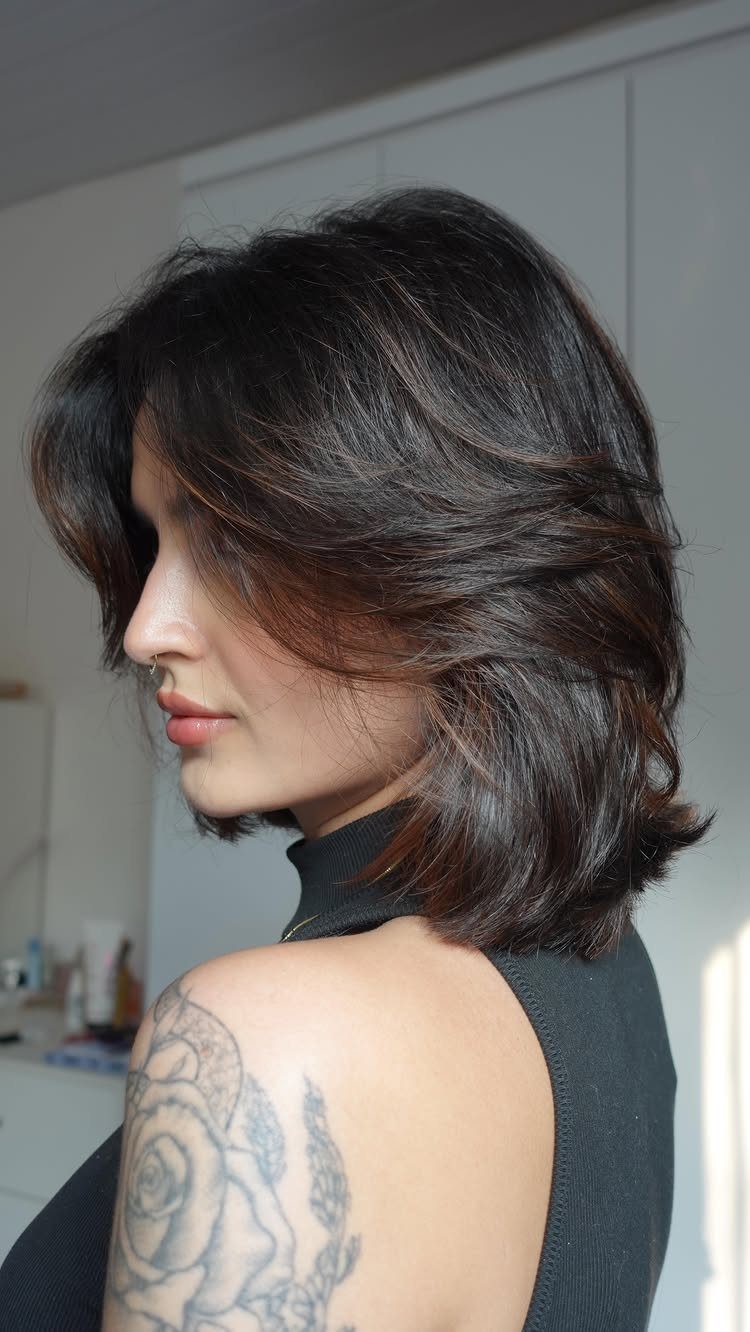
Layers cut short and choppy through the crown give this bob the lifted, disconnected shape of a wolf cut.
The bangs sweep long to the side and blend into face-framing pieces instead of sitting in a separate line across the forehead.
The texture works best on straight or slightly wavy hair that can hold the shag without turning frizzy. Thick hair benefits from the thinning; fine hair may need a texturizing spray to keep the pieces separated.
Style by scrunching damp hair with mousse and letting it air-dry, or blow-dry with your head flipped forward to add lift at the roots.
20. Piecey Bangs

Bangs cut with a razor or point-shears separate into individual strands instead of forming one solid edge. The bob itself can be any length; the piecey texture at the forehead is what makes the cut feel undone.
Straight, fine hair shows the separation most clearly. Thick hair needs more thinning to keep the bangs from clumping back together by midday.
Blow the bangs dry with your fingers running through them, not a brush, and skip heavy styling cream unless you want them to sit flat.
21. Undone Bob and Bangs
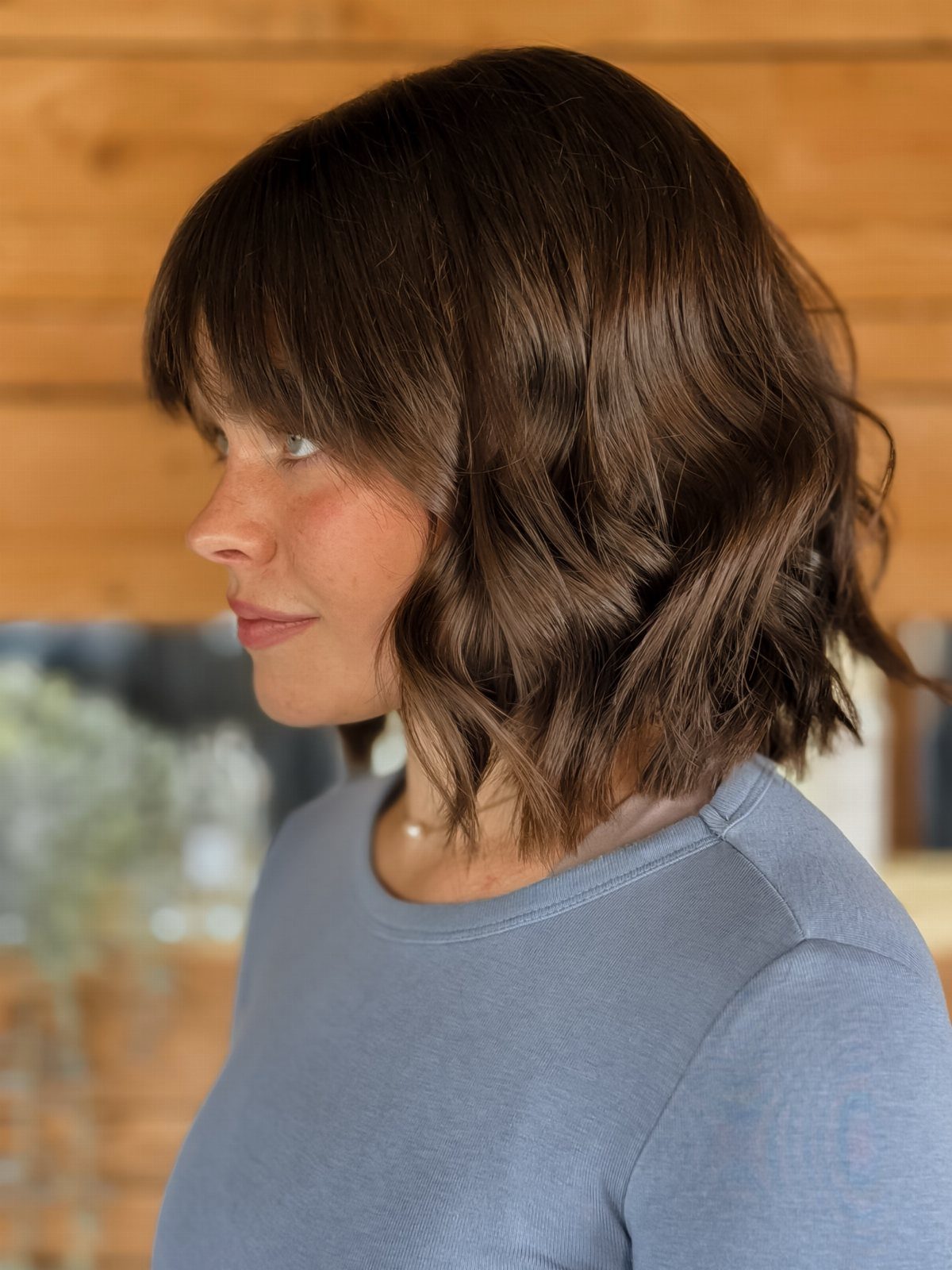
The bob falls in loose, tousled waves with no visible part or precise edges, and the bangs are long enough to graze the cheekbones instead of sitting above the eyebrows. Nothing is smoothed or set into place.
Air-dry or diffuse after scrunching in salt spray, then leave it alone. The texture is the point, so pulling it straight defeats the cut.
This suits wavy or textured hair that dries with movement on its own. Straight hair can fake it with a curling wand and fingers worked through to break up the pattern.
22. Short Asian Bob with Bangs
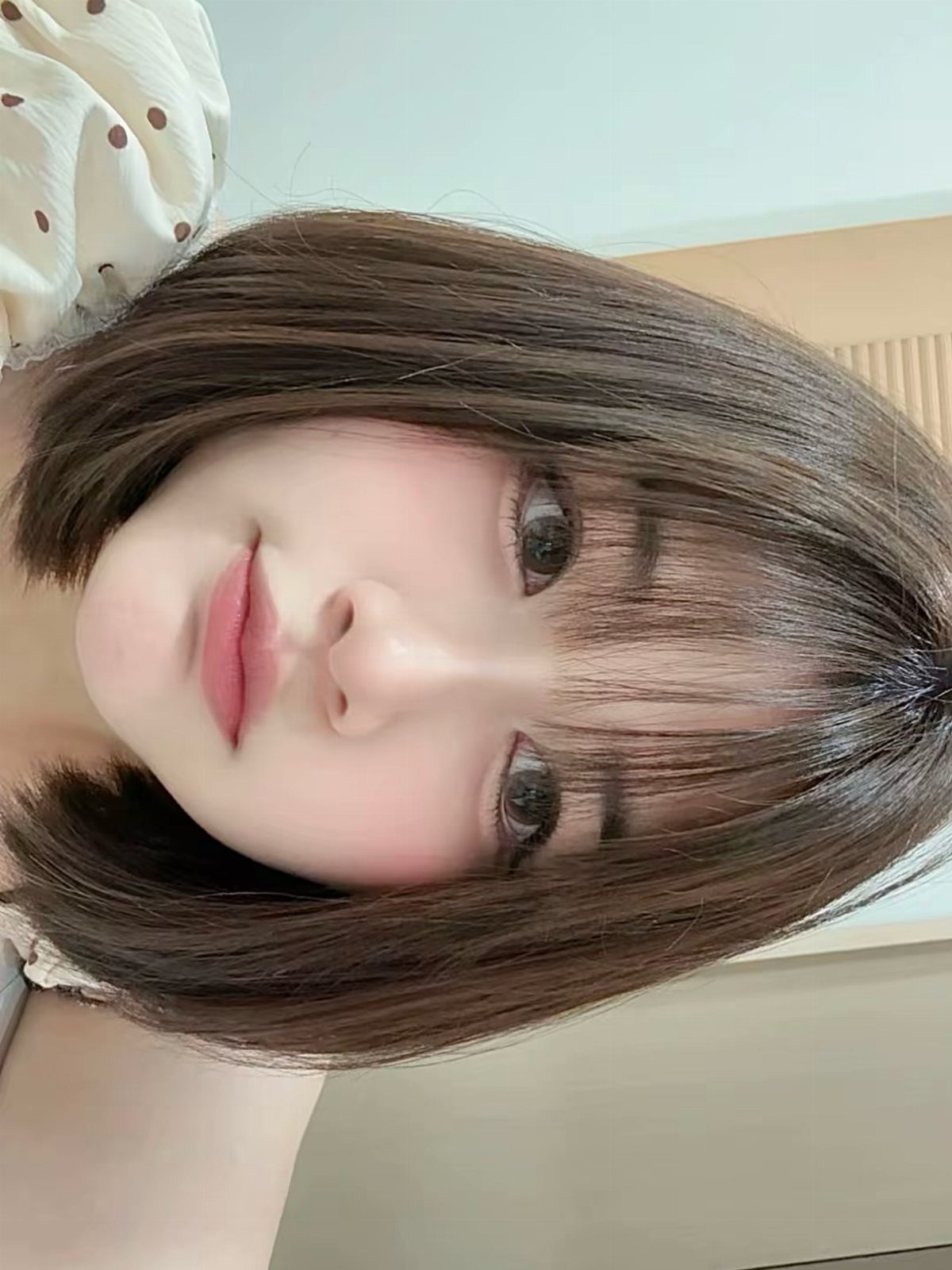
A clean, straight-edged bob sits at chin length with full bangs cut in a blunt line just above the eyebrows. The whole cut is precise, with no layers or texture to soften the shape.
Hair that falls flat on its own holds the shape best.
Blow-dry smooth with a paddle brush and finish with a flat iron to keep the edges sharp.
23. Jenna Ortega Bob
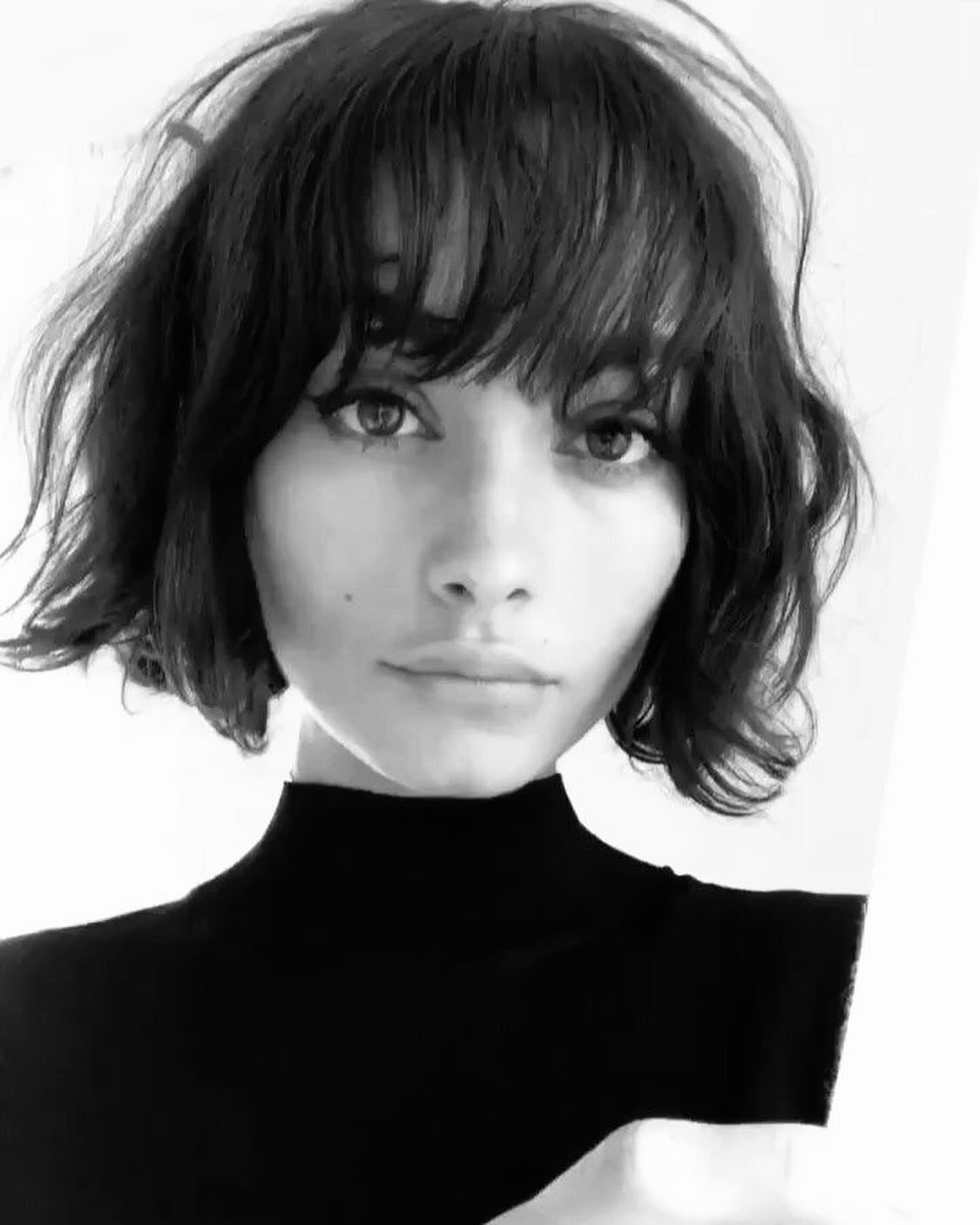
The bob sits just below the chin with volume concentrated through the crown and ends, styled to look slept-in and slightly messy. The bangs are blown straight and smooth, creating a contrast between the sleek forehead and the textured lengths.
Backcomb or tease the crown lightly after blow-drying, then work through the ends with your fingers and texturizing paste to rough them up. Keep the bangs flat with a round brush or flat iron so the difference reads clearly.
This suits thick hair that holds volume without deflating by the afternoon.
24. Sliced Bob with Baby Bangs
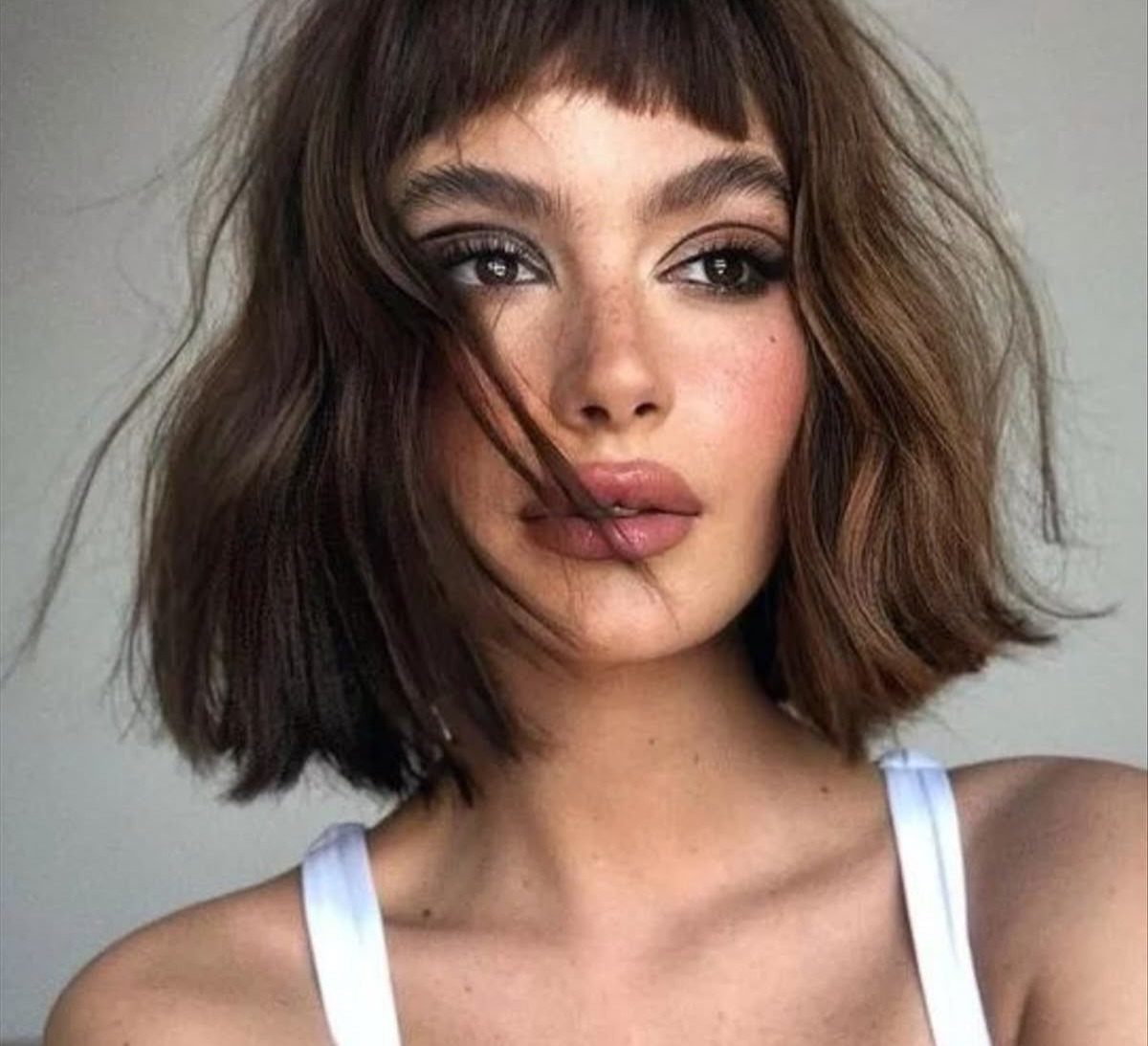
Baby bangs stop above the eyebrows, and the bob angles slightly longer toward the front.
The baby bangs commit you to regular trims or doing it yourself with small scissors. The sliced texture makes grow-out less obvious because the ends are already uneven.
Style with a flat iron pulled through at an angle to emphasize the piecey ends, and run a small amount of pomade through the bangs to keep them in place.
25. Chin-length Bob with Arched Bangs
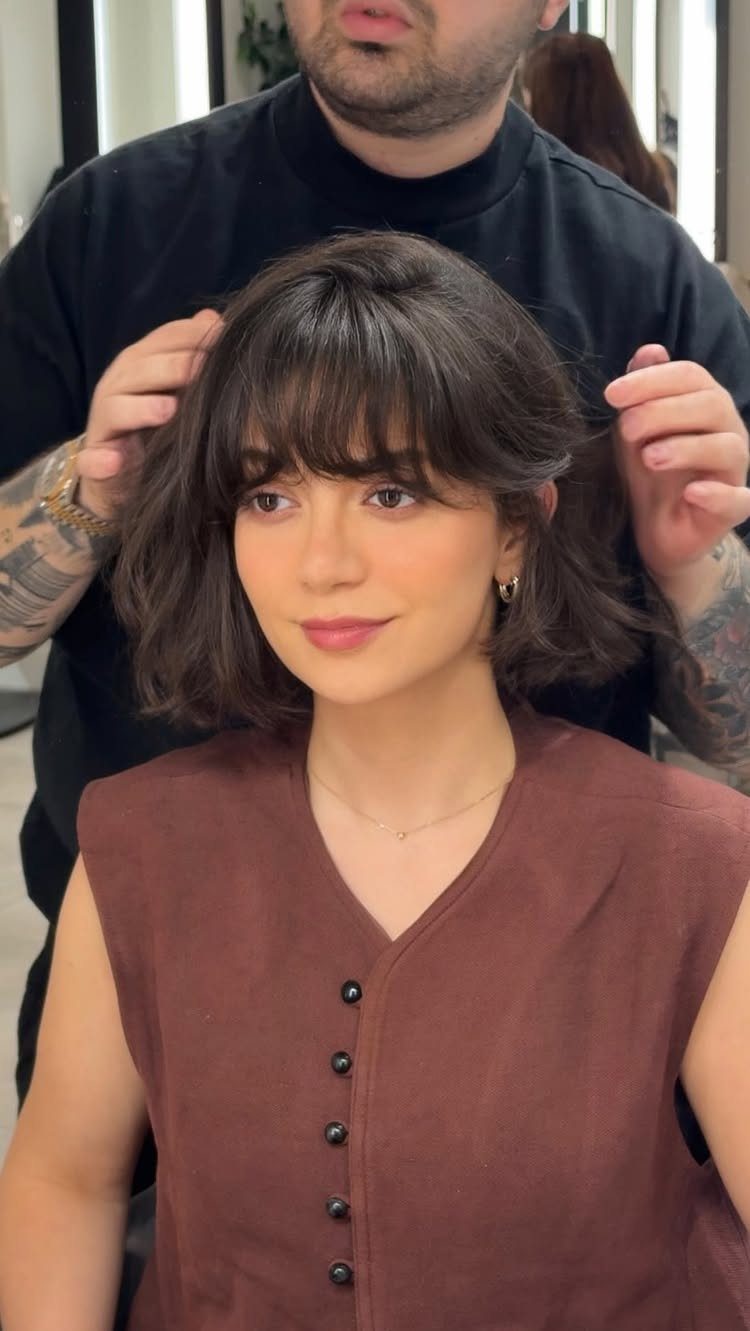
Arched bangs curve higher in the center and taper down toward the temples, following the natural shape of the eyebrows instead of sitting in a straight line.
The bob itself ends at the chin with light layers that keep the ends from looking too heavy.
The curve softens a square or rectangular face by breaking up the horizontal line across the forehead. On a round face, keep the arch subtle so it does not echo the face shape.
Trim the arch yourself by cutting the center shorter and gradually lengthening as you move toward each side.
26. Wavy Pixie Bob
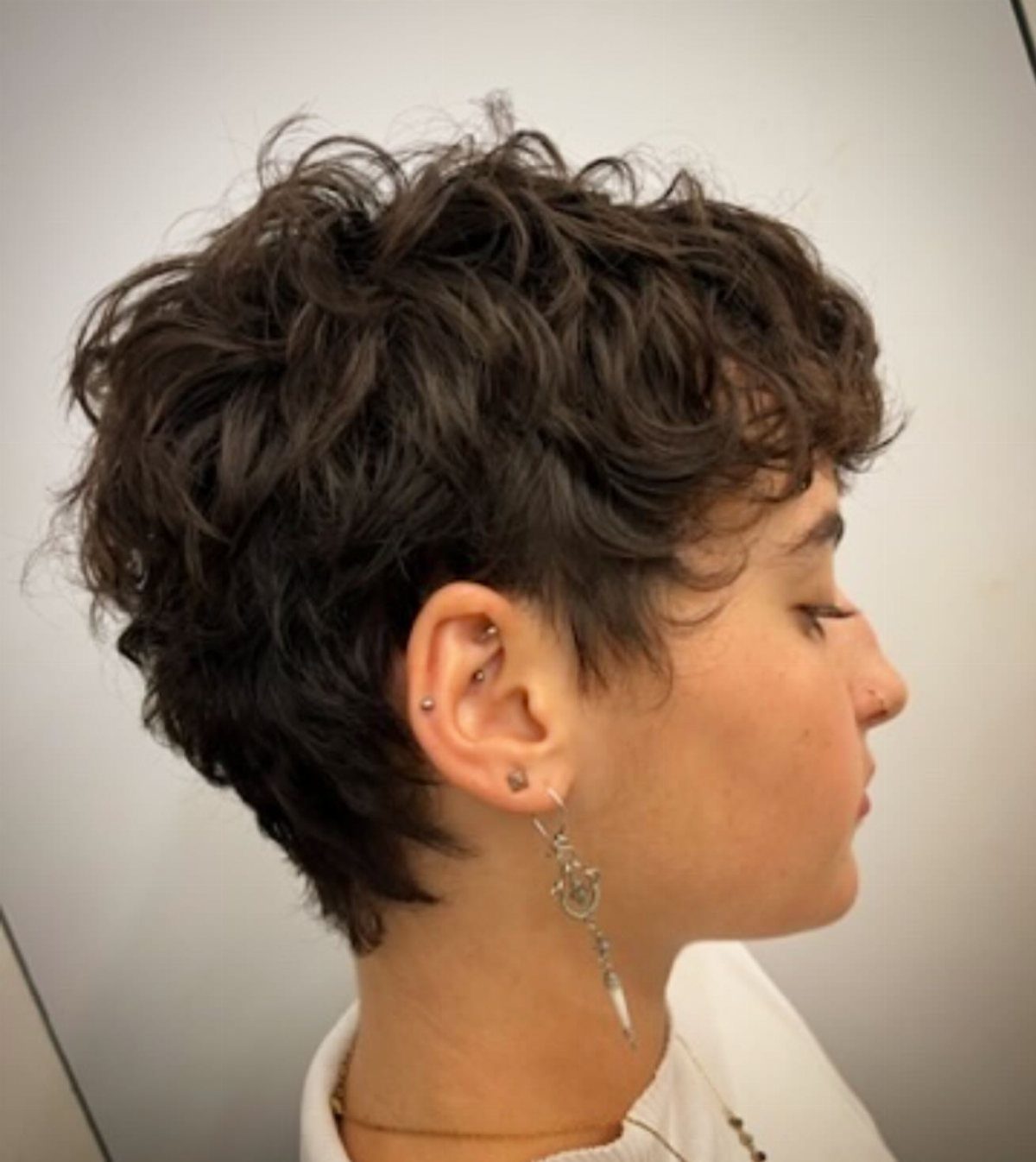
A pixie bob sits somewhere between a true pixie and a short bob, usually ending just above the ears or grazing the jawline. Waves add volume and movement that keep the short length from reading too severe.
Wispy bangs fall across the forehead in separated pieces rather than one solid line, which matches the texture of the wavy layers through the rest of the cut.
This works on hair with natural wave or bend; straight hair needs a curling iron or wand to add the texture, and the waves loosen quickly unless you set them with spray.
27. Neck-length Cut with Side Bangs
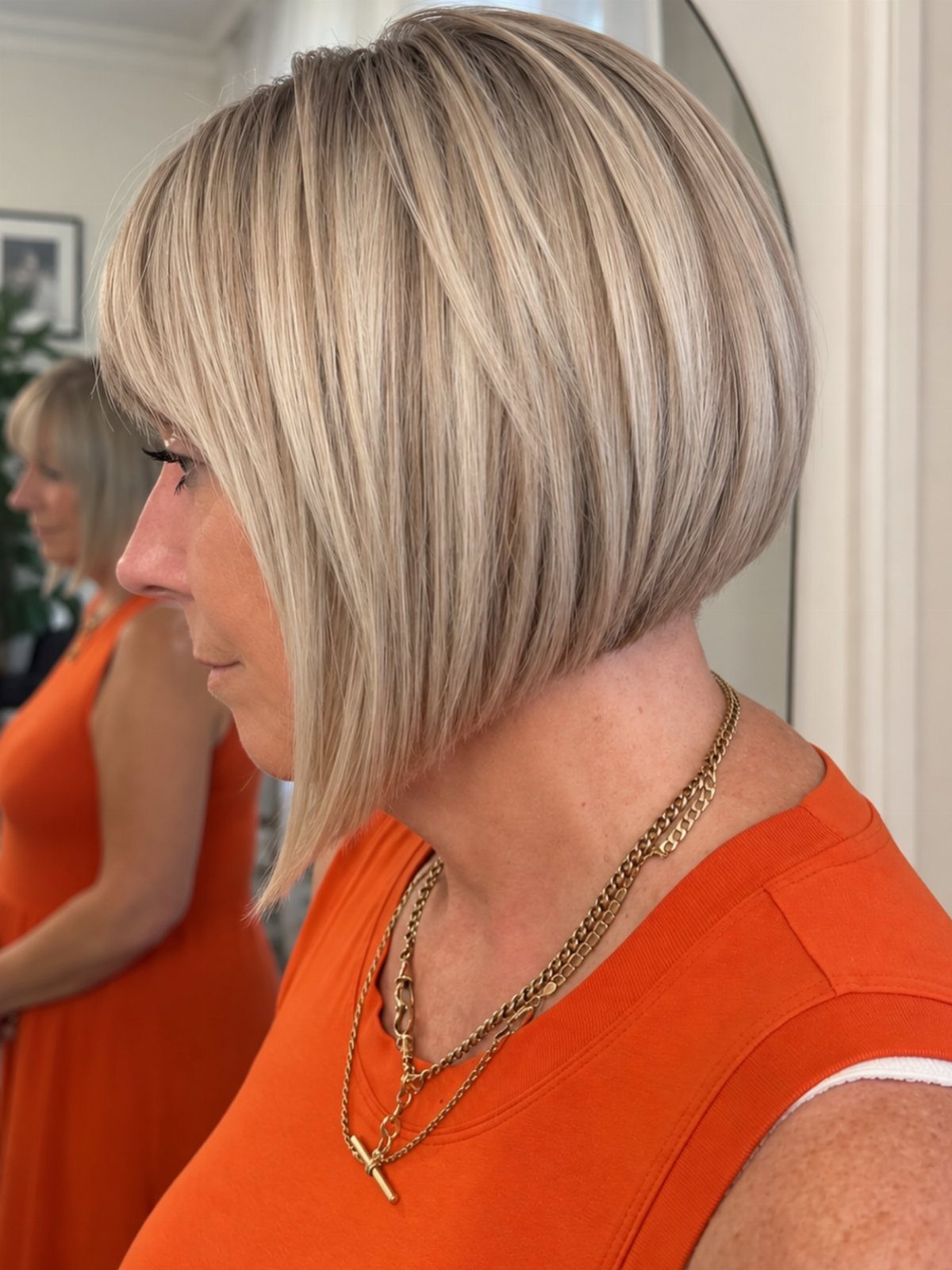
This suits someone who wants bangs without committing to a full blunt fringe that needs constant trimming.
The longer length tucks behind your ear when you need it out of your face, and the grow-out blends into the rest of the cut without an obvious line.
28. Angled Bob with Side Fringe
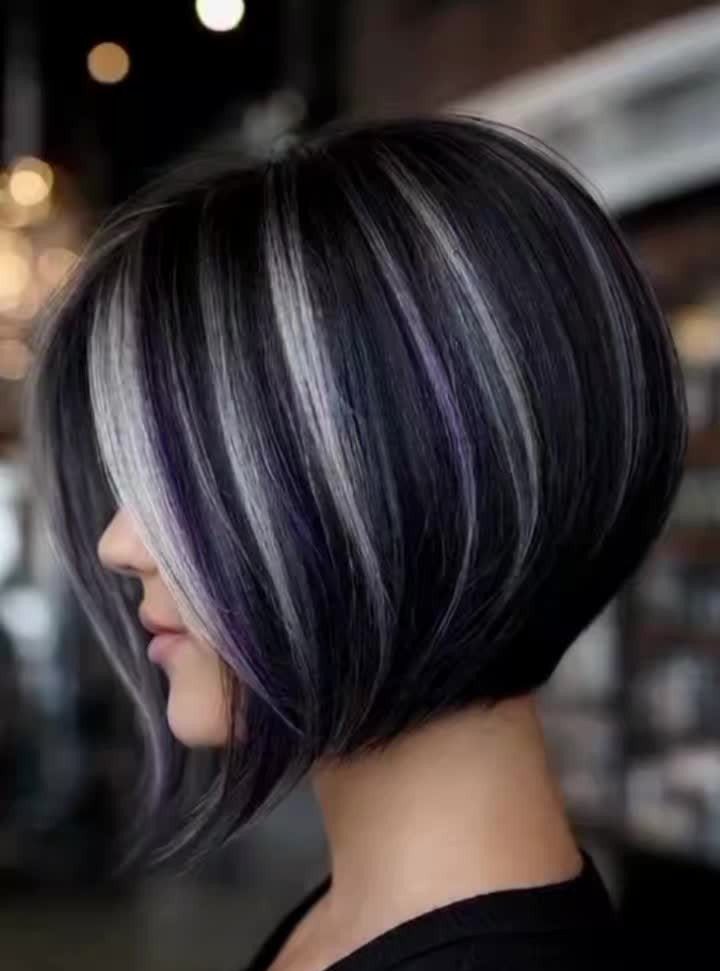
The bob angles longer toward the front, creating a sharp diagonal line from the back of the head to the chin. Side fringe sweeps long across the forehead and blends into the longer front pieces, emphasizing the asymmetric shape.
Silver or violet highlights show the angles and texture more clearly than a single solid color, but the cut works with any color as long as the line stays clean.
The fringe falls naturally to one side, so you only need to direct it as it dries.
29. Short Layered Bob with Wispy Bangs
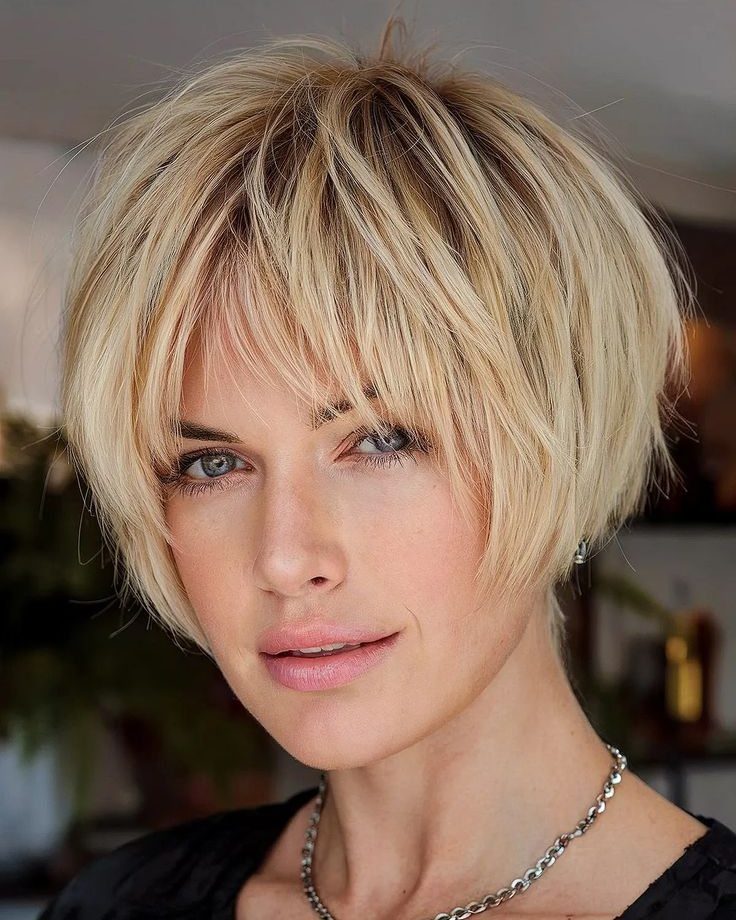
The cut suits fine or thin hair because the layers create the illusion of fullness without requiring much actual density.
Thick hair can wear this, but the stylist needs to thin the interior or the layers will stack instead of lifting.
Blow-dry with a round brush at the roots to keep the volume, and let the ends air-dry or rough them up with your fingers.
30. Dark Bob with Full Straight Bangs

A dark bob shows the shape of the cut more clearly than lighter colors because there are no highlights to break up the line.
The bangs fall just above or at the eyebrows, cut straight across and heavy enough to frame the eyes.
Wavy or textured hair needs a flat iron to keep the bangs and ends from separating into pieces, which changes the look entirely.
31. Tousled Bob with Wispy Bangs
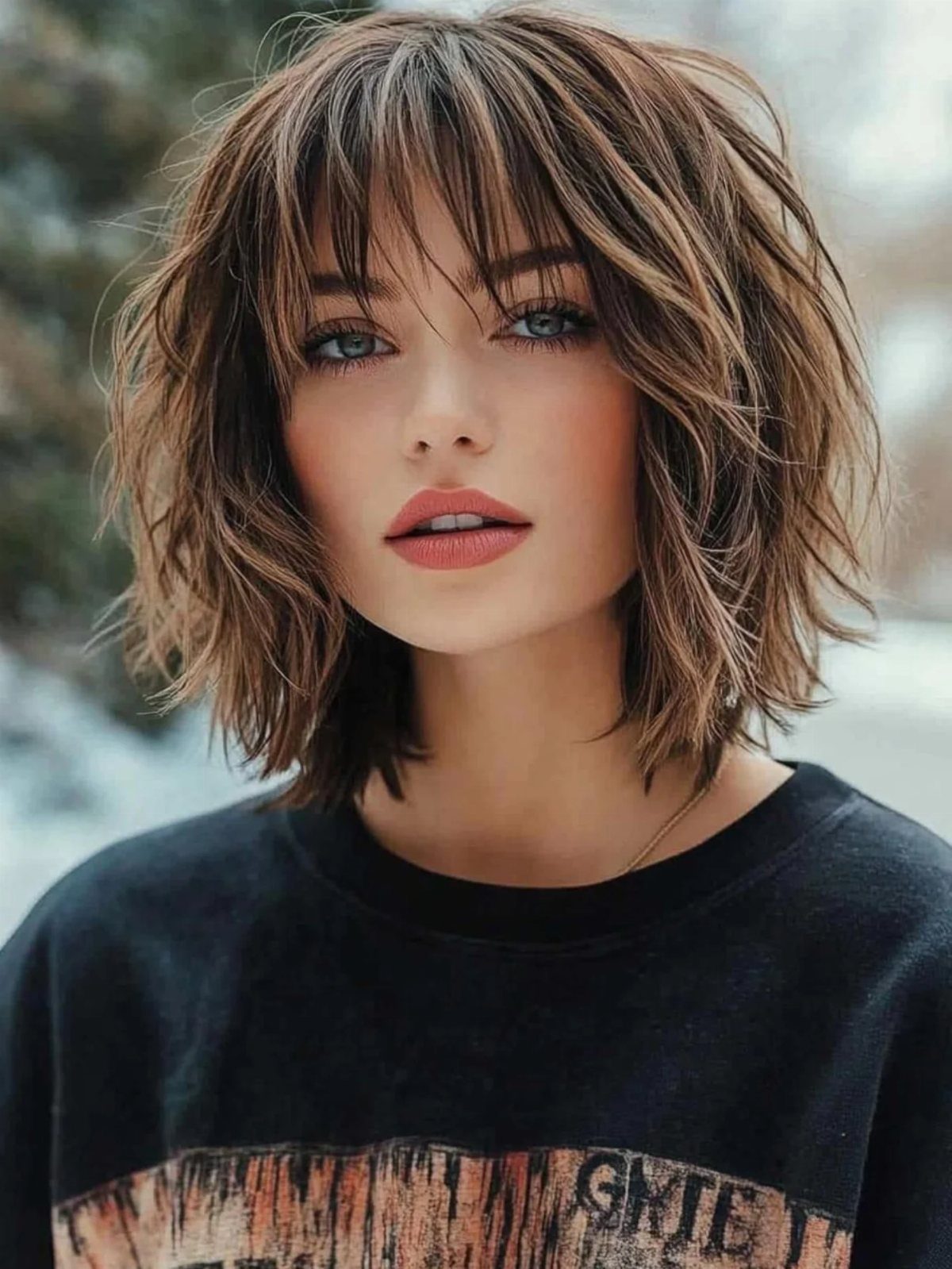
The bob ends at the chin and is styled with loose, irregular waves that look like they dried on their own. The fringe breaks into thin, separated strands instead of sitting in one heavy block.
Air-dry after scrunching in texturizing spray, or rough up damp hair with your fingers and let it finish drying without touching it again. The texture comes from how it dries, not from tools.
Wavy texture holds this shape on its own, no mousse required. Straight hair needs a curling iron and salt spray to hold the tousled shape past the first hour.
32. Shoulder-length Bob with Bangs
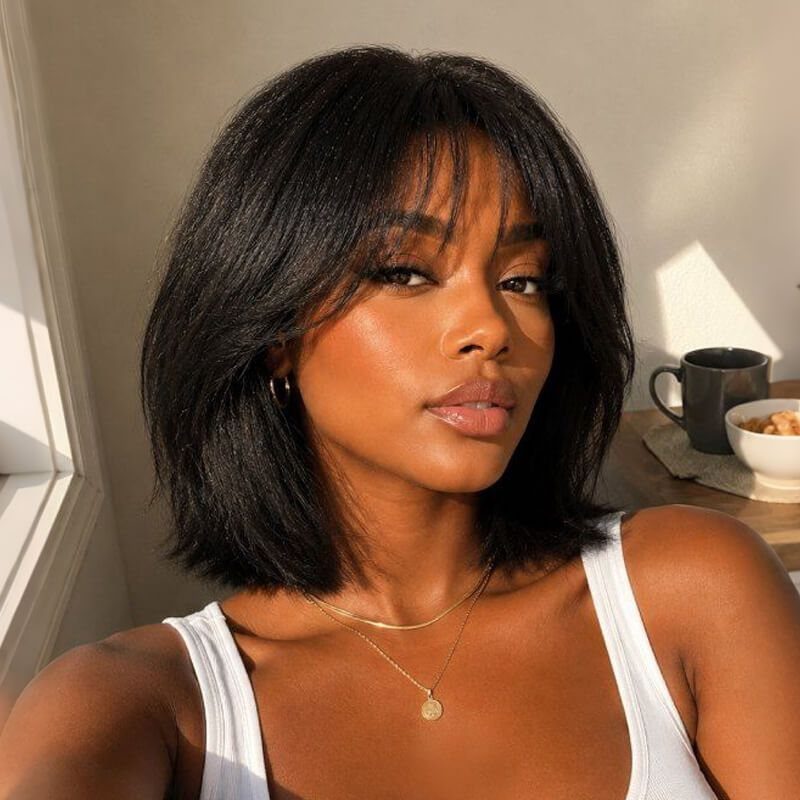
That extra inch or 2 lets you pin it back or loop it into a short ponytail on a hot day. Bangs sit across the forehead, either full and blunt or softened with texture depending on what your stylist cuts.
The longer length works on most textures and face shapes, and the grow-out stage blends in without looking neglected.
Run a flat iron through for a sleek finish, or wrap sections around a wand if you want texture. The bangs need a round brush or flat iron to keep them smooth if your hair dries with any bend.
33. Short Bob with Shaved Sides
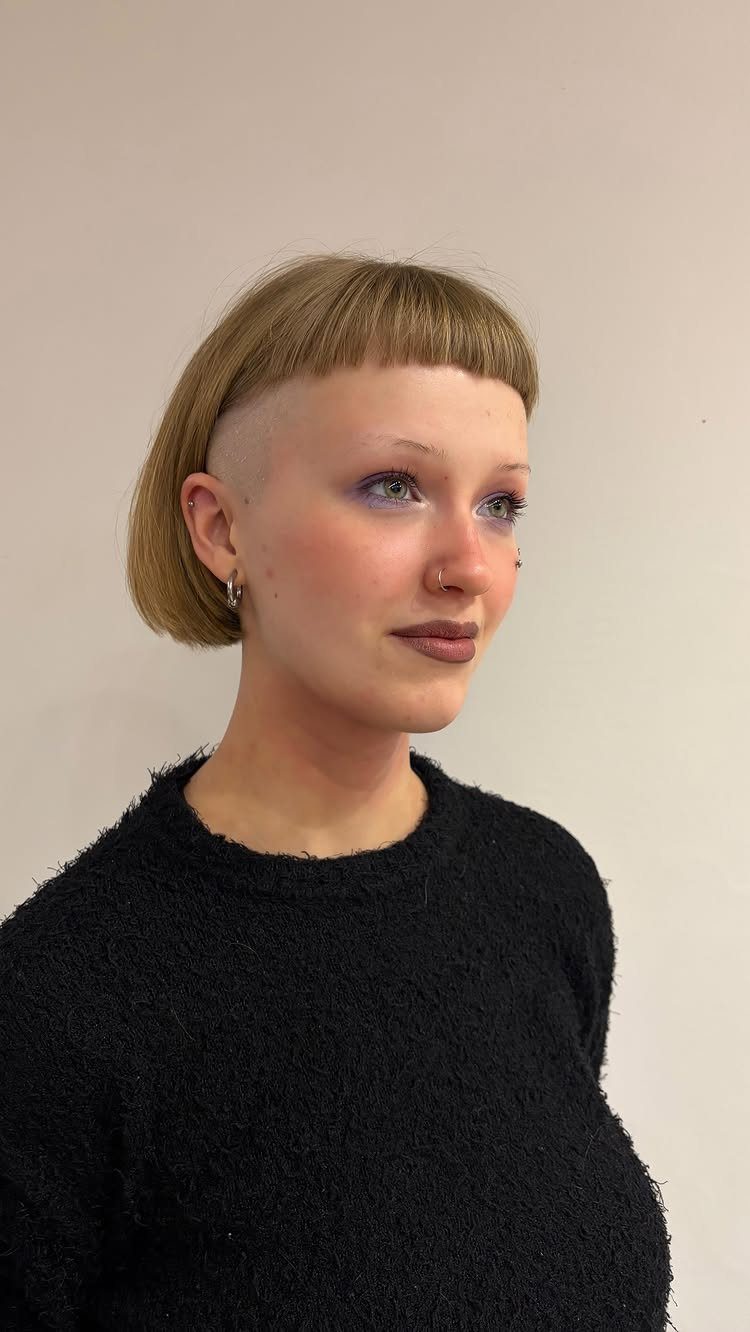
The top and front sections are cut into a short bob with blunt bangs just above the eyebrows, while the sides are buzzed or shaved close to the scalp.
The sharp difference in length signals a deliberate choice, not a cut halfway grown out.
Maintaining this requires frequent touch-ups on the shaved sections, either at a salon or with clippers at home.
The bob portion can grow slightly longer without losing the shape, but the sides need to stay short for the contrast to hold.
Blow the bob smooth and flat-iron the bangs to emphasize the clean lines.
Choosing a Cut for Hair Type
A wispy fringe spreads the density across the forehead without creating a heavy line that droops by afternoon.
Curly hair shrinks as it dries, so a stylist who cuts it wet may take off more length than you planned for.
Ask to have it cut dry or shaped with the curl pattern in mind so the fringe lands where you actually want it after it springs up.
Blow-drying and Styling Bangs
Bangs can be combed into place while wet and clipped with dent-free clips while they air-dry, which sets them without heat.
If you blow-dry, point the dryer from the left, then the right, then the center to keep them from falling to one side.
A round brush pulled over or under the bangs adds a slight bend. For longer bangs that need bounce, roll them back from your face and hit them with cool air to set the shape.
A diffuser speeds drying without blowing the bangs around, which matters if you are trying to keep a wave or curl intact from root to tip.
Frequently Asked Questions
Do bobs look better with bangs?
A bob with bangs works when the cut matches your hair texture and density.
Fine hair needs blunt ends and wispy bangs to avoid looking sparse, thick hair needs internal layering and textured bangs to prevent bulk, and curly hair should be cut dry so the stylist can see where the curl springs up.
The pairing suits most face shapes when tailored to your features.
What is the most flattering bob length for an older woman?
A chin-length bob or longer bob gives flexibility for styling and frames the face without looking severe. Side-swept or curtain bangs soften the forehead and grow out more gracefully than blunt bangs, which keeps the shape looking intentional between trims.
It sits just long enough to tuck behind the ear or gather at the nape with a small elastic.
How to cut a bob with bangs?
Leave the cut to a stylist, but bring a clear reference photo so you are both working toward the same shape.
The best pairing depends on your face shape, hair texture, and the look you want: a French bob suits shorter bangs, an angled bob works with side fringe, and a blunt bob needs either blunt or wispy bangs depending on your density.
Curly hair should be cut dry so the stylist can see how much the curl pulls the length up.