Layered cuts on short hair range from choppy pixies that need seconds of scrunching to polished bobs that rely on a round brush and regular trims.
The cut you pick depends on how much time you spend styling each morning and whether your hair is straight, wavy or curly, because texture changes how layers fall and how much product they need.
1. Long Pixie with Choppy Bangs
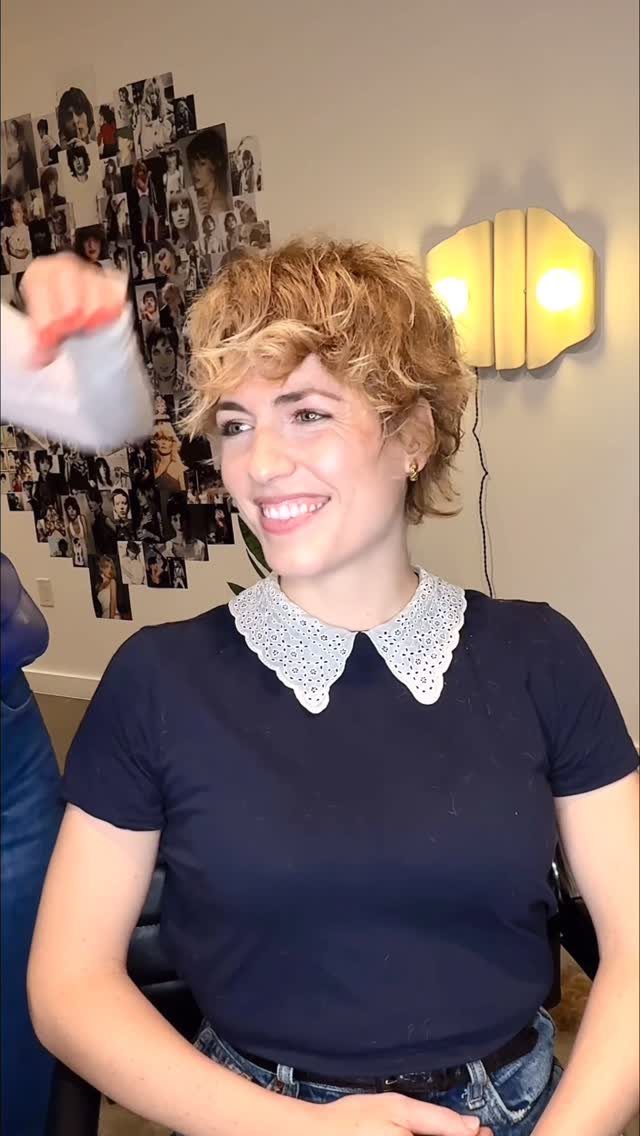
A long pixie with piecey layers and forehead-skimming bangs adds volume where the hair is longer on top and keeps the sides tight. The choppy texture works well if you want movement without daily heat styling.
Ask for longer crown layers with point-cut or razored ends, and bangs cut into sections rather than straight across. The difference in length from crown to nape creates lift, and the uneven bangs break up a strong forehead line.
This cut grows out with shape before the back needs a trim. Curly or wavy hair takes the texture naturally; straight hair may need a light texturizing spray.
2. Textured Pixie Cut
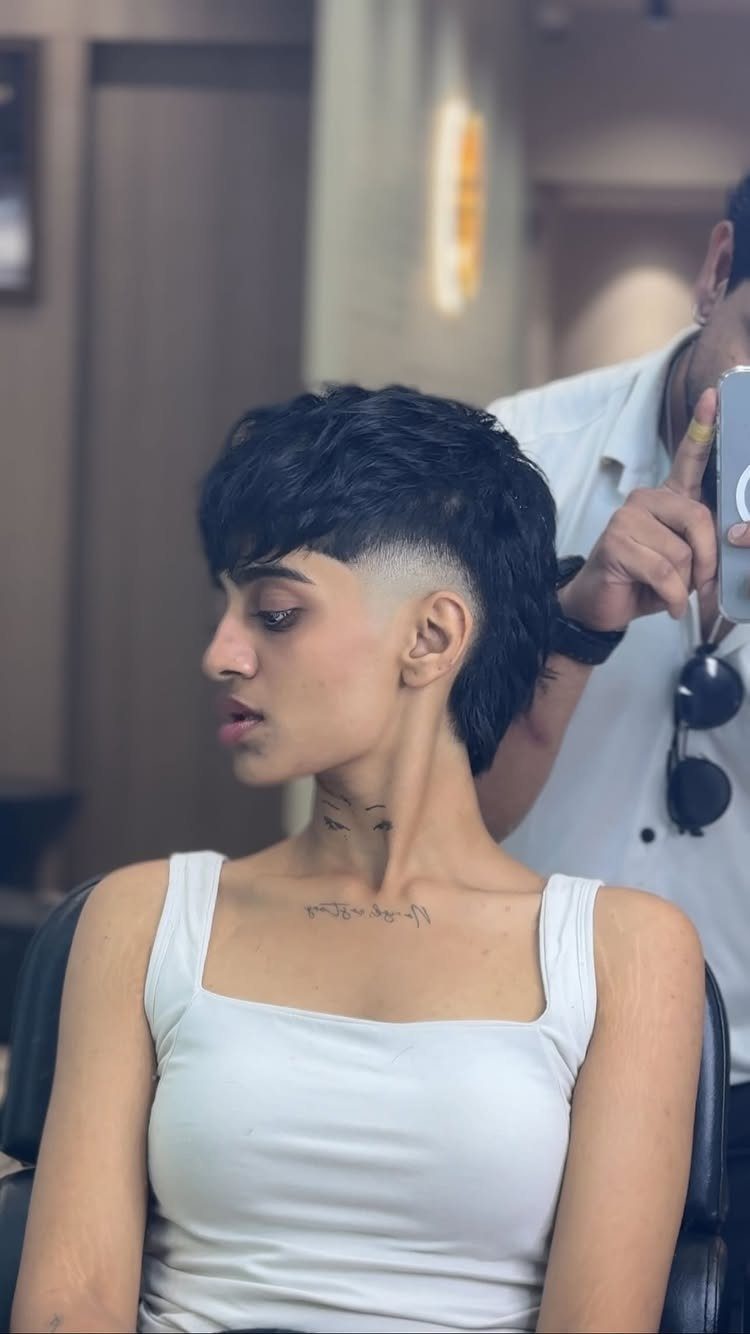
A cropped pixie with longer crown layers, airy side-swept bangs, and V-shaped sideburns gives height and frame in one cut. The length on top can be pushed forward or swept to the side depending on the day.
The V-shaped sideburns soften the jawline and draw the eye down from the temple. This works best on fine to medium hair where the crown layers hold their shape without much product.
3. Textured Pixie Bob
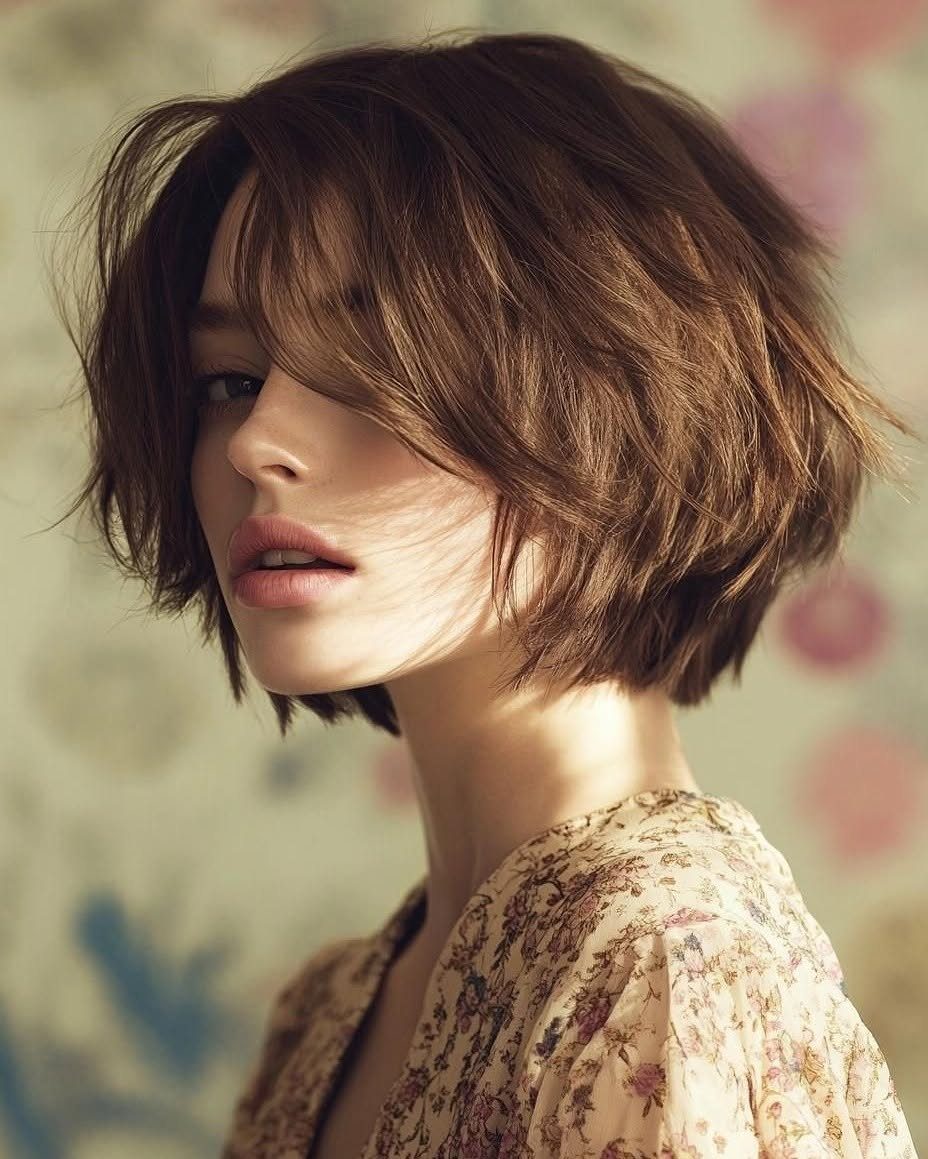
A bixie with texture that sits between ear and jaw length can slim a wide face by keeping volume at the crown and tapering toward the cheekbones. The side-swept fringe adds asymmetry, which breaks up width.
This cut gives you more styling range than a standard pixie but still dries fast. Tousle while damp and let it air-dry, or blow-dry with your fingers for more lift at the root.
4. Layered Sleek Bob
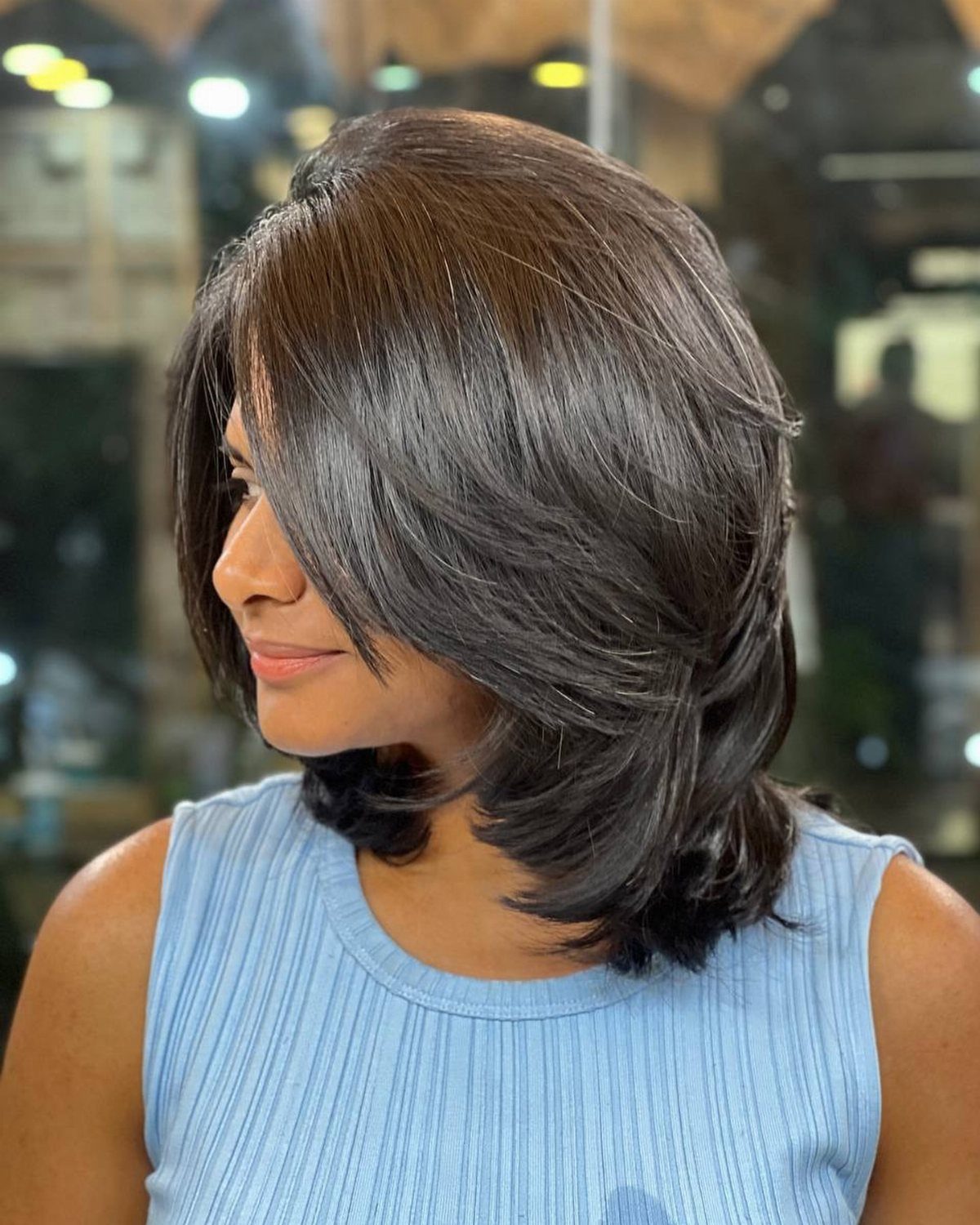
A polished bob with very light, seamlessly blended layers keeps a clean silhouette without the blunt weight of a one-length cut. The layers are subtle enough that you see the shape, not the cut lines.
This works well for straight or slightly wavy hair that you want to wear smooth.
The side-swept styling adds softness without fuss. Plan on regular trims to keep the line sharp.
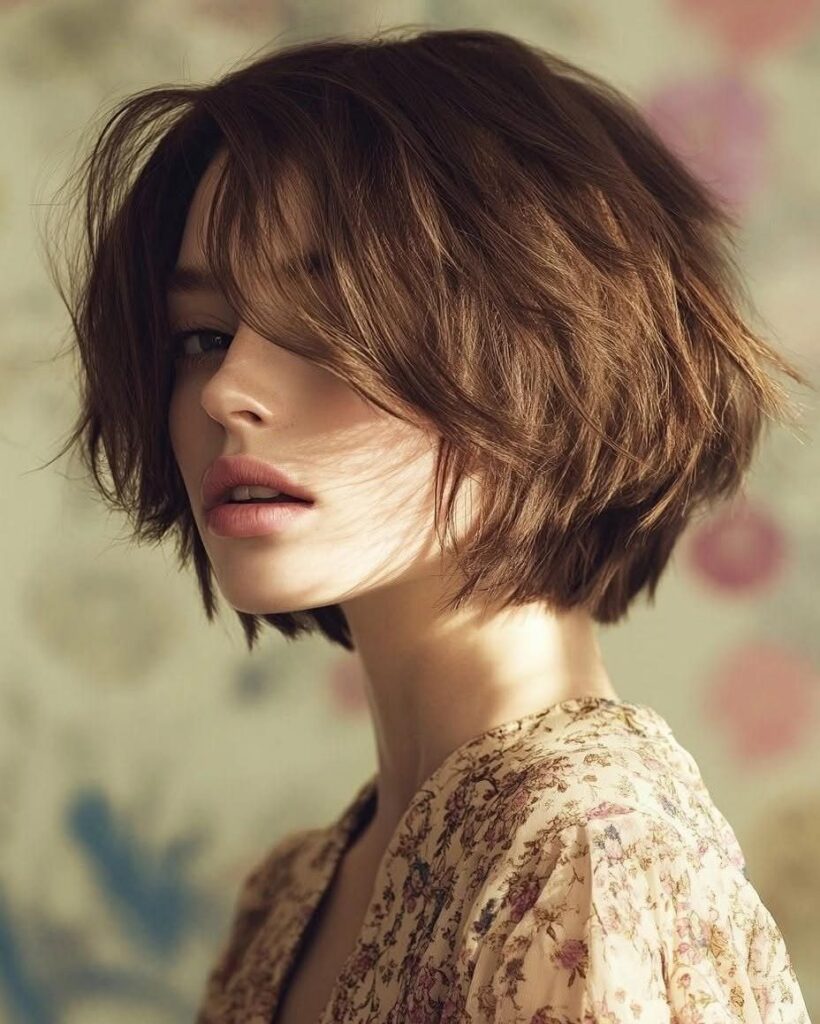
5. Wispy Bob with Bangs
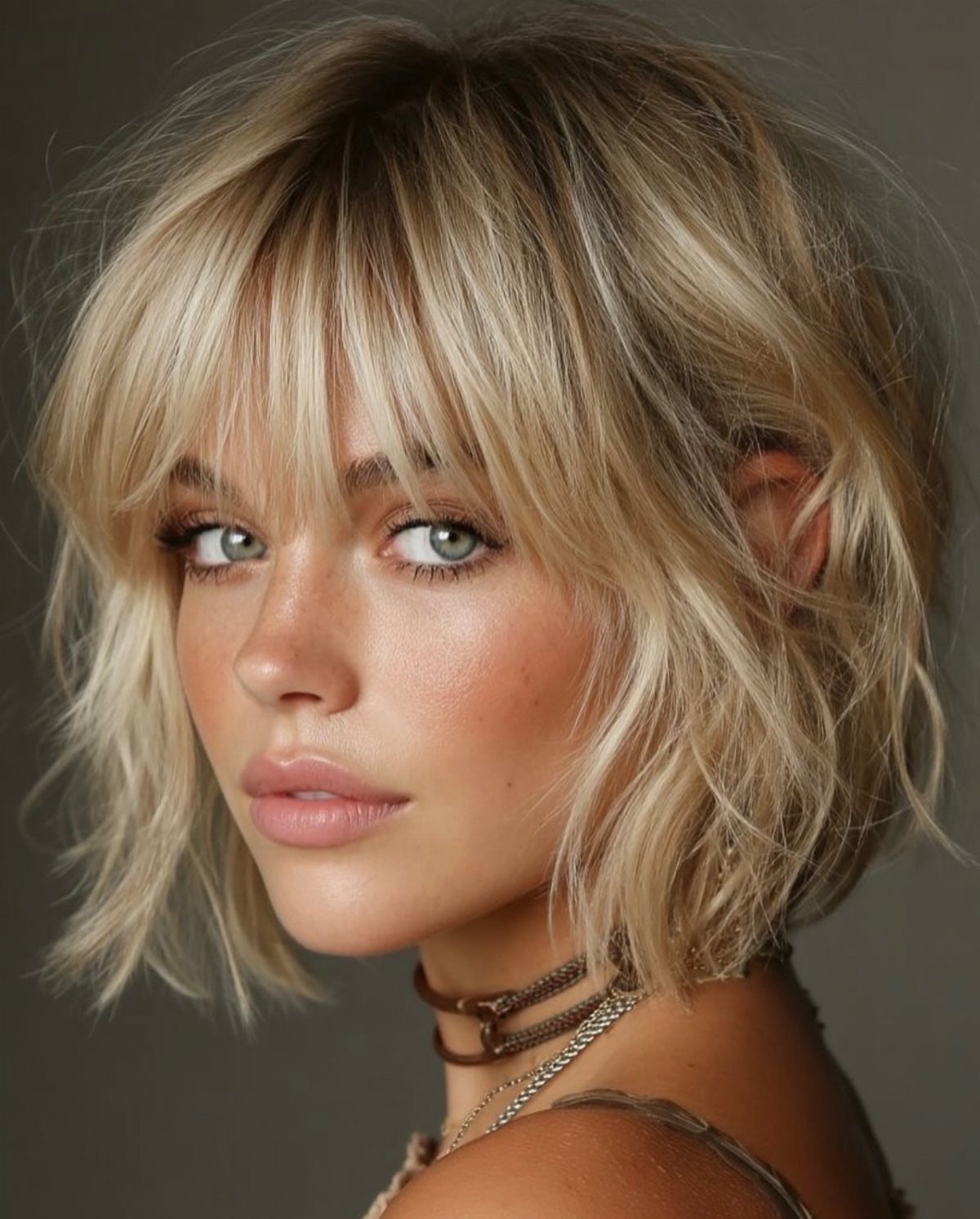
A bob with wispy layers, bangs, and sun-kissed balayage gives dimension in both cut and color. The darker roots let you stretch color appointments, and the lighter ends make the layers more visible.
Wispy means the ends are thinned or point-cut so they taper rather than end blunt.
This softens the overall shape and works especially well on fine hair where too much weight can pull flat. Styling takes a round brush and not much time, or skip it entirely if you prefer the lived-in look.
6. Curly French Bob
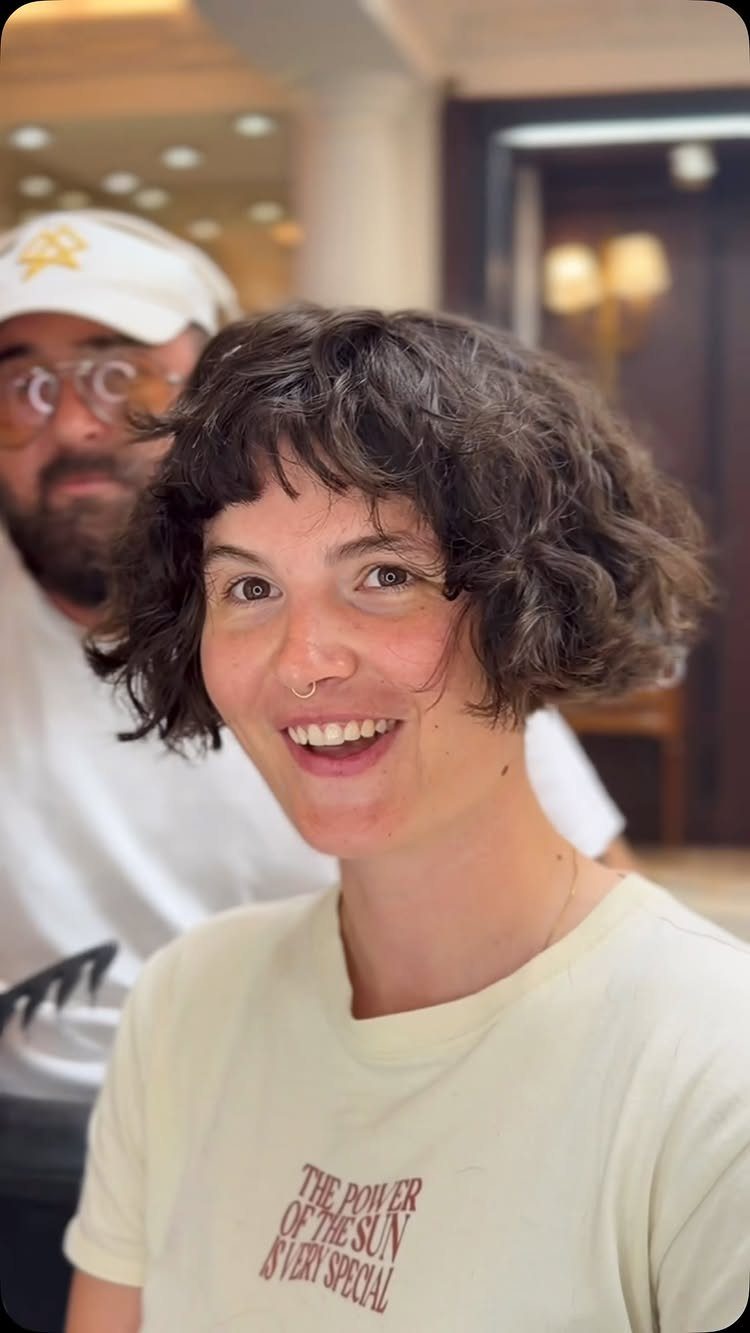
Light layers keep the weight from pulling the curl pattern down while the jaw length frames the face. The layers are cut to follow the natural curl rather than fight it.
Ask your stylist to cut dry so they can see where each curl falls.
Wet cuts on curly hair often end up shorter than expected once the hair dries and springs back. This length works well if you want to tuck hair behind your ears or let it sit forward on your cheeks.
7. Beachy Layered Lob
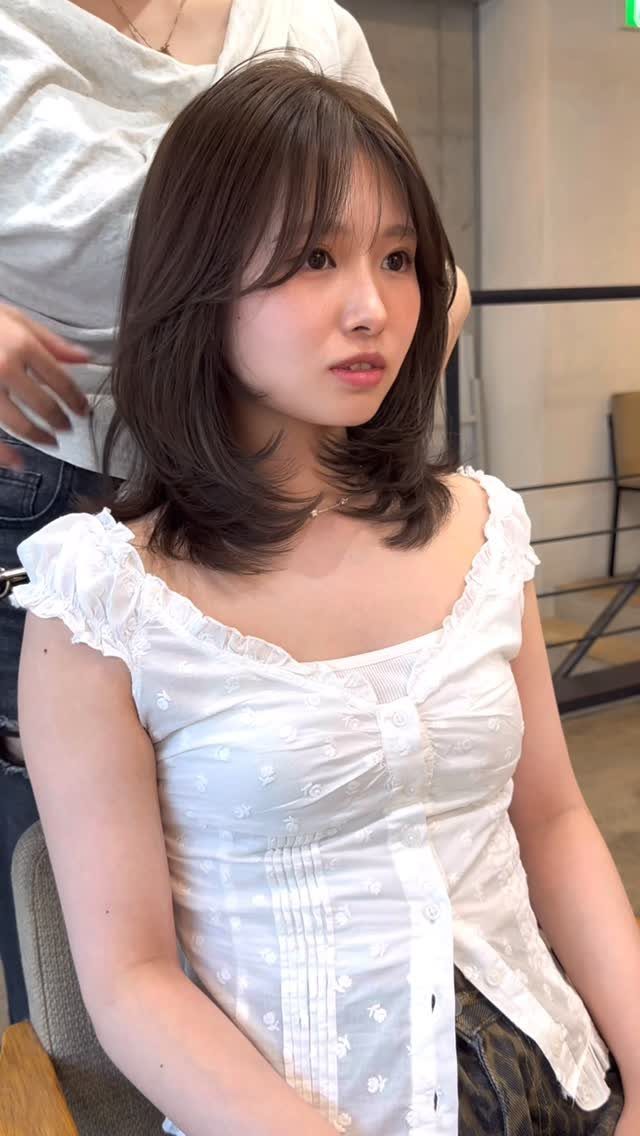
Face-framing layers start around the cheekbones and get longer toward the back, which adds softness without losing length. The textured ends keep the cut from looking too polished.
This works if you want the option to wear your hair down or pull it into a low ponytail. The layers fall naturally with a bit of wave, or you can blow-dry straight and still see the shape.
Grows out well because the layers blend rather than stack. Fine hair gets movement, and thick hair sheds some weight at the ends.
8. Short Curly Shag
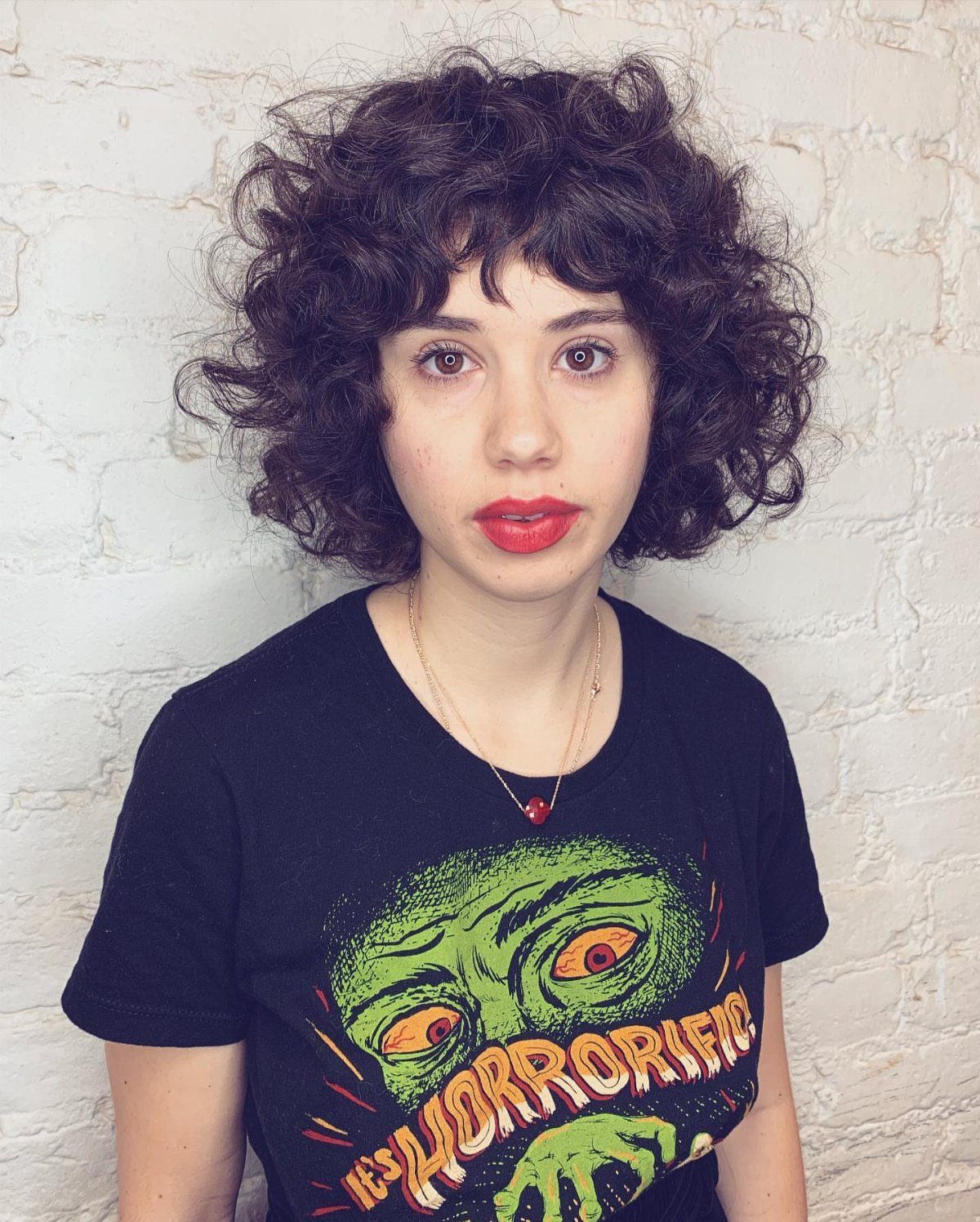
Choppy layers cut into curly hair give the shag its signature volume and messy texture. The fringe sits full across the forehead, and the face-framing pieces curve in toward the cheeks.
The layers lighten the overall weight, which lets curls spring up instead of pulling down.
Work curl cream through damp hair, scrunch and leave it alone. The choppy texture hides regrowth, so you can go longer between trims.
9. Rooted Bixie Cut
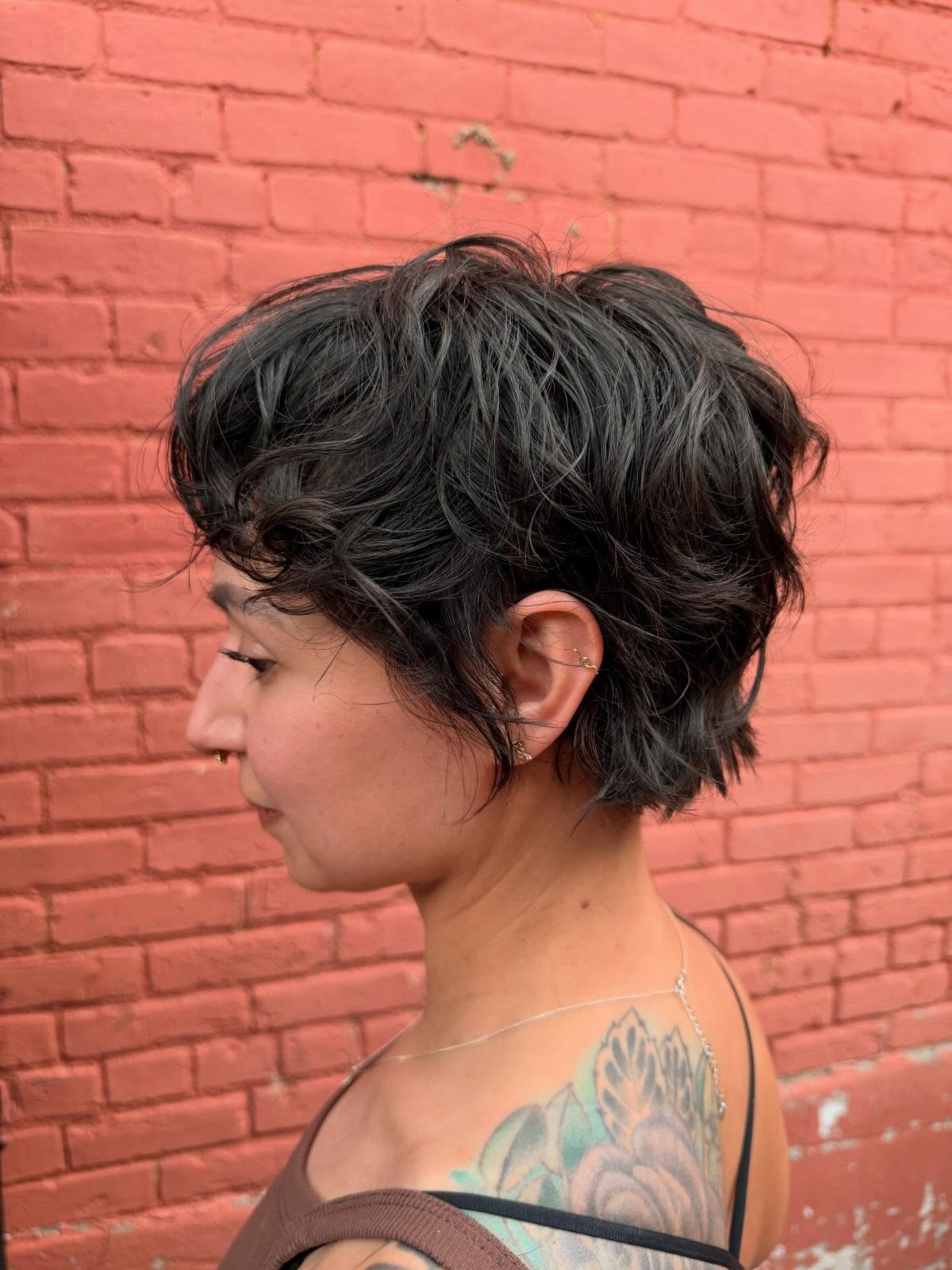
Longer textured layers on top sit between pixie and bob length, giving you room to style forward or sweep to the side. The shadow roots add depth and stretch color appointments by several weeks.
The back tapers shorter, which keeps the cut from looking too heavy.
Fine to medium hair holds the shape best. Thick hair may need thinning at the ends to keep the layers from stacking.
10. Feathered Bob
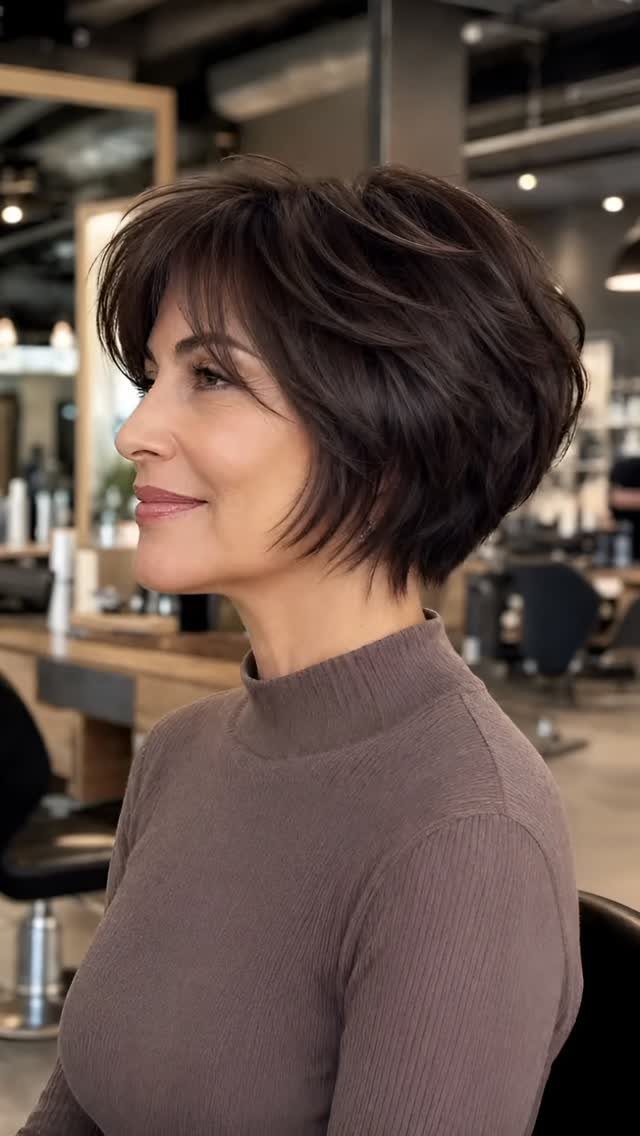
Soft layers cut at an angle create the feathered texture, which flips slightly at the ends rather than falling flat. The side-swept bangs blend into the rest of the cut without a hard line.
Ask for layers cut with a razor or point-cutting technique, which removes weight and adds movement. Straight or slightly wavy hair takes this cut best because the feathering shows more clearly.
A round brush and some heat will lift at the root and tuck the ends under, or skip it and let texture do the work.
11. Bob with Tousled Surface Layers
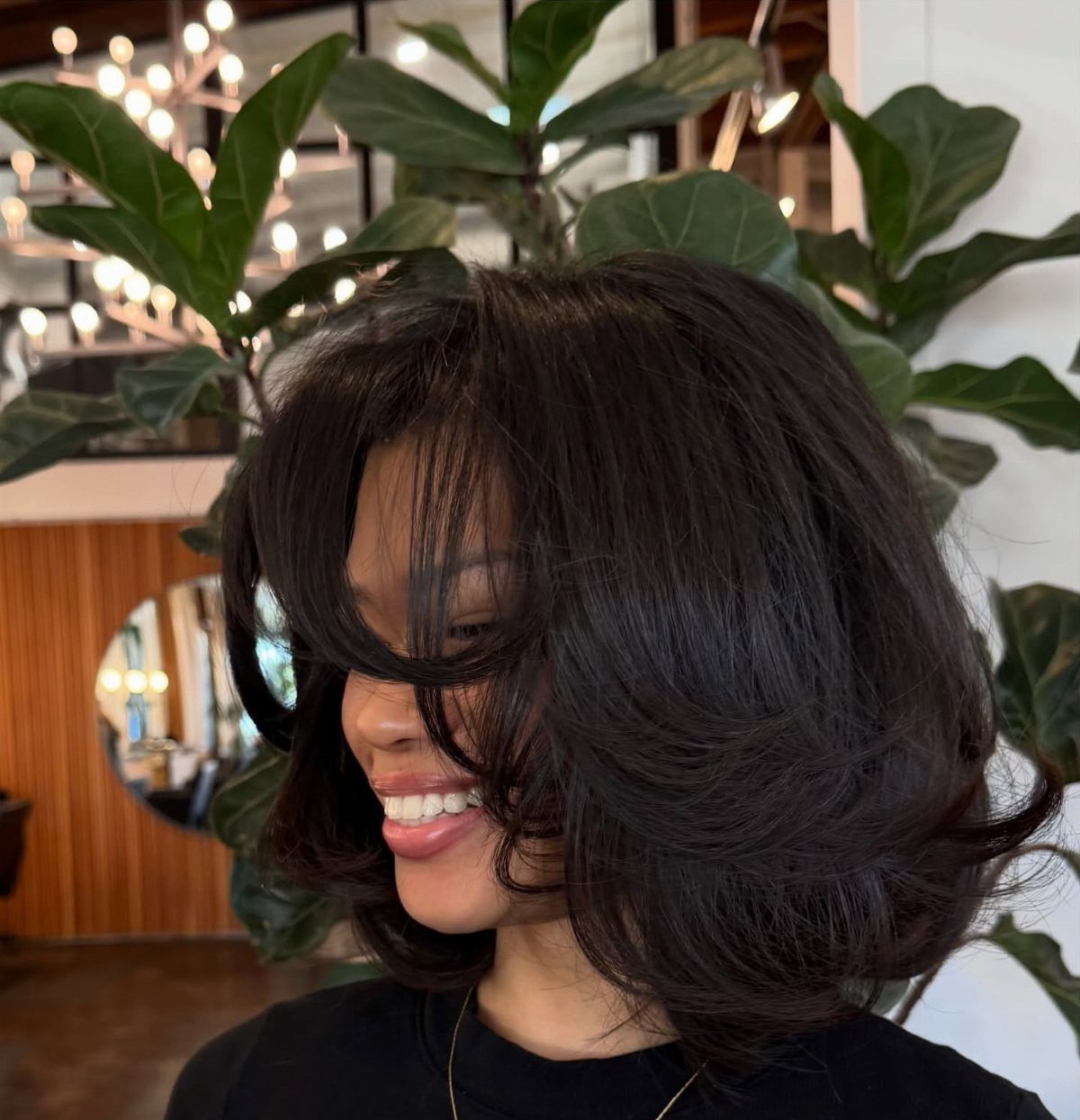
The base is cut blunt, and shorter layers are added only at the surface to create volume without losing the solid shape underneath. This gives lift at the crown while keeping the ends full.
The contrast between the blunt perimeter and the tousled top works well for thick hair that can hold both textures. Fine hair may lose the blunt line if the surface layers are cut too short.
Blow-dry upside down to build volume, then smooth the surface layers with your fingers. The longer fringe can be swept to the side or pinned back.
12. Stacked Bob with Lifted Crown
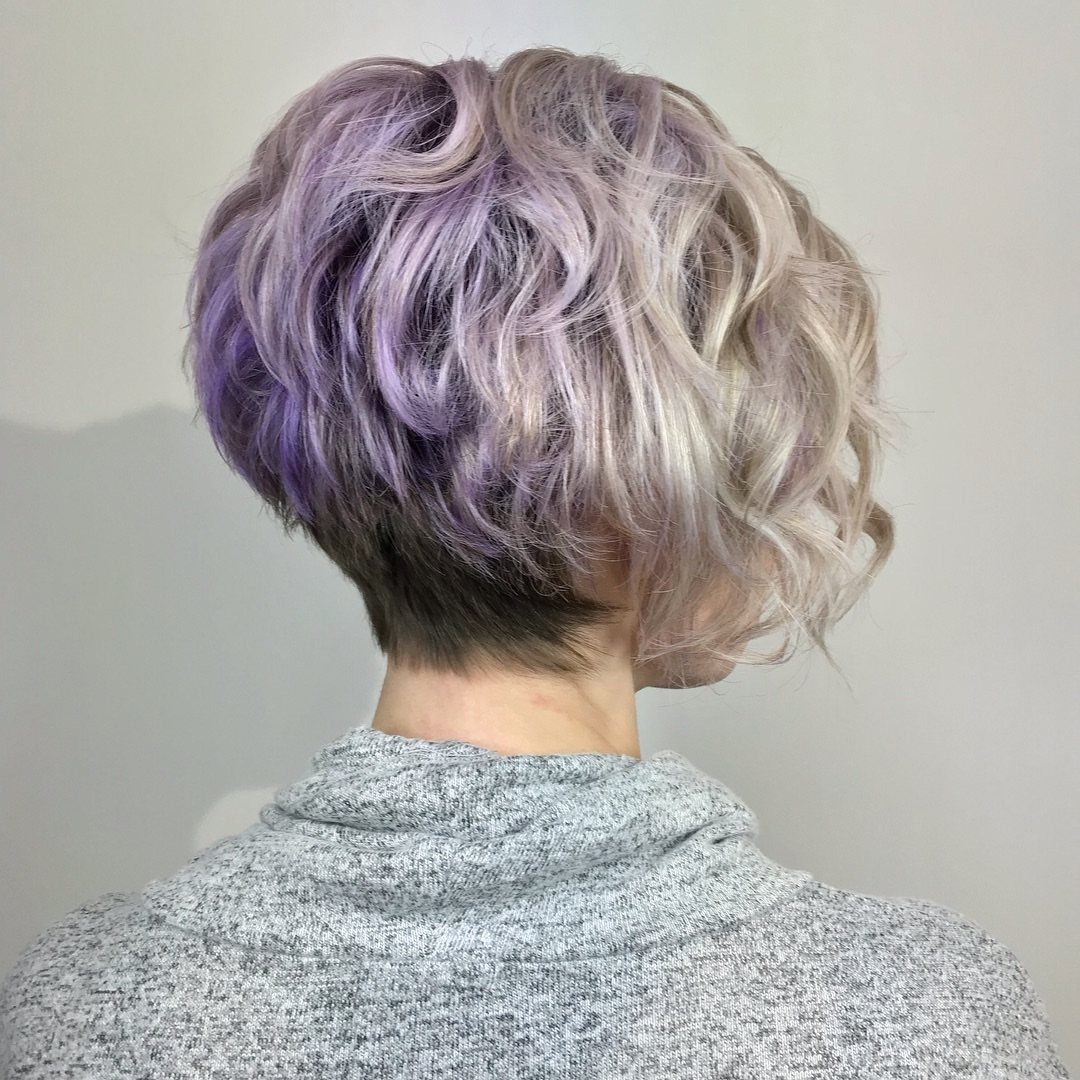
The back is graduated in short, stacked layers that build height at the crown, while the front pieces stay longer and angle down toward the jawline.
This creates volume where the hair is shortest and length where it frames the face.
The stacked layers need regular trims to hold their shape. This cut works if you want height without teasing or backcombing.
The longer front pieces can be curled or worn straight. Thick hair holds the stack well, and fine hair gets instant volume from the layered back.
13. Choppy Platinum Pixie
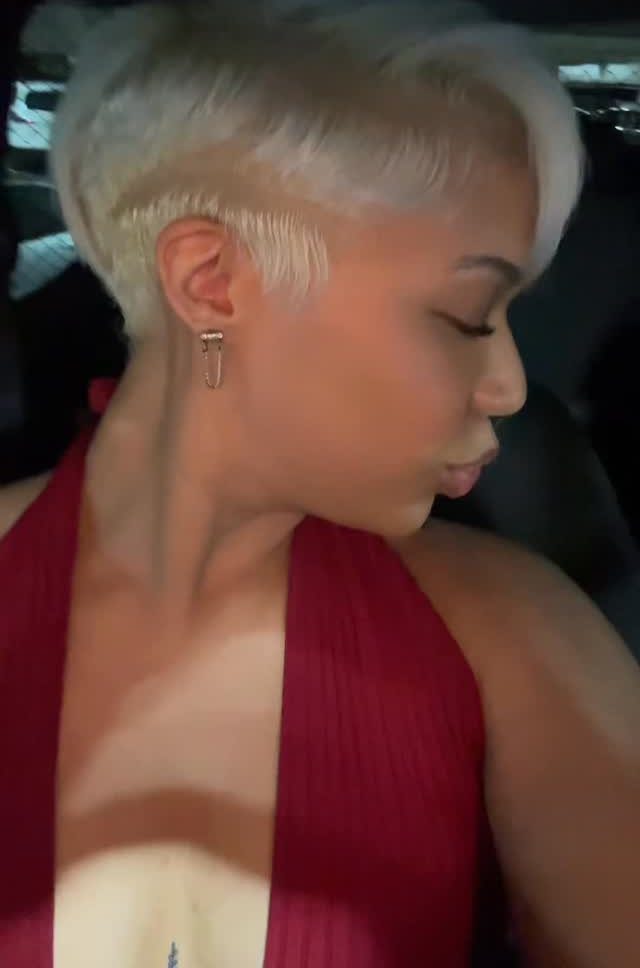
Platinum color on a layered pixie stands out more than the same cut in a natural shade because the light reflects off every angle the layers create.
The choppy texture on top contrasts with the close sides, giving you height without length.
Ask for disconnected layers, meaning the top and sides are cut separately rather than blended smoothly.
This cut shows every detail, so it works best if you want the color and the layers to be the first thing someone sees.
14. Textured Bob with Highlights
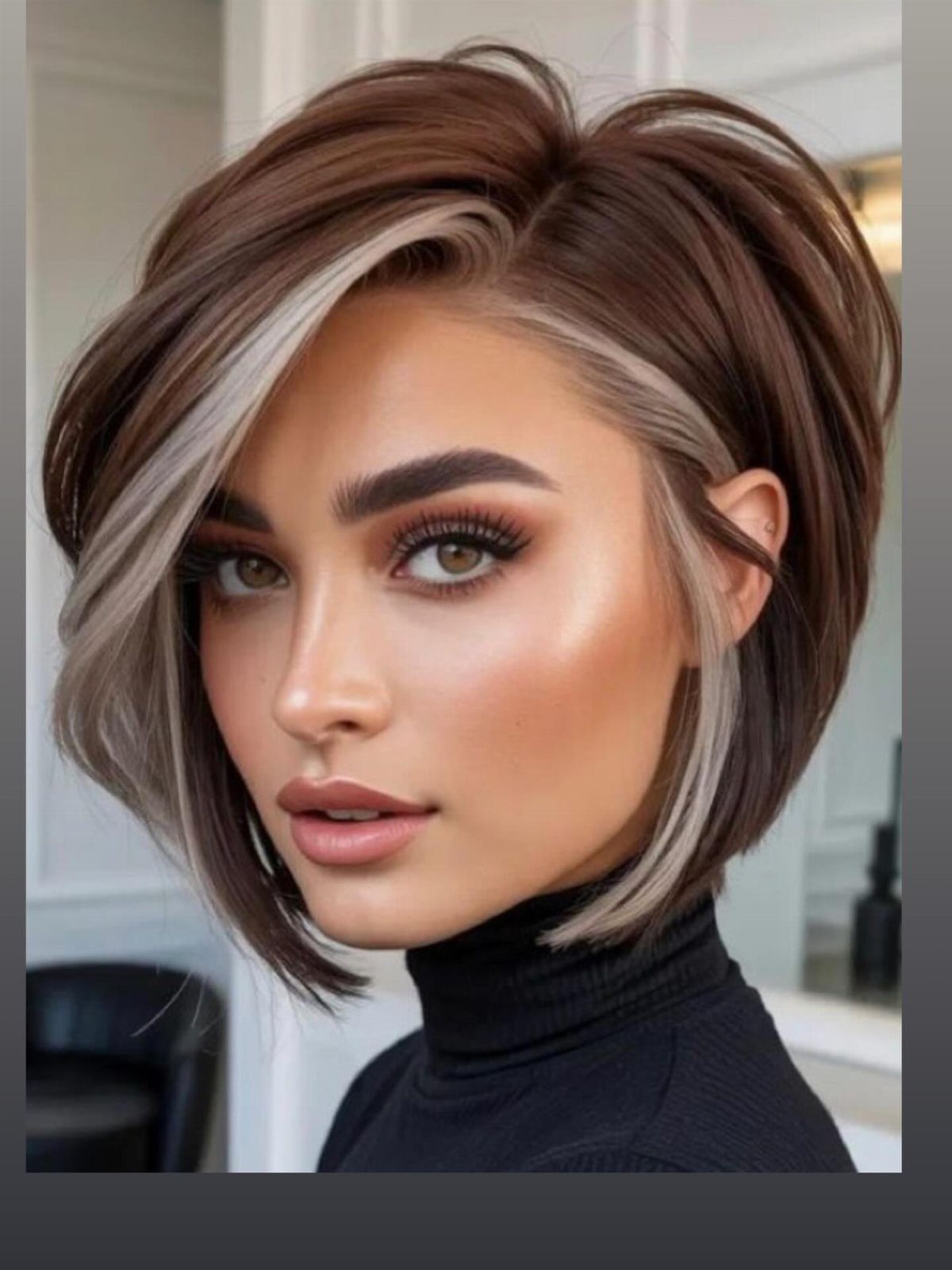
Sandy highlights woven through a tousled bob add dimension without a full bleach. The pale blonde pieces near the face catch light and frame your features, while the darker base keeps roots from showing starkly.
The layers are cut throughout to create movement, not just at the ends. Ask for a lived-in look if you want to skip daily styling.
Balayage or foil highlights both work here. Balayage grows out softer, foils give more contrast.
15. Side-Swept Layered Pixie
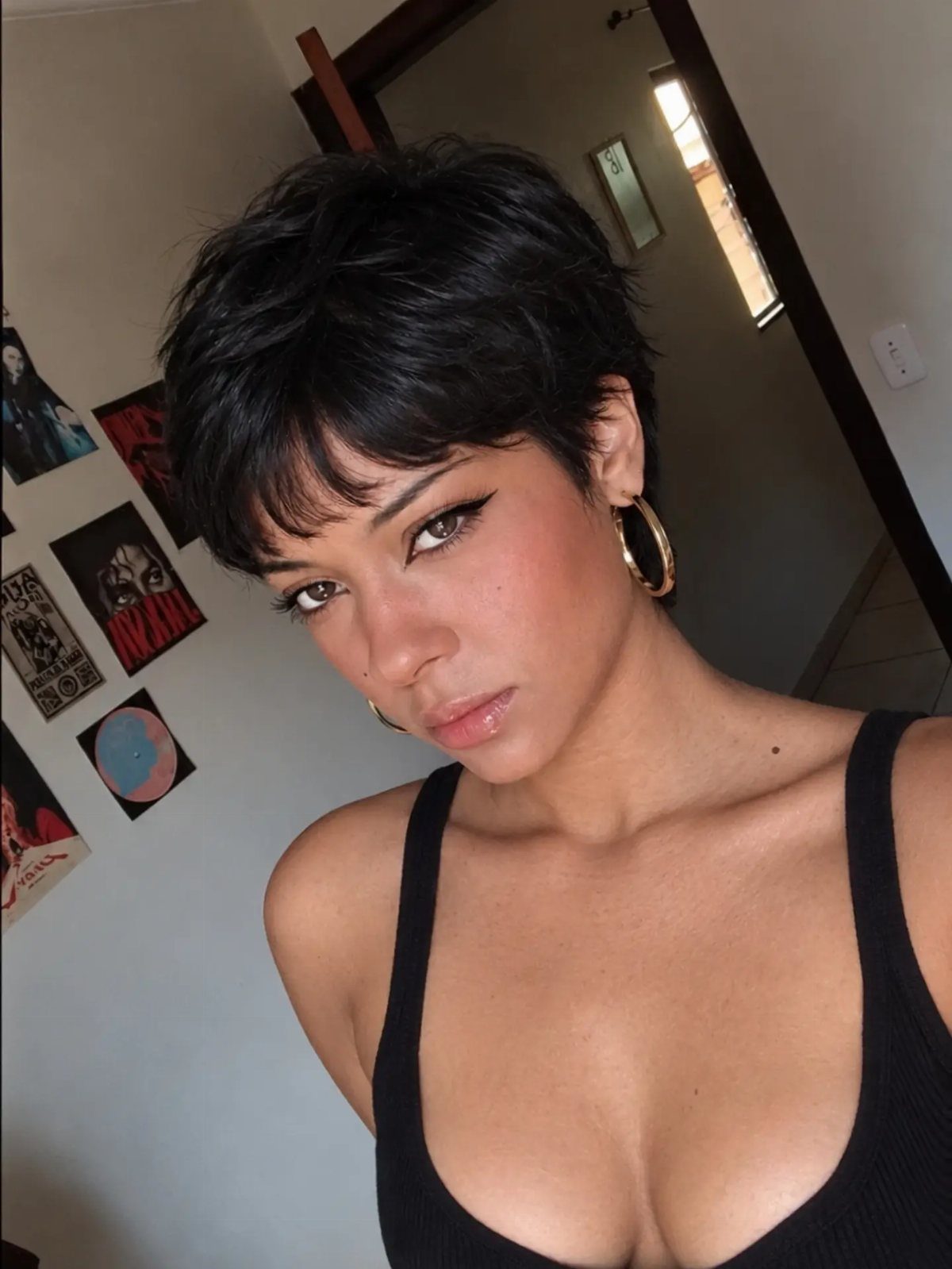
Choppy layers swept to one side give you the option to style messy with texture paste or sleek with a flat iron. The uneven ends add movement either way.
The side-swept fringe sits longer on one side, which breaks up symmetry and works well if you have a round or square face. Ask for point-cut or razored layers so the ends stay light.
16. Layered Bixie with Bangs
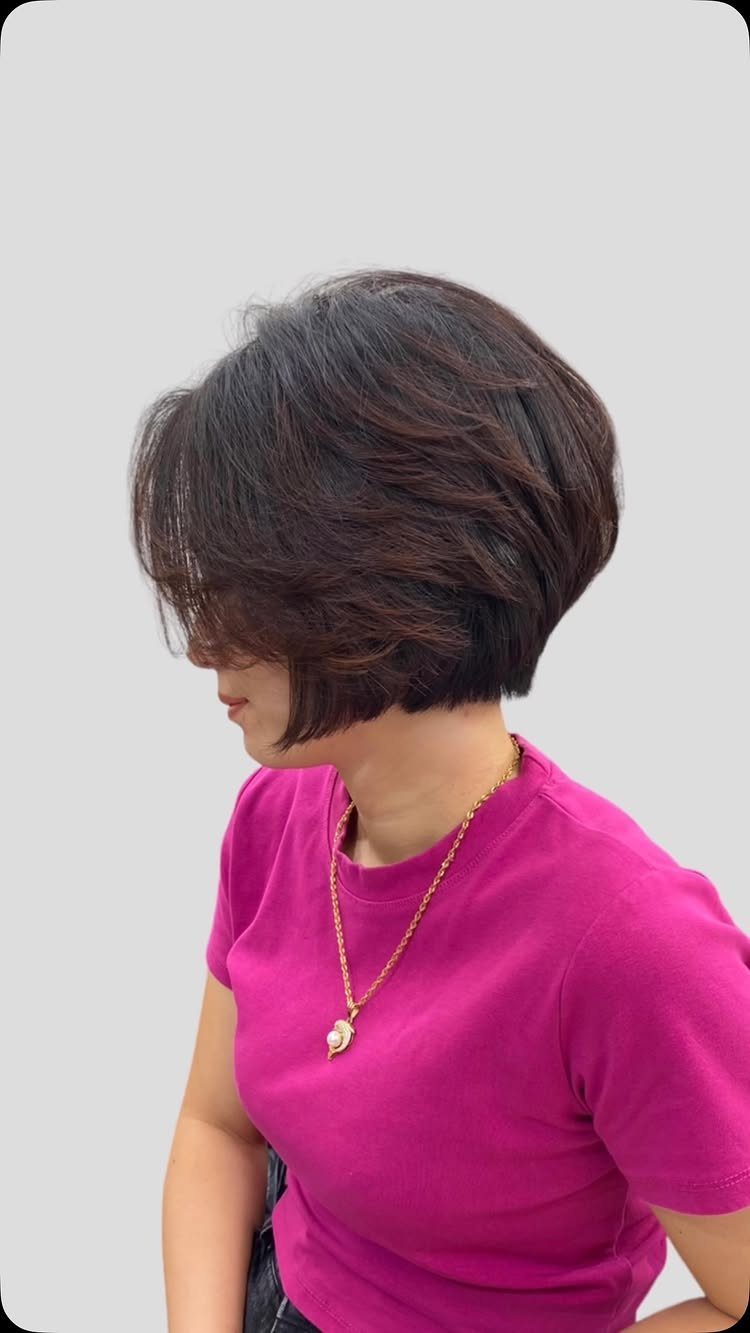
Bangs that sweep across the forehead soften the face-framing effect of a bixie. The layers through the back and sides keep the cut from looking heavy, and the length gives you more styling options than a standard pixie.
Ask for the bangs to be cut into the side layers rather than sitting separately. This makes them easier to blend back if you want to change the part.
This cut grows out well because the layers are blended rather than stacked.
17. Rounded Airy Bixie
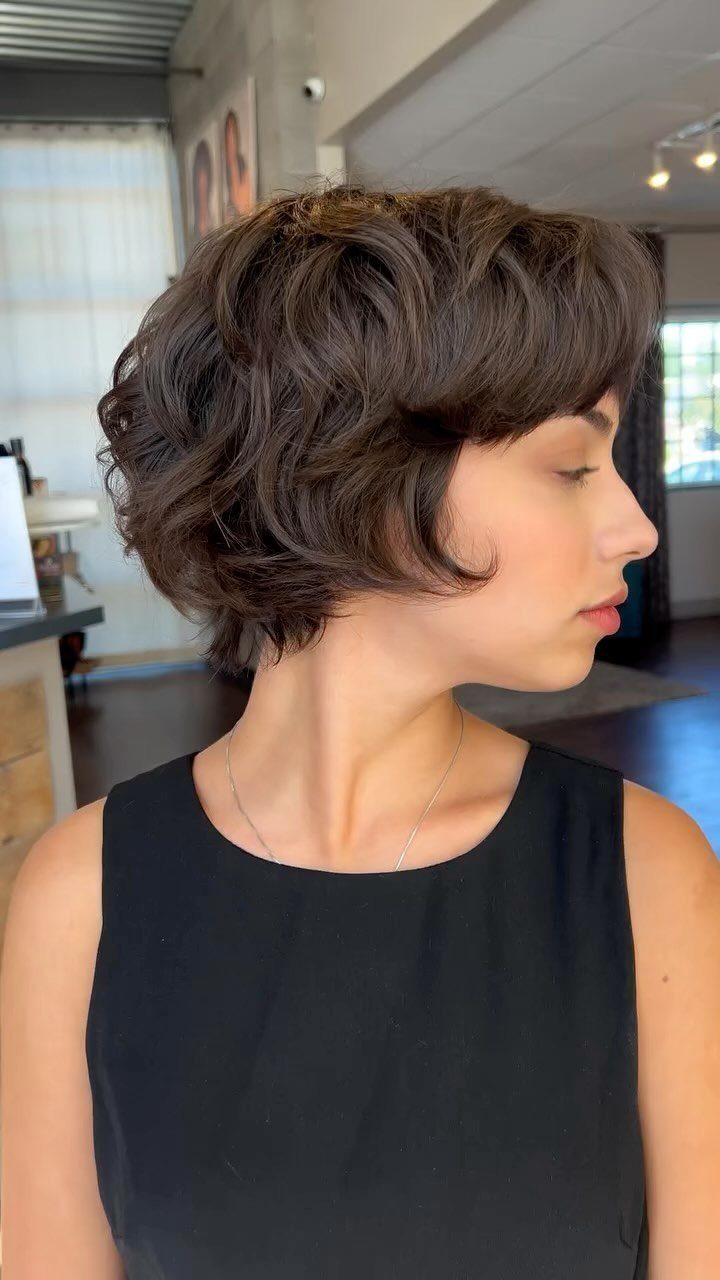
Rounded layers cut to follow the head shape keep the silhouette soft and airy instead of choppy. The long side fringe can be tucked behind the ear or left forward to frame the face.
The layers are subtle, meaning they blend into each other without visible lines. This works well if you want the shape to read as smooth rather than textured.
Use a round brush when blow-drying to bring out the curve, or skip it and let texture do the work. Fine to medium hair takes this cut best because thick hair may lose the airy quality.
18. Side-Parted Voluminous Bixie
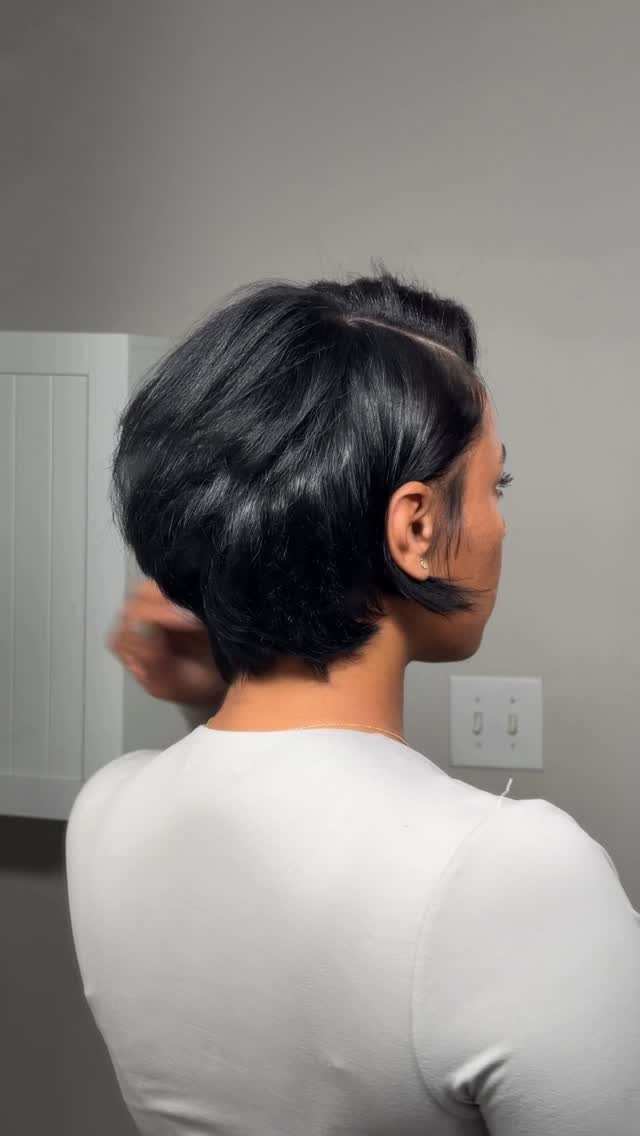
A side part adds height at the root and shifts the volume to one side, which flatters most face shapes. The layers are cut to build fullness at the crown while keeping the sides closer to the head.
Blow-dry with a side part and use a volumizing mousse at the root if your hair tends to fall flat. The volume comes from the way the layers are cut, not from teasing.
This length sits between a pixie and a bob, so you can tuck it behind your ears or style it forward.
19. Wavy Pixie Bob
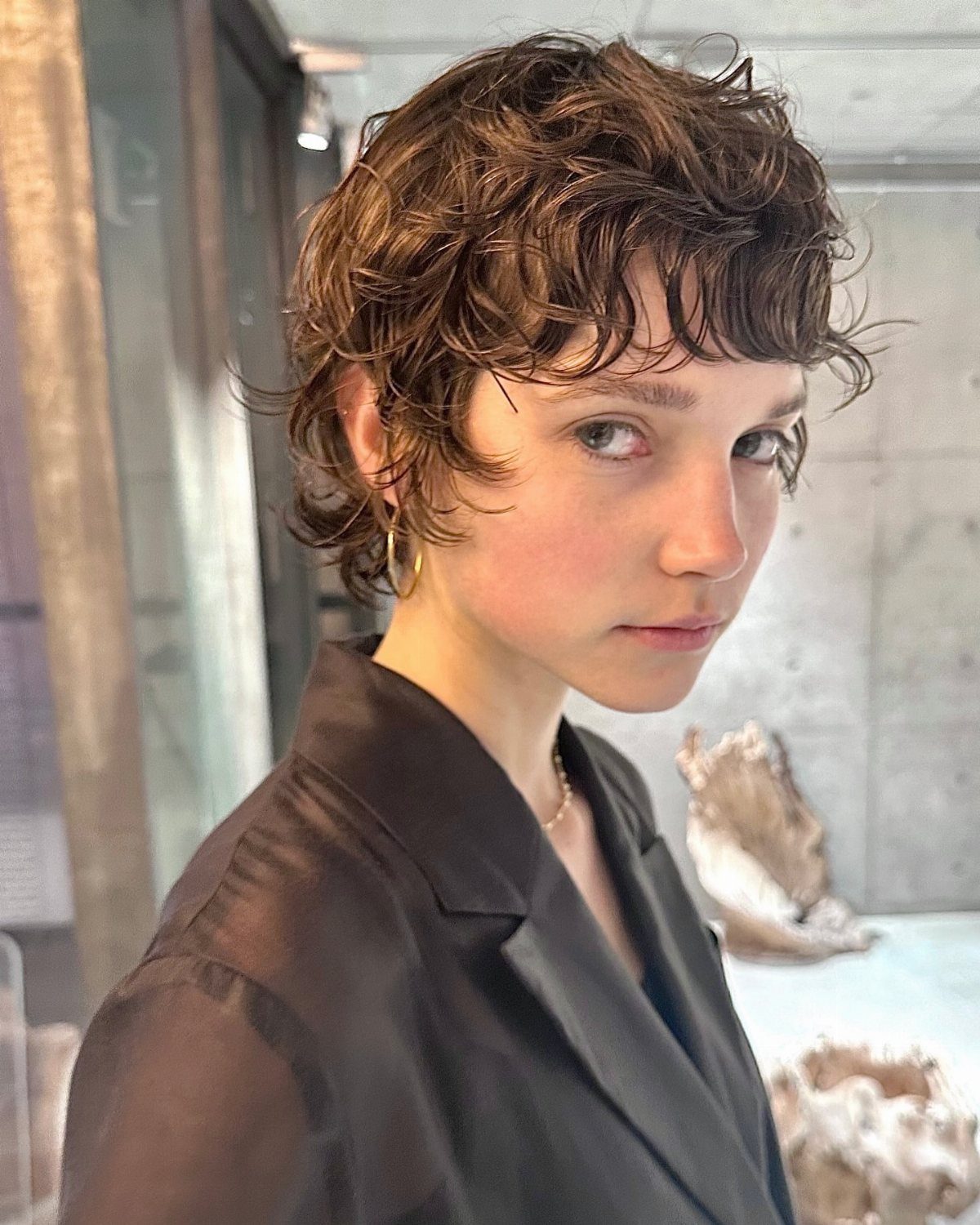
Soft waves layered into a pixie bob add movement without heat tools. The texture keeps the cut from sitting flat, and the length gives you enough to tuck behind your ears or style forward.
Wavy hair takes this naturally. For straight hair, work a salt spray or texturizing mousse into damp strands and scrunch as it dries.
The fringe sits short enough to stay off your forehead but long enough to blend into the side layers. This cut dries fast and grows out without looking unfinished.
20. Tapered Layered Pixie
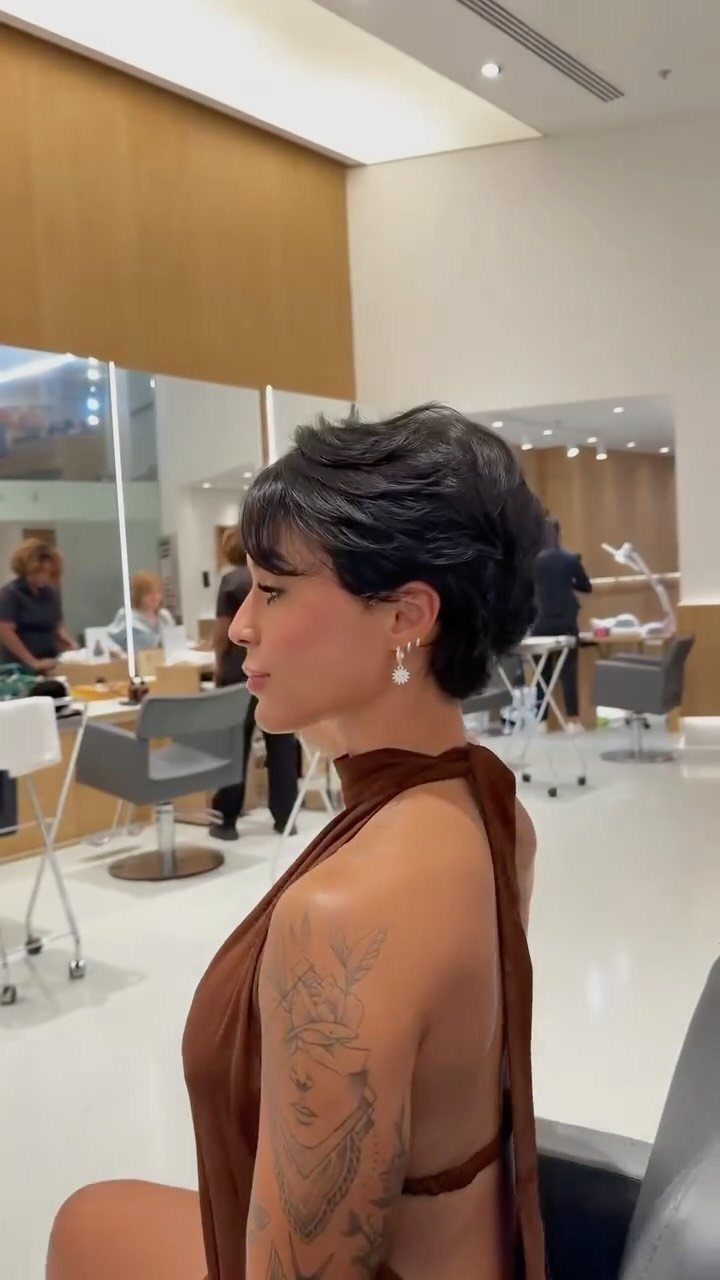
Layers cut close at the sides and longer through the crown taper smoothly around the ears and down the nape. The dark color shows every line, so the cut needs to be precise.
This works if you want a low-profile style that stays sleek without much effort. The tapered sides keep hair off your face, and the slightly longer top gives you room to add texture or smooth it back.
21. Rounded Layered Bob
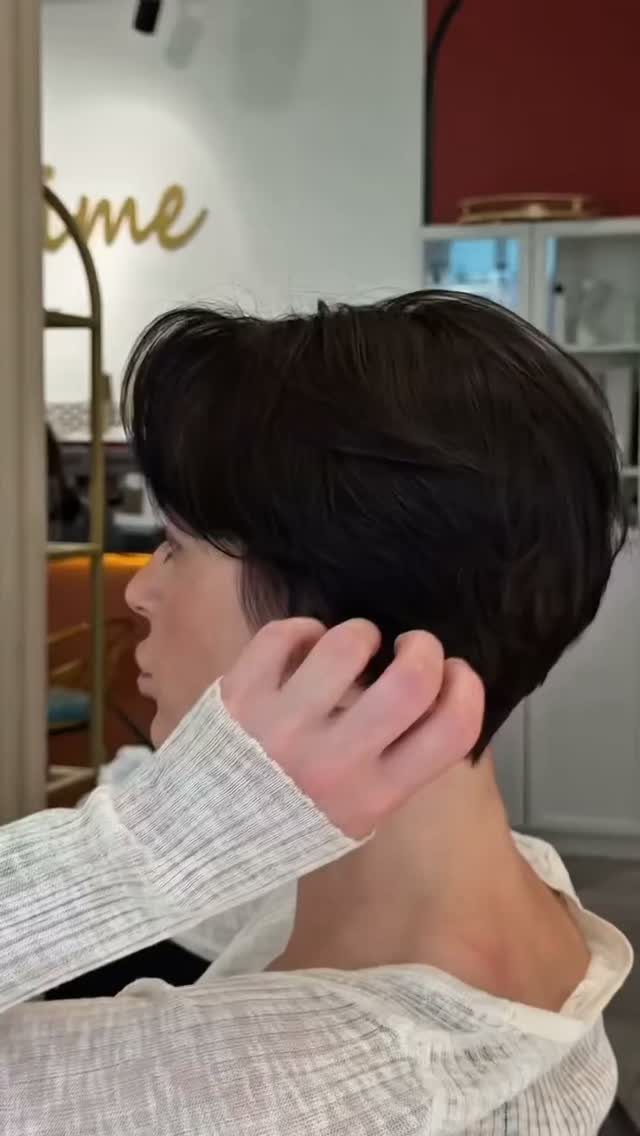
Soft layers follow the curve of the head, creating a rounded silhouette that sits close without clinging. The shape shows best in profile, where the layering builds volume at the crown and tapers toward the nape.
This cut flatters oval and heart-shaped faces by keeping the width at the top rather than the sides.
A round brush while blow-drying gives polish; air-drying leaves it softer.
22. Shaved-Side Rounded Cut
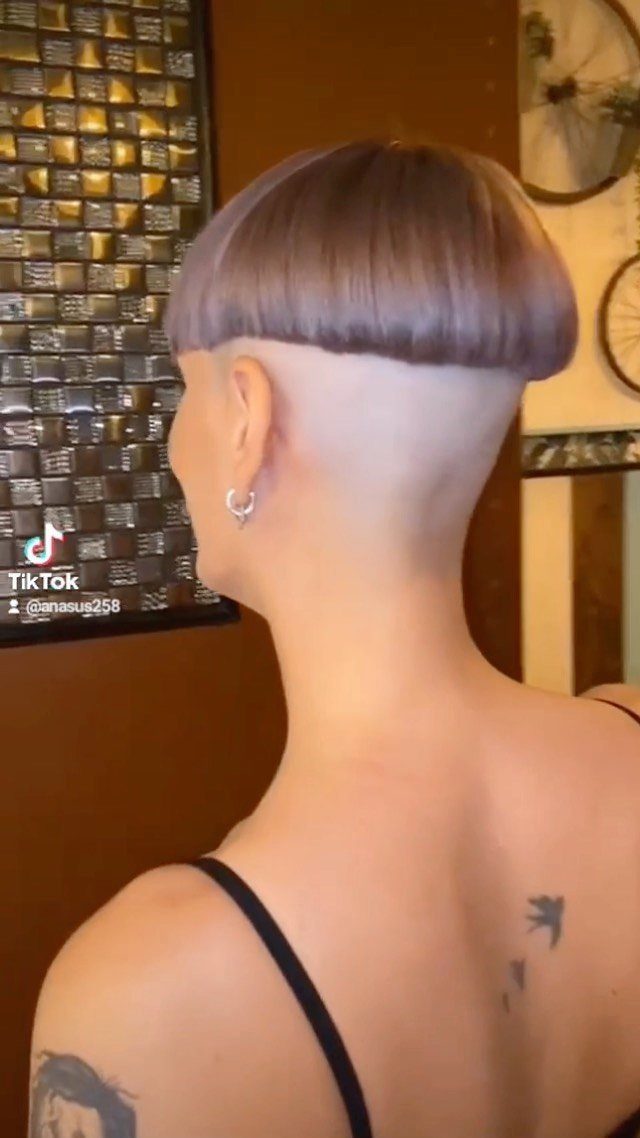
The rounded top sits blunt at the edges, creating a clean line above closely shaved sides and nape. The contrast between the full top and the shaved sections makes the cut read bold.
Ask your stylist to use clippers on the sides and scissors for the top so the 2 textures stay distinct. This cut shows off earrings and jawline, and it needs regular upkeep to keep the shaved sections short.
23. Short Tousled Layered Cut
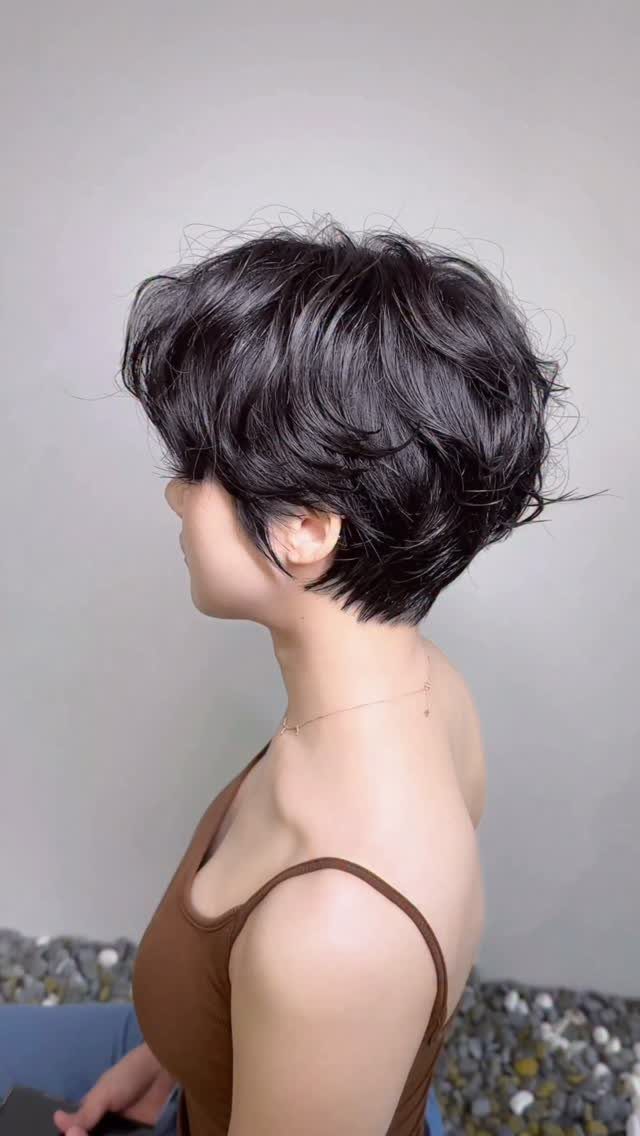
Choppy layers cut short create texture that shows from every angle. The tousled finish looks intentional without much styling, which makes this a good option if you want low daily effort.
The length sits between a pixie and a bob, so you can wear it sleek or messy depending on the day.
Grows out well because the uneven ends hide regrowth.
24. Short Layered Cut with Undercut
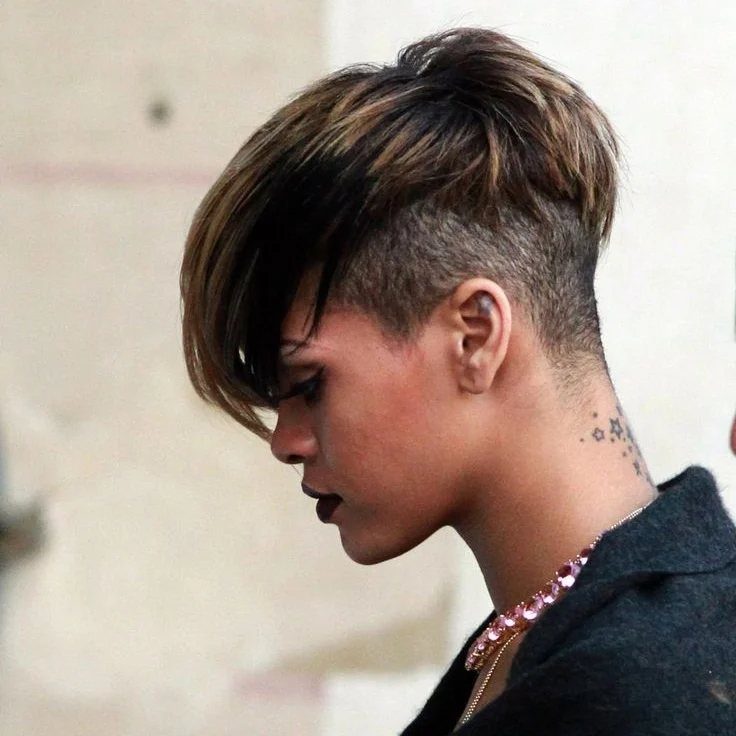
Closely cropped sides contrast with a longer fringe that sweeps across the forehead and down toward the cheekbone. The undercut clears the sides while the fringe softens the whole look.
This cut works if you want the ease of short hair with one piece left long enough to style. The fringe can be worn forward, tucked behind your ear, or pinned back when you need it off your face.
The undercut grows in fast, so expect trims every few weeks to keep the sides short.
25. Short Curly Layered Cut
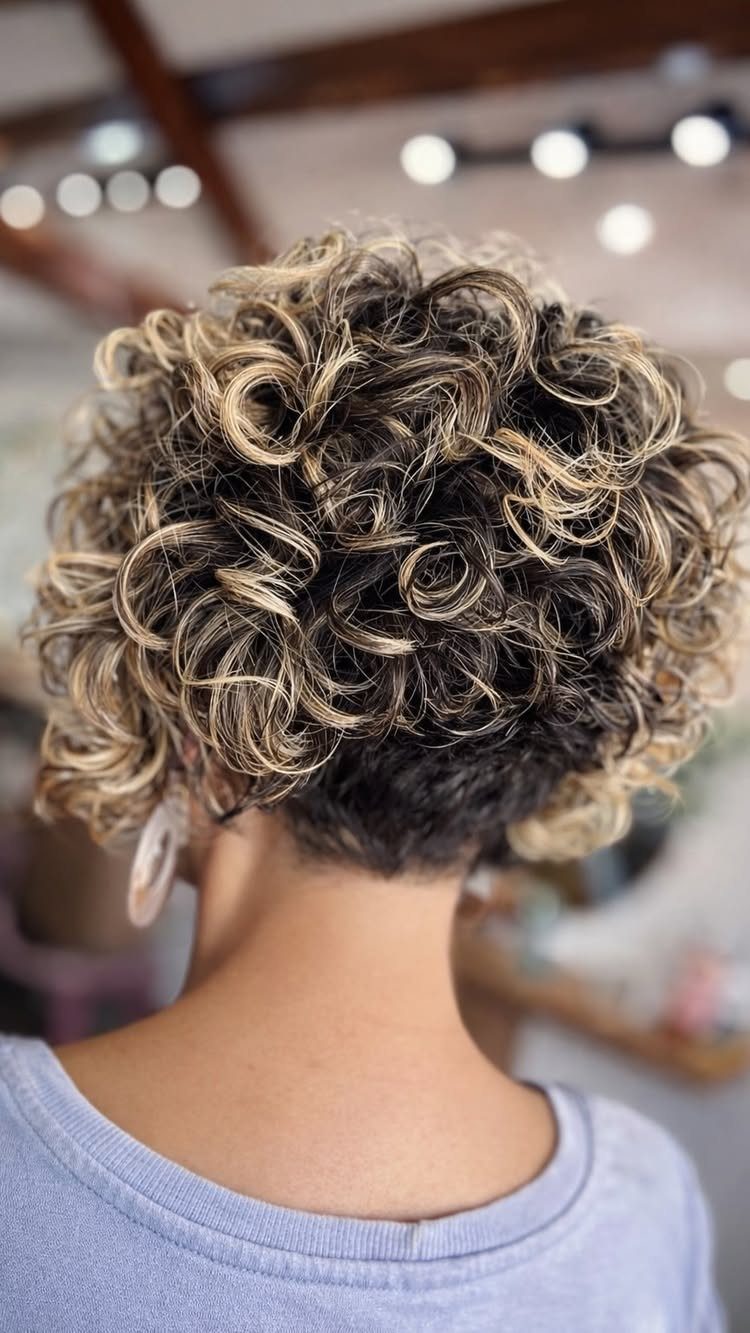
Layers cut into short curls reduce bulk and let each curl form its own shape instead of clumping together. The blonde highlights pick up light and show the layered texture more clearly than a single shade would.
Ask for dry cutting if your stylist offers it, because curls shrink when they dry and the final length matters. The layers should remove weight without creating frizz at the ends.
Works well for thick, coarse curls that need volume at the crown.
26. Short Layered Purple Hair
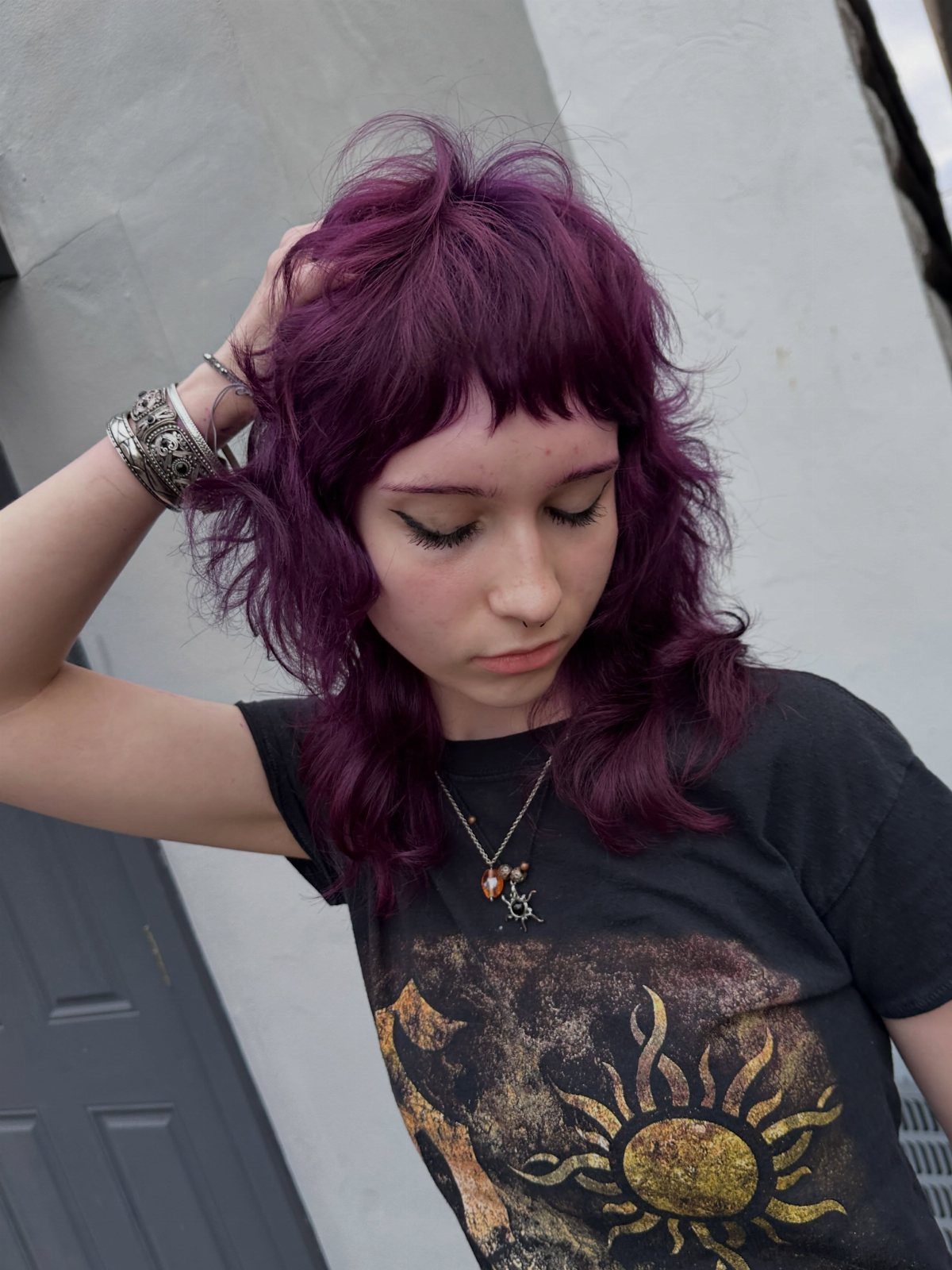
Vivid purple on a short layered cut makes the texture more visible because the color catches light at every angle the layers create. The bangs sit full across the forehead and blend into the tousled layers on top.
The color needs regular touch-ups to stay vivid, and how fast it fades depends on your hair’s porosity and how often you wash.
Purple tends to wash out faster than natural tones, so a color-depositing conditioner stretches the time between salon visits.
The tousled texture hides roots better than a sleek finish would, which buys you a few extra days.
27. Choppy Blunt Bob
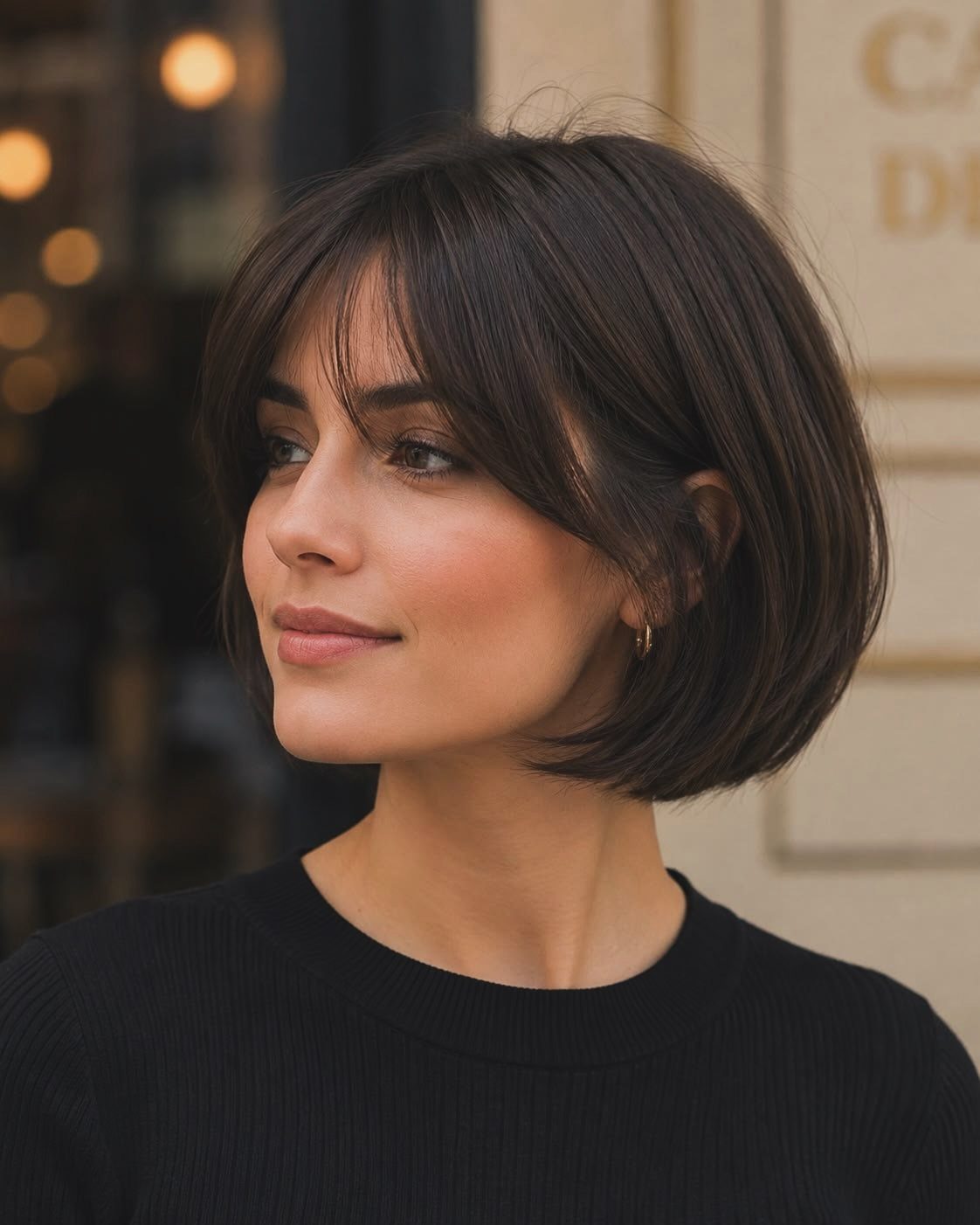
The blunt perimeter keeps the ends heavy, and choppy layers cut into the surface add texture without losing that weight. The fringe sits just above the eyebrows and can be worn straight across or swept to the side.
This cut works for thick hair that can hold both the blunt line and the choppy texture.
A flat iron smooths the ends, or skip it and let the choppy texture show. Grows out well because the blunt line stays intact even as the layers soften.
28. Jaw-Length Bob
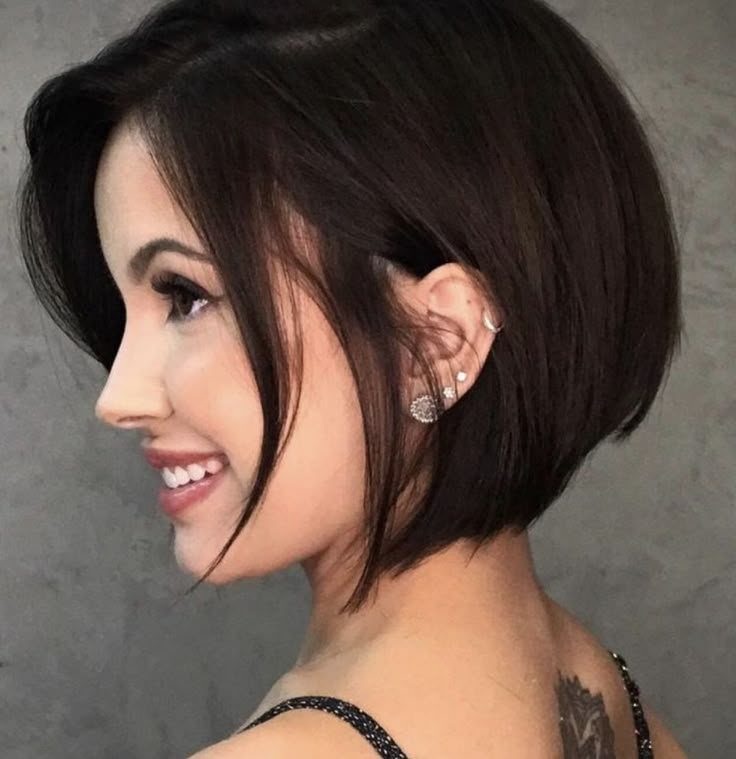
The length stops at the jawline, which makes this a good middle option if you want short hair but need enough to tuck behind your ears. A side part adds movement without texture or layers.
Ask for a slight angle if you want the front pieces to sit longer than the back, or keep it all one length for a classic bob.
This cut works for straight or slightly wavy hair because the sleek finish shows best when the hair lays flat.
29. Asymmetrical Lixie Cut
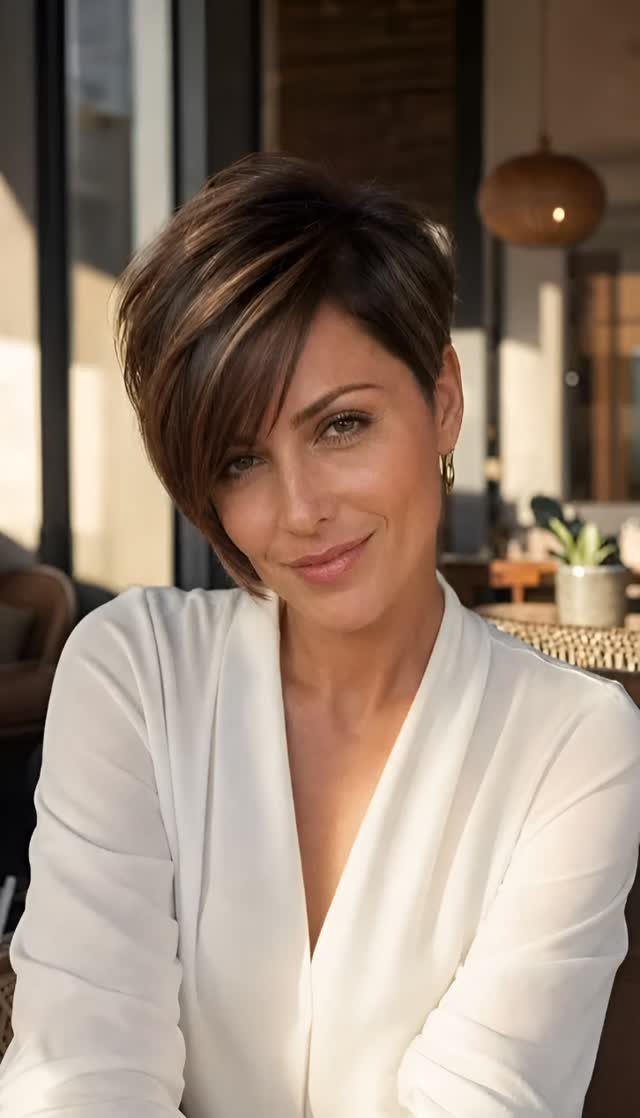
One side of the lixie sits longer than the other, which breaks symmetry and gives you more styling options than a balanced cut.
The asymmetry works well if you have a round or square face because the longer side adds length where the cut would otherwise sit wide. The shorter side stays close to the head, keeping the overall shape light.
30. Two-Tone Highlighted Pixie
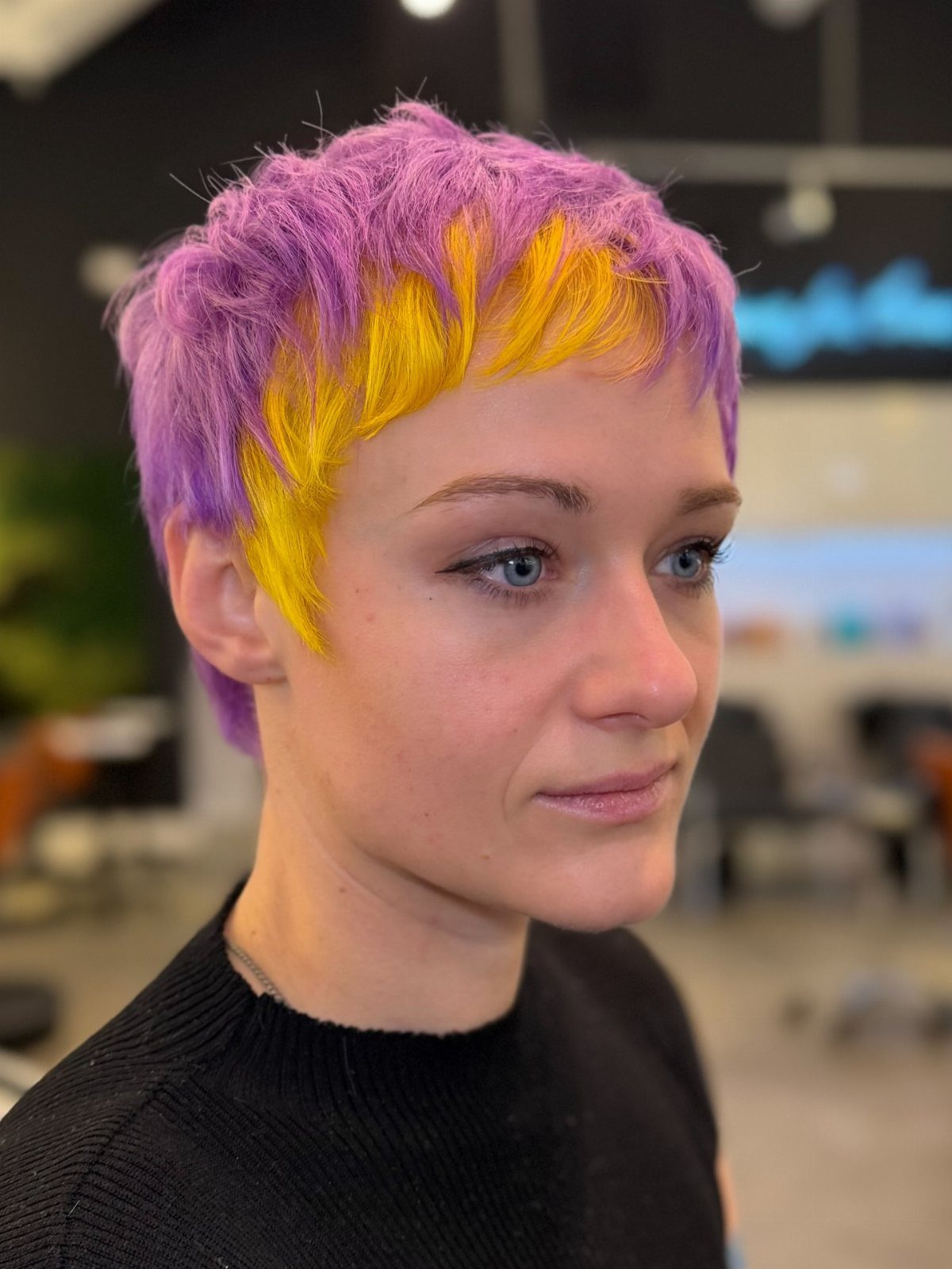
Purple and yellow sit opposite each other on the color wheel, so the contrast reads bold. The yellow pieces frame the face while the purple layers sit through the back and crown.
Two-tone color on a pixie shows every layer because the cut is short enough that both colors stay visible from most angles. Ask for the face-framing pieces to be foiled or painted separately so the yellow stays bright.
Both colors fade at different rates, so touch-ups may not line up. The purple washes out faster, which means the yellow will dominate as the color fades.
Short-cut Versatility
Layers multiply your options where a blunt line leaves you with one shape and no variation.
Most short layered cuts look finished without heat styling.
Towel-dry, add a small amount of product if you want hold or texture, and let it dry on its own. The cut does the work.
Frequently Asked Questions
Which layer cut is best for short hair?
A blunt bob with interior layers works well if you have fine hair and want thickness without losing the clean perimeter.
The blunt edge keeps the ends looking full while the interior layers add movement. For thick or coarse hair, a choppy pixie or short shag removes weight and shows off texture.
What are some popular short, layered haircuts for 2026?
Choppy blunt bobs, short curly shags, curly French bobs, beachy lobs, and textured pixie bobs are trending this year.
These cuts work across different face shapes and hair types, and most air-dry well without daily heat styling. The common thread is layered texture that builds volume without stiffness.
Looking for an easy-to-style haircut?
A pixie with choppy layers and side-swept bangs lets you change the styling direction daily without much effort. Run your fingers through it for texture or smooth it flat, whichever the morning calls for.
Want a more edgy hairstyle?
Add an undercut with clipped sides and leave the top longer for contrast. The shaved sections show off your jawline and earrings, and the longer fringe gives you something to style.