Long hair wins for styling range and lower salon frequency, but only if you’re willing to manage the wash time, product load, and heat damage that comes with the length.
Short hair flips that: faster to clean and healthier by default because damaged ends disappear every 6 weeks, but you’ll book trims often and spend more time learning to style it each morning until the shape becomes second nature.
Maintenance and Styling Time
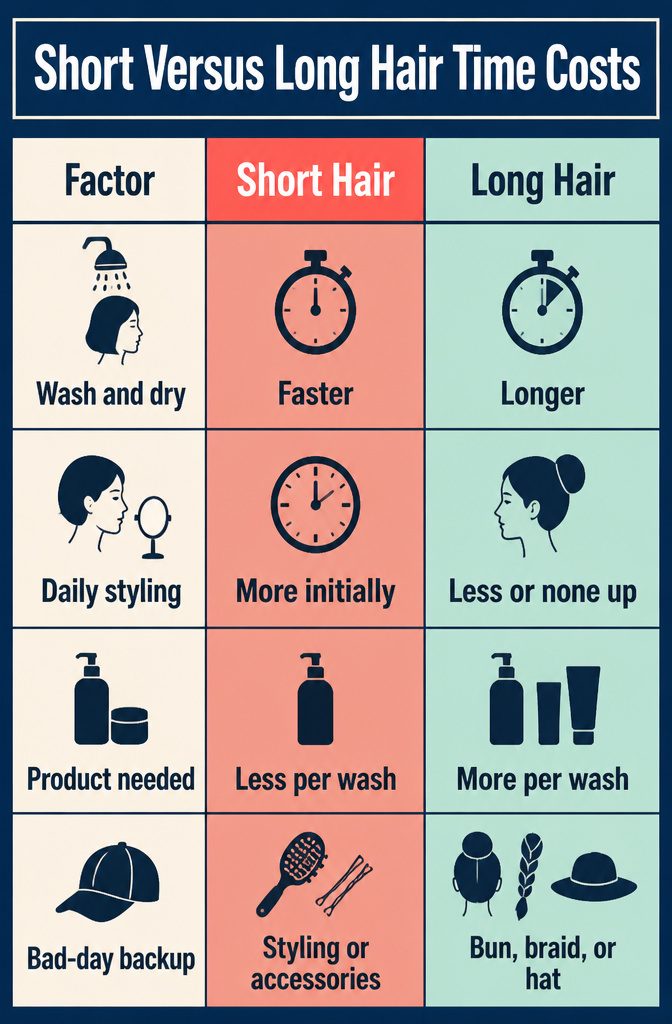
Washing and drying short hair takes less time upfront.
With less surface area to shampoo, condition, and rinse, you’re in and out of the shower faster, and drying can take as little as a few minutes with a towel or a quick blast of heat.
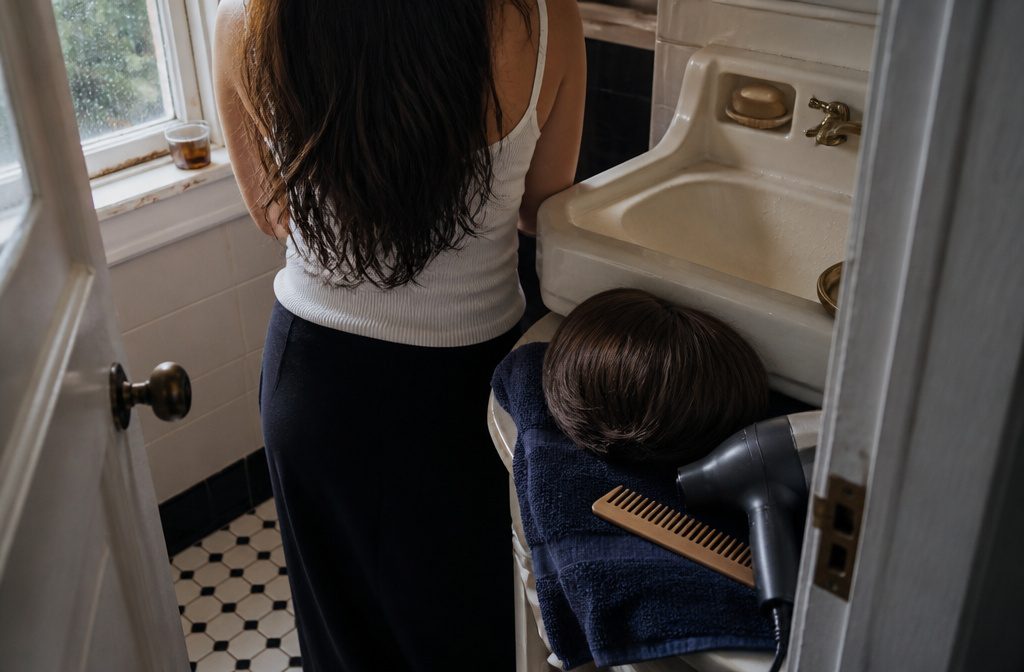
Long hair demands more time at the sink and under the dryer, plus more product to cover the length.
The tradeoff: you can pull it into a bun or braid on a rushed morning and look put together without styling a single strand.
Short cuts often need more daily styling and practice to look polished. Getting the shape right, taming cowlicks, and achieving the texture you want takes patience at first and can add time each morning that long hair skips entirely.
| Factor | Short Hair | Long Hair |
|---|---|---|
| Wash and dry time | Faster | Longer |
| Daily styling time | More (especially at first) | Less (or none if worn up) |
| Product needed | Less per wash | More per wash |
| Bad hair day backup | Requires styling or accessories | Bun, braid, or hat hides everything |
Salon Visits and Upkeep
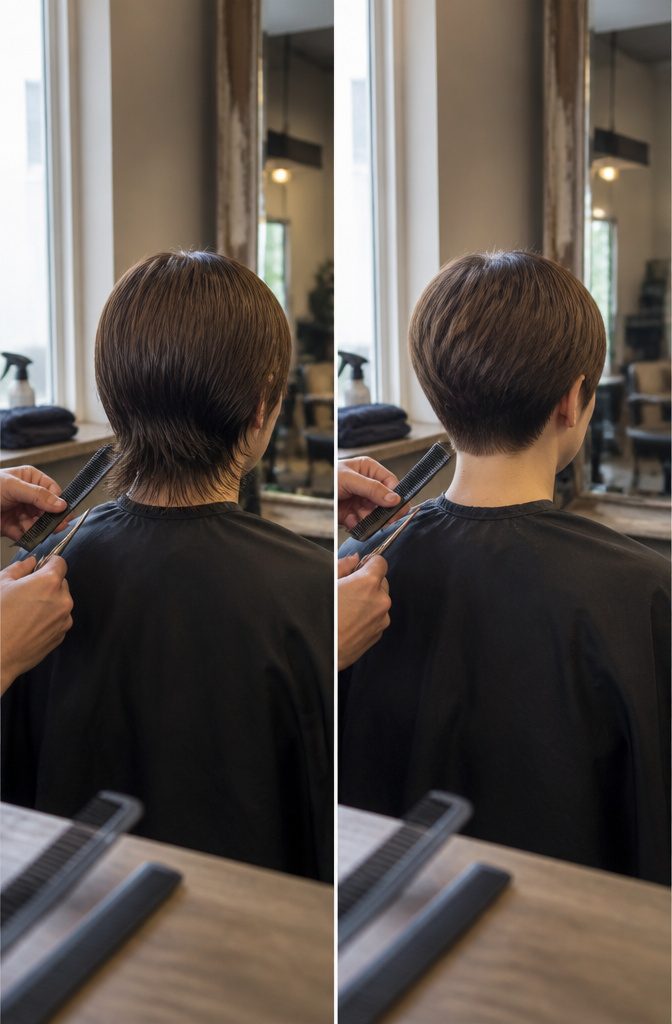
Short hair calls for trims every three to six weeks to hold its shape.
A pixie or bob loses its line fast, and most people who commit to a short cut also commit to regular salon appointments or learn to trim it themselves.
Long hair stretches those visits out further, sometimes going months between cuts, though it still benefits from periodic trims to catch split ends before they travel up the shaft.
The upkeep difference is less about effort and more about calendar. Short hair asks you to show up often.
Long hair asks you to remember products, detangling sessions, and the occasional search for a scrunchie, but the salon schedule relaxes. If you hate booking appointments or prefer to stretch time between cuts, long hair wins on that front alone.
Styling Versatility
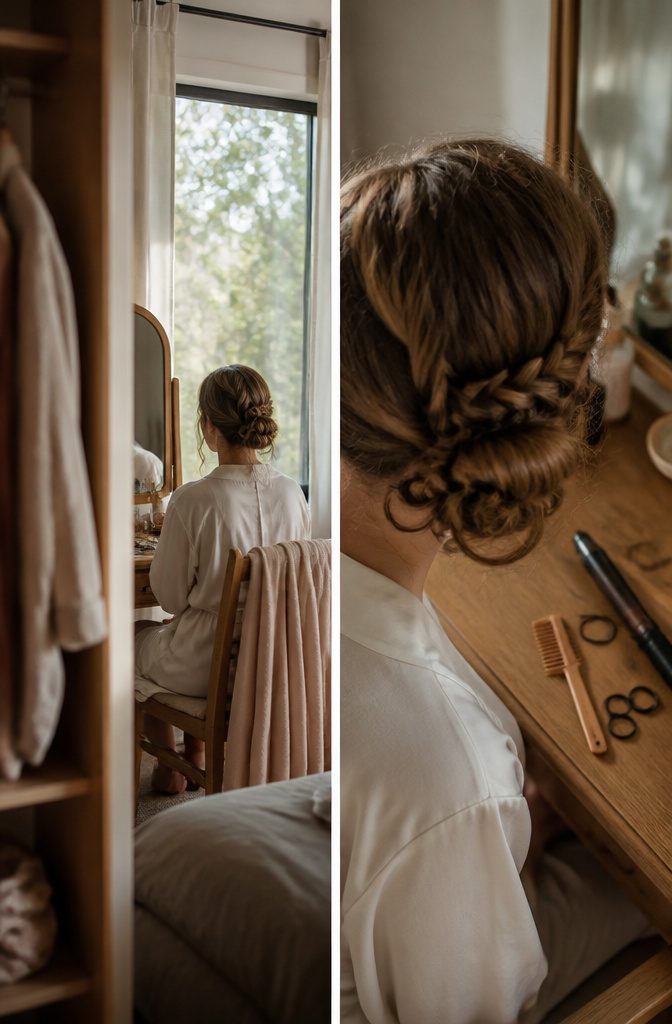
Long hair gives you ponytails, buns, braids, and updos when you need them off your face, plus the option to wear it down and shift the look with curls or waves.
That range matters if your routine changes day to day or you like having a formal option without booking a stylist.
Short cuts lose most of those, but they open different ground: a pixie can be slicked back or textured forward, a bob works blunt or wavy, and an undercut lets you play with contrast and sharpness that long hair can’t pull off.
I’d take long hair for the sheer number of ways to reset it between morning and evening.
Short hair wins if you’re the type to change through color, texture, or a new part rather than switching between structural styles. The trade is breadth against edge.
Hair Health and Damage
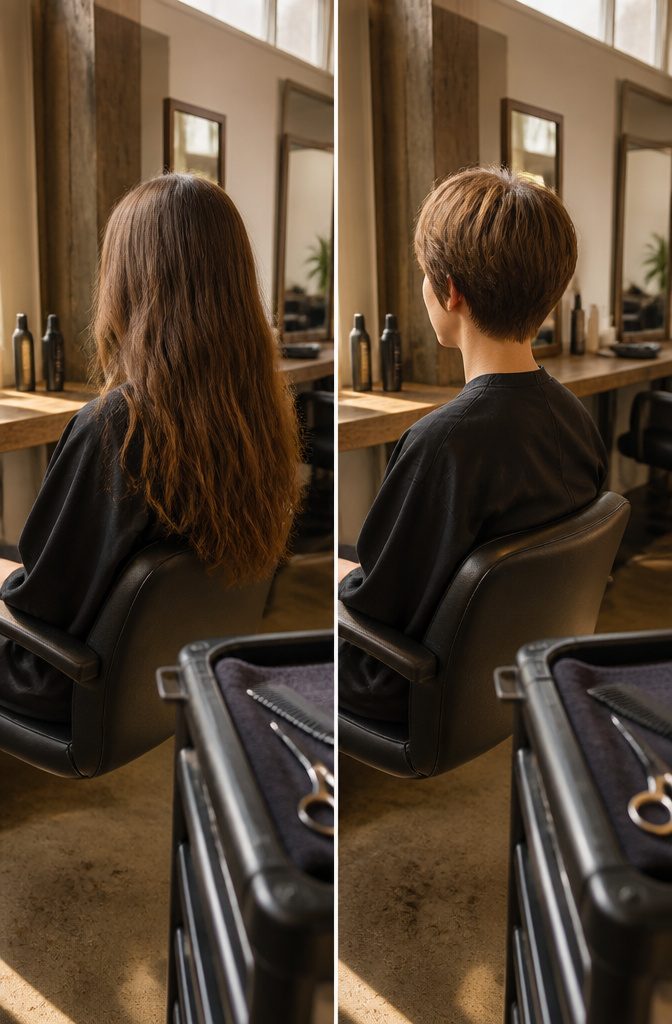
Short hair looks healthier because damaged ends get trimmed away every six to eight weeks.
Each salon visit removes split ends before they travel up the shaft, so the hair you see is newer and less broken. Long hair has more surface area exposed to heat tools, sun, chlorine, and friction against clothing and pillows.
The older length at the ends splits, frays, and dries out. You can keep long hair healthy with regular trims, leave-in conditioner, and heat protection, but the length itself means more to maintain and more to damage.
Short hair simply has less hair to care for and fewer inches that have lived through months of styling.
Comfort in Hot and Cold Weather
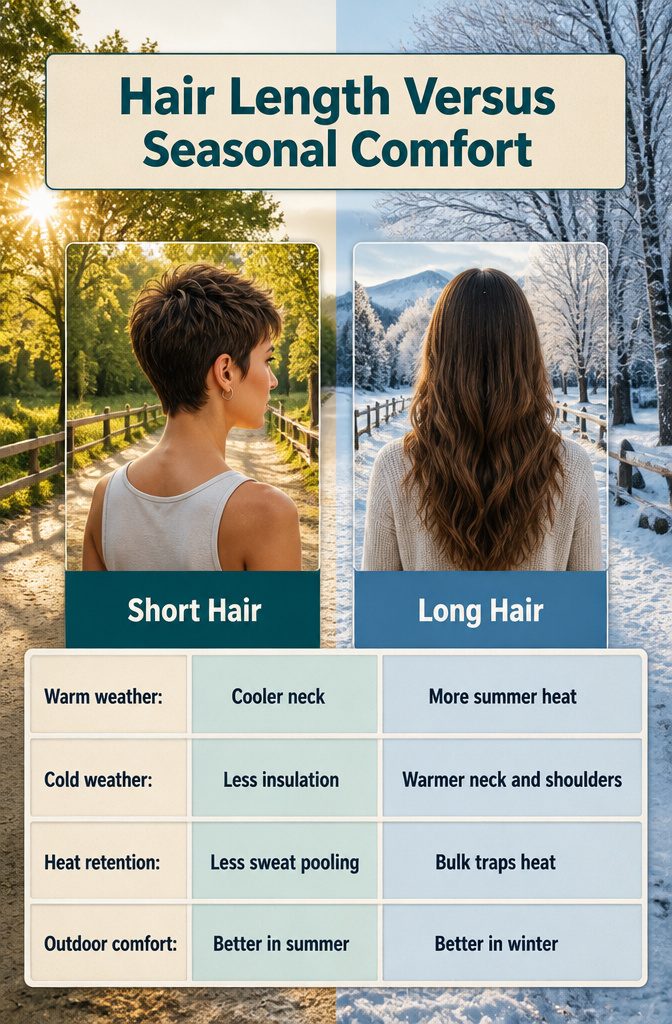
Short hair keeps your neck cooler in warm weather. There’s less surface area holding heat against your skin, and you get airflow where long hair would sit like a wool scarf.
If you live somewhere with serious summer heat or work outside, that difference matters. The lack of weight and fabric-like coverage also means less sweat pooling at your hairline and neck.
Long hair works the opposite way.
It provides extra warmth during colder seasons, acting as a natural insulator around your neck and shoulders. If you spend time outdoors in winter, that layer makes a noticeable difference.
The trade is summer discomfort: long hair down your back in July feels like wearing a heating pad on your head, and even when pulled up into a bun or ponytail, the bulk still traps heat.
Face Shape and Facial Features
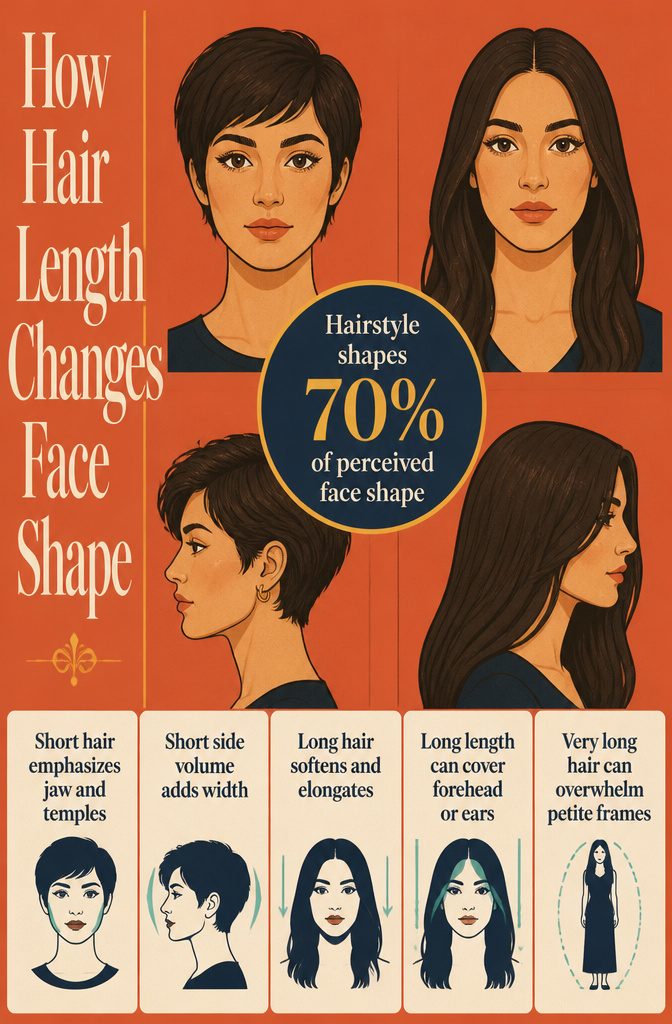
Face Shape and Facial Features
The cut you pick changes how someone reads your face.
A 2020 analysis found that 70% of perceived face shape can be attributed to hairstyle, which means length plays a bigger role in how balanced or angular you look than bone structure alone.
Short hair tends to frame. It sits close to the jawline and temples, so it draws attention to cheekbones, chin width, and forehead proportion.
If your face is longer or narrower, a short cut can add visual width at the sides. If your face is rounder or wider, short hair without enough volume on top can make that more obvious.
Long hair softens and elongates.
It pulls the eye downward, which can make a round face appear longer or hide a strong jawline. It also gives you the option to cover ears, a wide forehead, or a neck you would rather not emphasize.
Very long hair on a petite frame can overwhelm, and on a larger head it can look unbalanced without enough volume at the crown.
Lifestyle
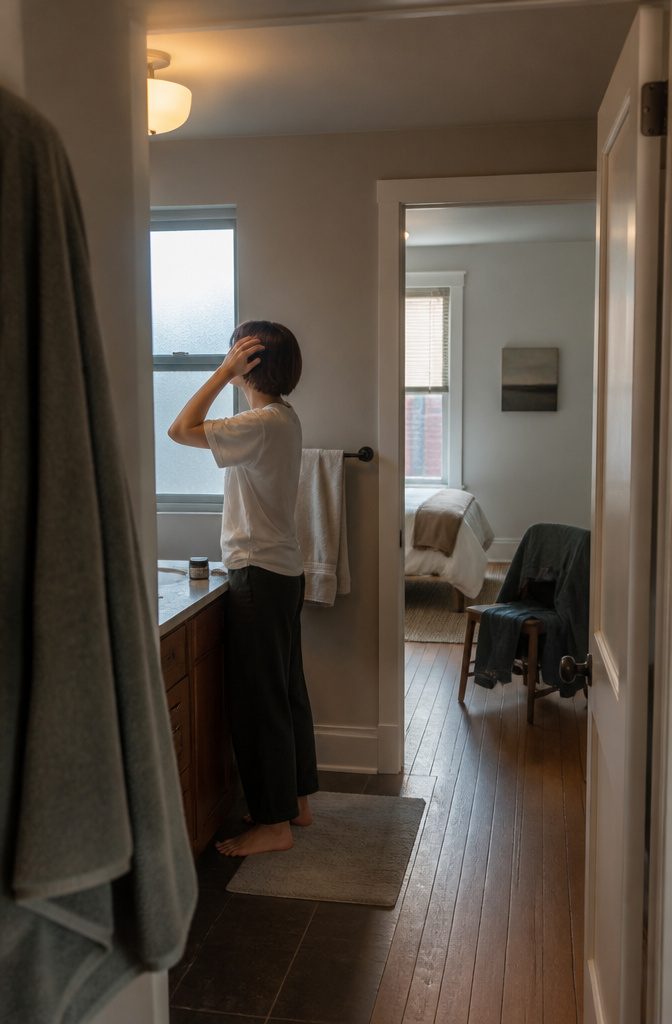
Your routine decides whether short or long works.
If you get up, shower, and want to walk out the door in five minutes, short hair is the faster option. Wash it, run your fingers through it with a little product, and it’s done.
Some people can skip shampoo entirely in a rush and still look fine. Short hair dries in the time it takes to get dressed.
Long hair needs more steps. You brush it before and after washing, condition it to keep it from drying out or frizzing, and manage split ends.
Drying takes longer. If you like throwing your hair into a bun or ponytail most mornings, you’ll miss that once it’s gone.
But if pulling your hair up every day sounds like exactly the kind of low-effort routine you want, long hair gives you that. Short hair doesn’t.
Appearance and Self-Expression
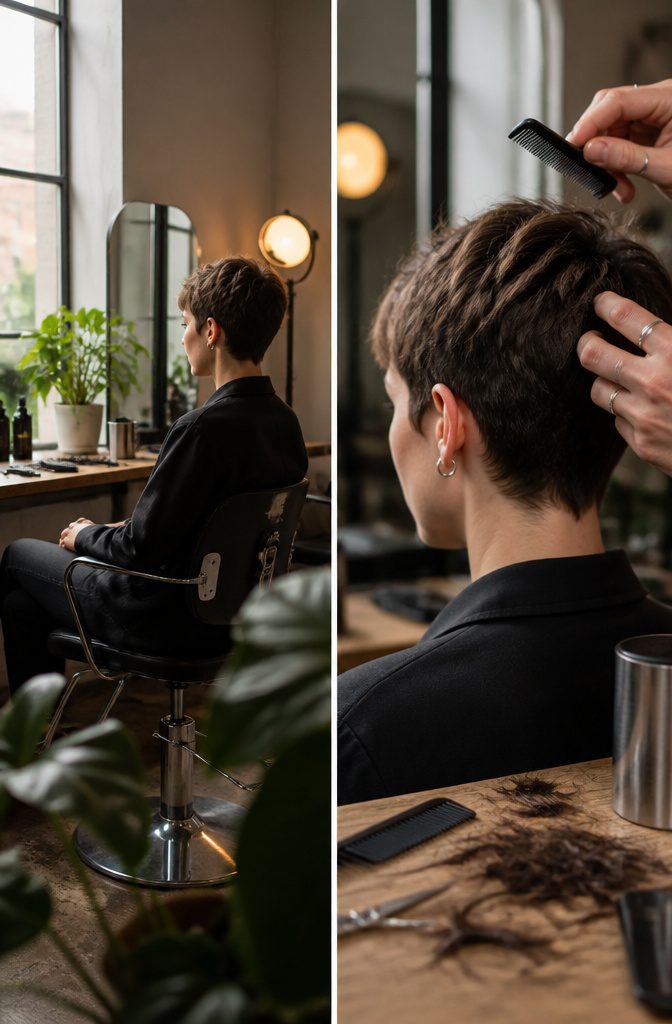
Your hair length broadcasts who you are before you say a word.
Short hair reads as confidence and transformation: the pixie and the bob put your face front and center, and the decision to cut it all off signals you’re willing to take a risk.
It carries an edginess that long hair can’t, and in professional settings it often lands as modern and decisive. Marilyn Monroe and Halle Berry made short hair iconic not just because it looked good, but because it looked bold.
Long hair anchors itself in femininity and timelessness. It has been tied to beauty across cultures for centuries, and that association hasn’t faded.
Long hair lets you channel a bohemian goddess one day and Old Hollywood glamour the next, and the sheer range of what you can do with it becomes part of how you express yourself.
Where short hair makes a statement through the cut itself, long hair makes one through what you do with it.
Attractiveness and Dating
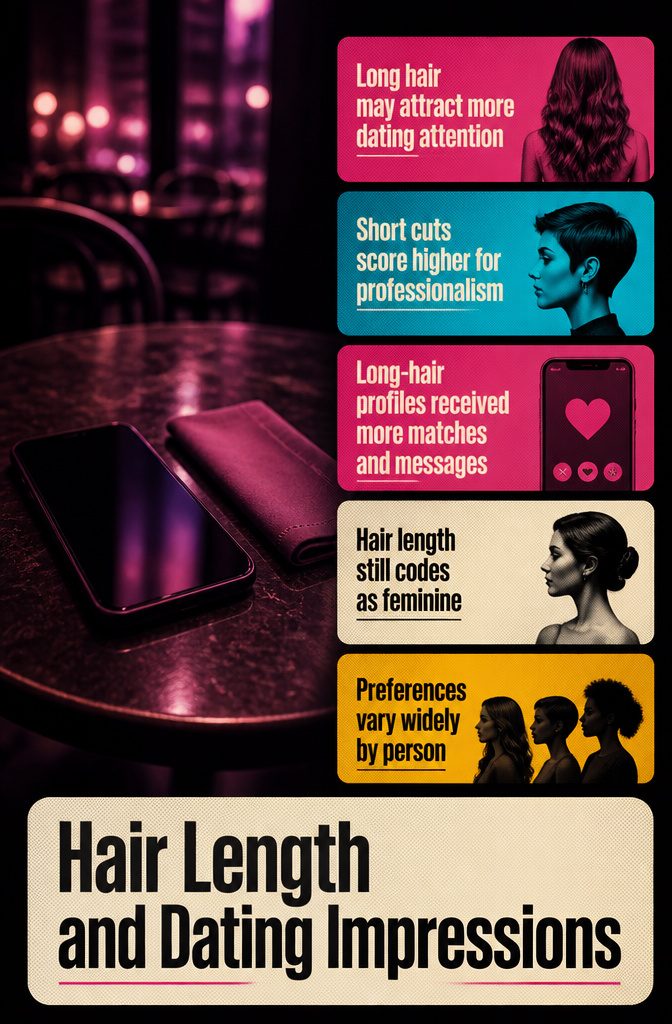
Several studies suggest that long hair may draw more attention in dating contexts, though short hair tends to score higher for professionalism.
A 2015 experiment asked three long-haired women to create identical dating-app profiles, then measured responses after digitally altering their photos to show shoulder-length and pixie cuts.
The profiles featuring long hair received noticeably more matches and messages than the short versions. Other research using dating apps found similar patterns, with longer styles generating higher interest from potential matches.
That doesn’t mean short hair reads as unattractive. The same data shows short cuts register as more competent and put-together, which can matter in contexts where looking polished weighs heavier than looking available.
The distinction seems to fall along traditional lines: length still codes as feminine in ways that influence first impressions, even as preferences shift over time and vary widely by person.
Workplace Expectations
Workplace Expectations
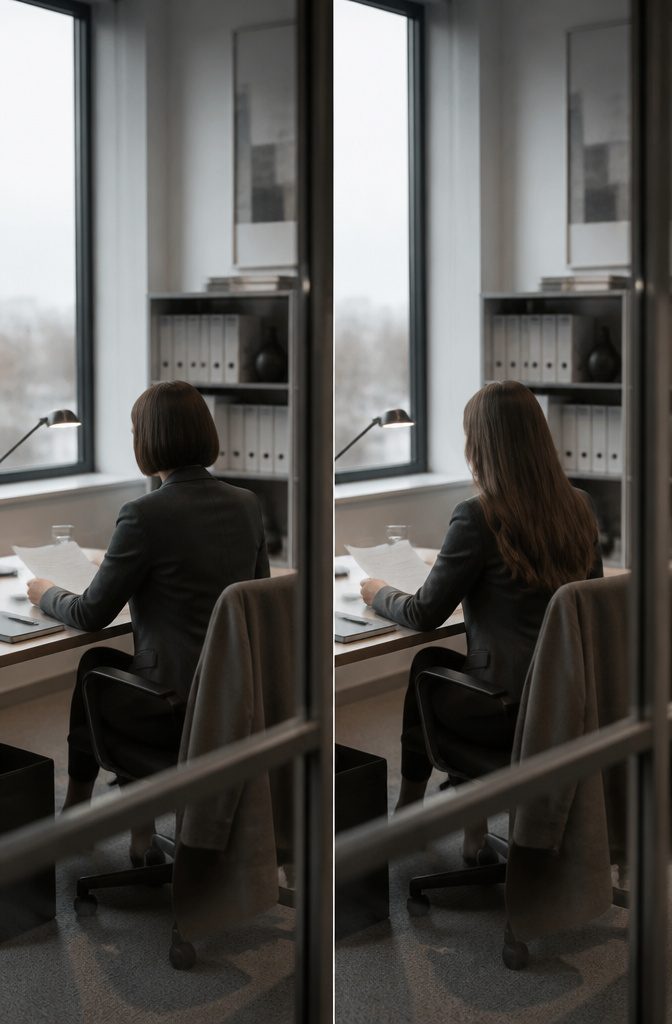
Short hair reads as professional in conservative industries. If you work in law, finance, or sales, short hair signals competence before you say a word.
It aligns with what hiring managers expect, and in client-facing roles where first impressions close deals, length matters more than it should. The bias is real: long hair can cost you credibility in environments that still associate grooming with seriousness.
Long hair works in creative fields and less formal workplaces, provided it looks intentional.
Neat is the operative word. If your industry skews casual or values individuality over conformity, length becomes neutral or even an asset.
I see long hair as a test of workplace culture. If they care more about your hair than your output, you know what you’re walking into.
What the Studies Say
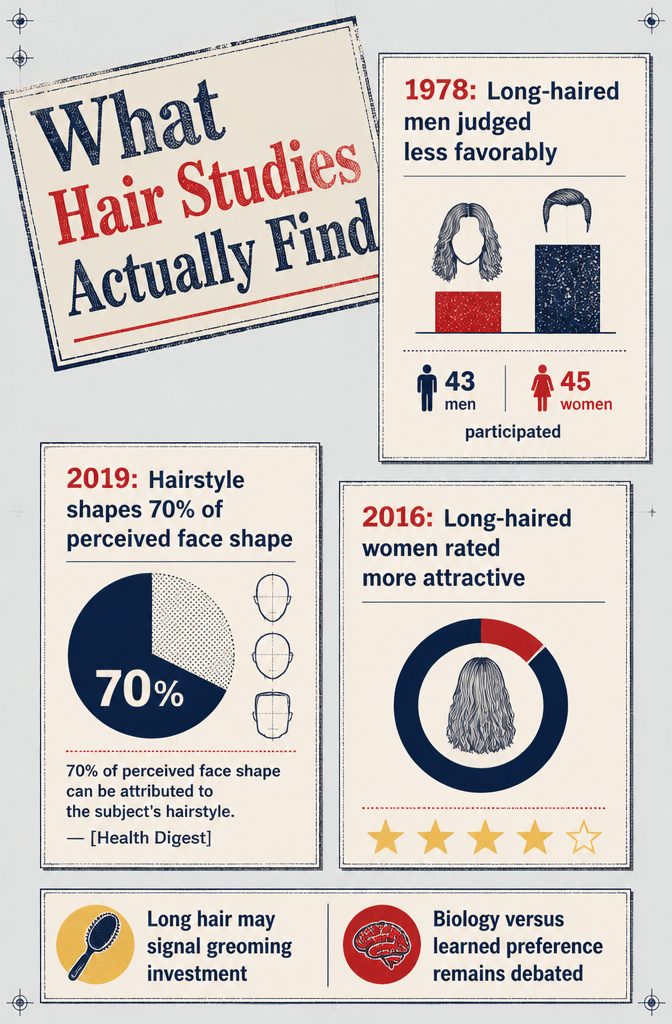
Researchers have measured this question a few different ways, and the results are messier than either side wants to admit. A 1978 study in Sage Journals presented 43 men and 45 women with drawings of men who had either long or short hair.
Participants formed a markedly negative impression of the long-haired men compared to those with short hair, suggesting that both men and women saw long hair on men less favorably at the time.
A 2019 study in Clinical Anatomy asked 120 participants to judge 30 male and 30 female faces for attractiveness. Women with blonde hair and slimmer faces won out, but for the short-versus-long debate:
70% of perceived face shape can be attributed to the subject’s hairstyle.
That means your cut shapes how narrow or wide your face reads, which in turn drives how attractive observers judge you to be.
A 2016 study in Frontiers in Psychology found that both men and women rated women with long hair as more attractive, regardless of color.
The researchers thought this traced back to an assumption that long hair is harder to maintain, signaling someone who invests time in grooming. Whether that is biology or learned preference is still debated.
Which Length Makes You Look Younger
The consensus here is that there is no consensus. Some people read long hair as older, others feel short hair ages them, and preference decides more than any fixed rule does.
The disagreement runs both directions. Long hair can look dated if the cut or style skews too conservative, but it can also read as youthful when it moves and catches light.
Short hair can feel fresh and modern, or it can land severe depending on the cut and how it frames your face.
Neither length carries an automatic age advantage, and trying to reverse-engineer youth from length alone misses the larger picture: condition, movement, and whether the cut actually suits your face shape matter more than the inches themselves.
If one length makes you feel visibly older or younger, trust that read. Your own comfort shows, and confidence does more for how you come across than any length rule ever will.
Frequently Asked Questions
Which is more attractive, long hair or short hair?
Studies suggest long hair tends to draw more attention in dating contexts, with dating-app experiments showing profiles with long hair receiving noticeably more matches than short versions.
Short hair scores higher for professionalism and competence, though attractiveness varies widely by personal preference. Face shape, hair color, and hairstyle also influence the result.
Do you look younger with long or short hair?
There is no fixed rule.
Some people read long hair as more youthful when it moves and catches light, while others feel short hair looks fresh and modern. Condition, movement, and whether the cut suits your face shape matter more than length itself.
Is it healthier to have long hair or short hair?
Short hair looks healthier because damaged ends get trimmed away every 6 to 8 weeks, removing split ends before they travel up the shaft.
Long hair has more surface area exposed to heat, sun, and friction, so the older length at the ends splits and dries out more easily.
Either length can look healthy with proper care, but short hair requires less effort to maintain.
Is long hair hard to maintain?
Long hair demands more time to wash, dry, and detangle, plus more product to cover the length.
It requires regular trims to catch split ends, along with leave-in conditioner and heat protection to prevent damage. On rushed mornings you can pull it into a bun or braid without any styling.
What hair length is flattering?
It depends on your face shape and lifestyle.
Short hair frames the face and draws attention to cheekbones and jawline, while long hair softens features and elongates the face. Long hair gives you more styling options, but short hair reads as sharper and more modern.