Going from long hair to a short haircut takes one appointment and typically costs $50 to $200, depending on the salon and the complexity of the cut.
Most people make the mistake of jumping straight to the shortest length instead of testing an intermediate style first, which leaves no room to adjust if the result feels too drastic.
A lob (long bob) between chin and collarbone gives you time to decide whether you actually want to go shorter or whether that middle length is where you wanted to land all along.
1. Look at Short Styles and Decide What You Want
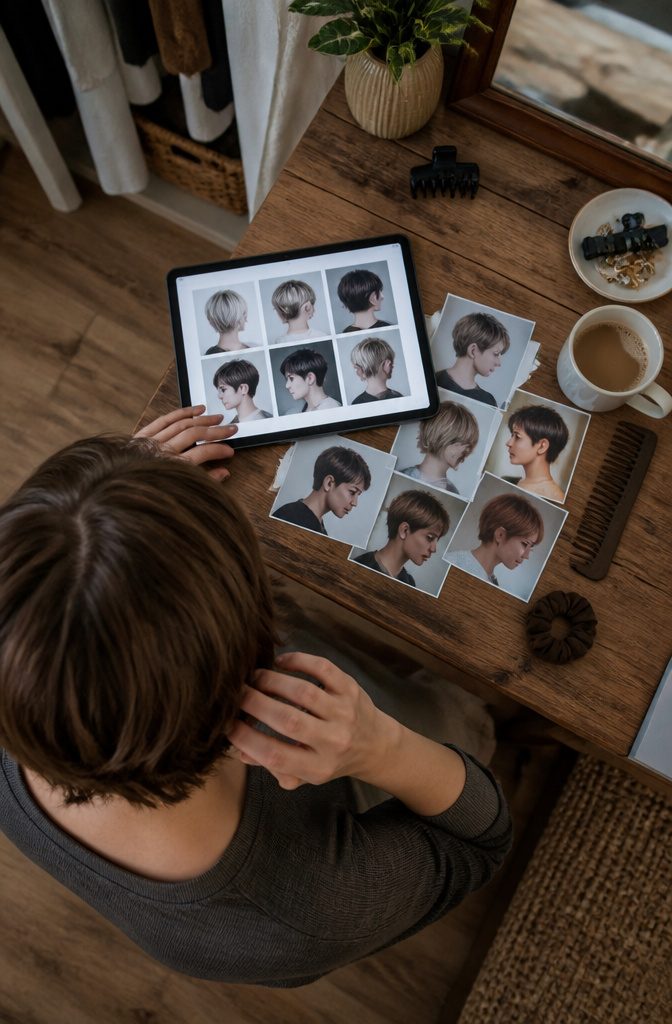
Start by collecting pictures of short styles that pull you toward them. Pinterest and Instagram are good for this, because you can save examples and compare them side by side.
Look for pixies, textured crops, layered bobs, asymmetrical pixies, and bobs with layers. Each one sits differently on the head and asks something different of your morning routine.
Face shape matters here. Round faces tend to look sharper with angular cuts like pixies or side-swept bobs.
Square faces soften with rounded layers or a blunt fringe. Oval faces can handle most short styles.
Heart-shaped faces often work best with chin-length layers or a side part. Long faces benefit from hair that either falls right at the jawline or stays much shorter, with some framing around the face to break up the length.
Hair texture and lifestyle narrow the field further.
If you air-dry most mornings, a style that needs daily heat styling will feel like more work than you bargained for. Save pictures of what you dislike, too.
The front of a cut might work for you, but the back might not. Bringing both kinds of examples makes it easier to talk through what you actually want when you sit down with a stylist.
2. Talk With a Stylist Before the Cut
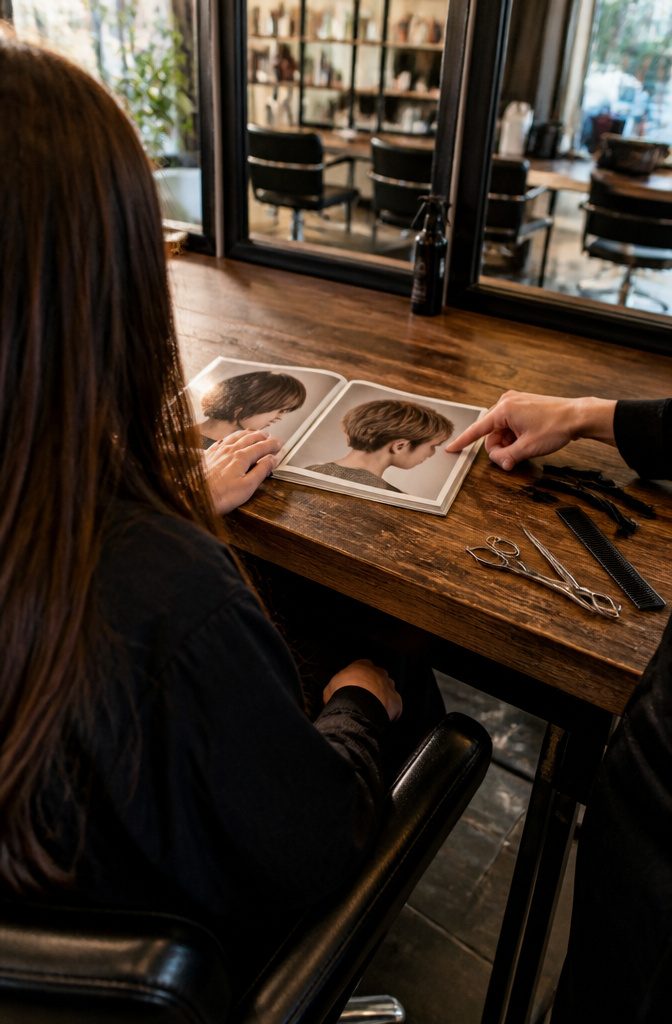
A stylist knows which lengths work for your face shape and how different cuts behave as they grow. That matters when you are making a change you cannot reverse in an afternoon.
Hair that took years to grow is gone in five minutes, and the stylist who cuts it should ask what you do with your hair each morning and how much time you are willing to spend on it after the cut.
It’s easier when you bring pictures to actually talk to your hair stylist about it, and actually both of you can find the middle ground on what you like and don’t like.
— Howcast
Bring reference photos of what you like and what you do not.
A stylist can look at the front of a cut you saved and explain why the back would not work, or suggest a similar shape that suits your hair texture better.
Pictures give you both something to point at instead of hoping the word "layered" means the same thing to each of you.
3. Assess the Hair and Plan the Cut
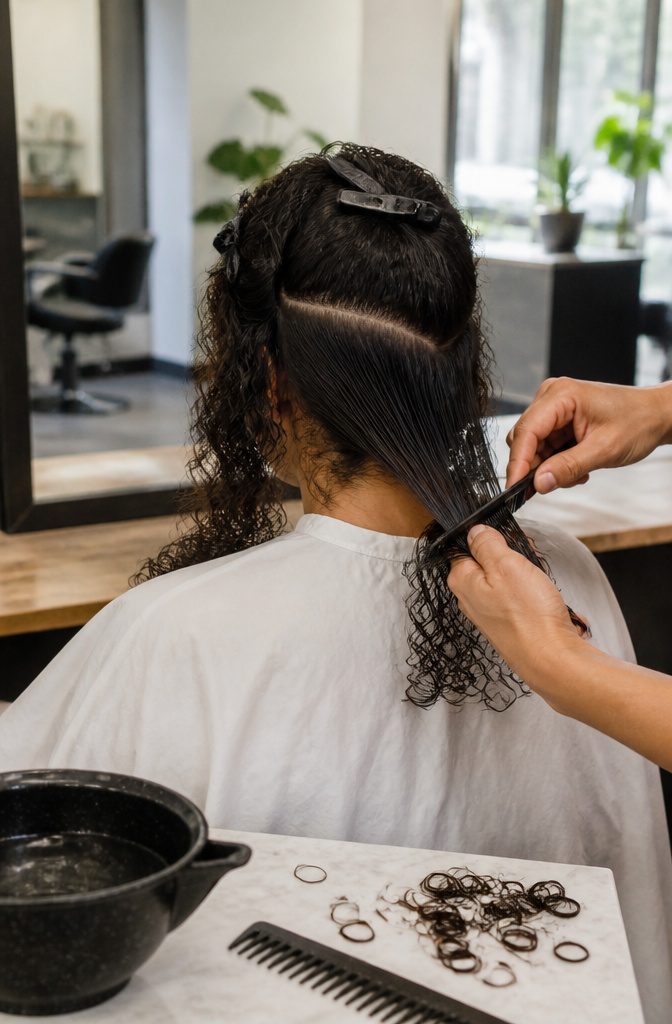
Hair condition, thickness, density, and natural texture decide how the cut will sit once shortened. Fine, straight hair takes a blunt bob cleanly but can lack body without layering.
Thick, curly hair gains volume and movement when reduced in length but may need point cutting or razor work to soften the edges and define the curl pattern.
Density matters too: a high follicle count means more hair to remove and more weight to manage, while low-density hair may struggle to fill out certain short styles without strategic shaping.
Hair emerges from follicles at a 45-degree angle to the scalp, which affects how the cut will behave.
A 90-degree cut creates a blunt edge, while a 45-degree angle introduces softness and movement. Balancing what you want with what the hair can actually do requires matching the desired result to hair type and face shape.
A cut that looks sharp in a reference photo may need adaptation if your texture or growth pattern differs, and a gradual approach often wins over committing to the shortest length right away.
4. Consider an Intermediate Length First
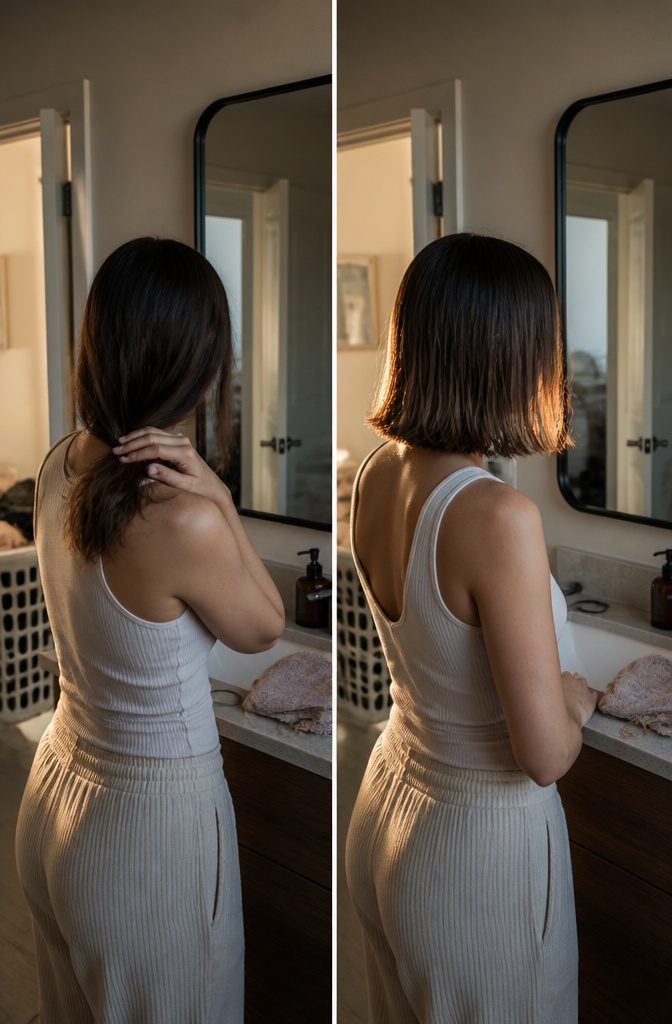
If the idea of going from long to short in one appointment makes you anxious, a lob (long bob) lets you test shorter hair without the full commitment.
The cut typically lands somewhere between chin and collarbone, which keeps enough length to pull back if you panic but removes enough weight that you start to feel the difference in how your hair dries and moves.
I think of it as a trial run: you get used to seeing less hair in the mirror, you learn whether you like the lighter feel, and if it turns out short hair is not for you, growing out a lob is faster than growing out a pixie.
The same logic applies to adding layers before you take off real length.
Layers change how your hair sits and behaves without shortening the overall silhouette, so you can adjust to a new shape before you commit to a new length.
Either path buys you time to decide whether you actually want to go shorter or whether the lob or the layered version is where you wanted to land all along.
5. Get the Cut With a Clear Plan for Its Shape
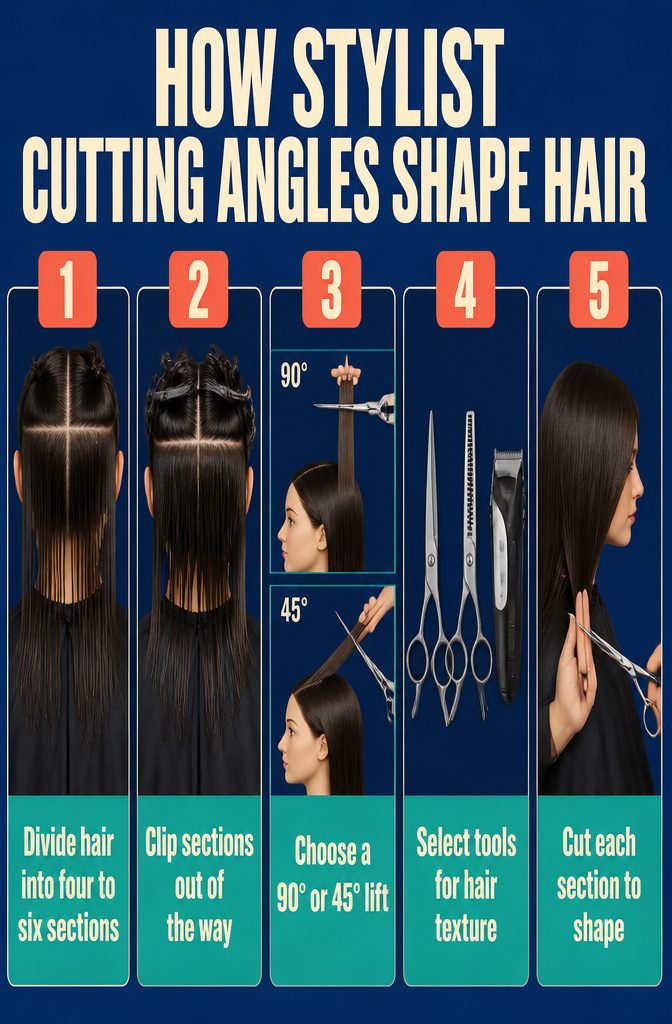
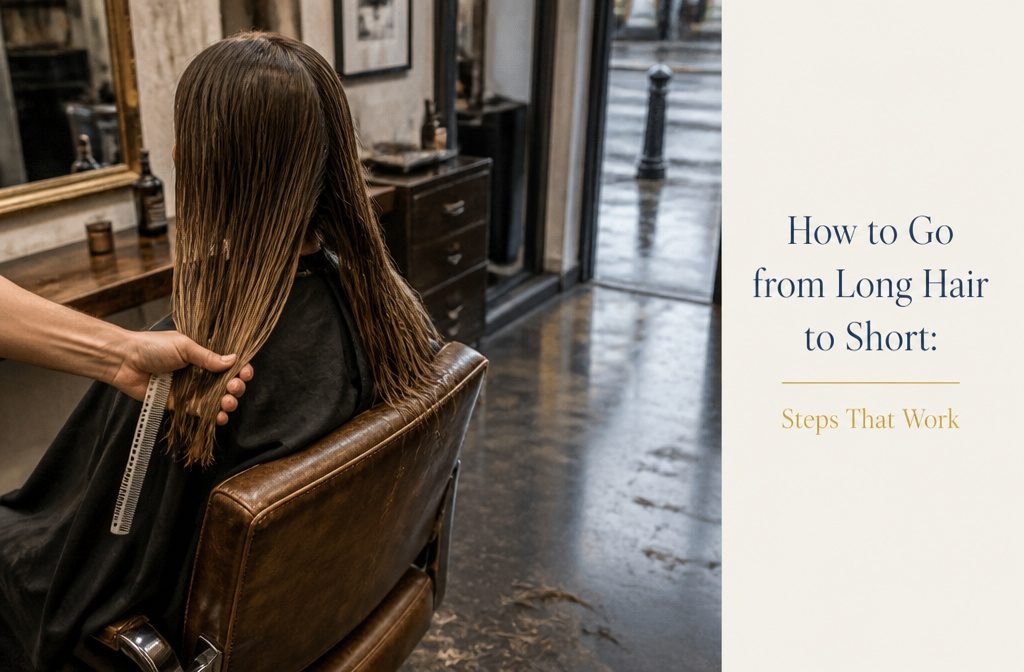
The stylist divides the hair into four to six sections depending on thickness, clipping each out of the way so no strand gets cut twice or skipped.
Thicker hair needs more sections to keep each one manageable, and the sectioning itself becomes part of the plan: where each section sits determines how the final shape will fall.
Each section is lifted at a controlled angle before the shears meet it. A 90-degree lift creates volume and a blunt edge, the hair standing perpendicular to the scalp so every strand hits the blade at the same point.
A 45-degree lift introduces softness and movement, the angle letting some strands fall longer than others. That difference in angle is how a stylist moves between sharp structure and something that grows out with less obvious lines.
The tools shift with texture. Shears handle most of the work, but thinning scissors remove bulk without changing length, and clippers give precision at the nape or sides where scissors alone might leave uneven patches.
For curly hair, point cutting snips small sections to define individual curls, and razor work softens edges that would otherwise sit too heavy.
Slide cutting, where the blade glides along the hair rather than straight across, adds texture through the body of the cut.
Freehand work skips the comb and lets the stylist follow the hair’s natural fall, useful when curls or waves would distort a measured section.
6. Adjust to How the Shorter Hair Moves and Behaves
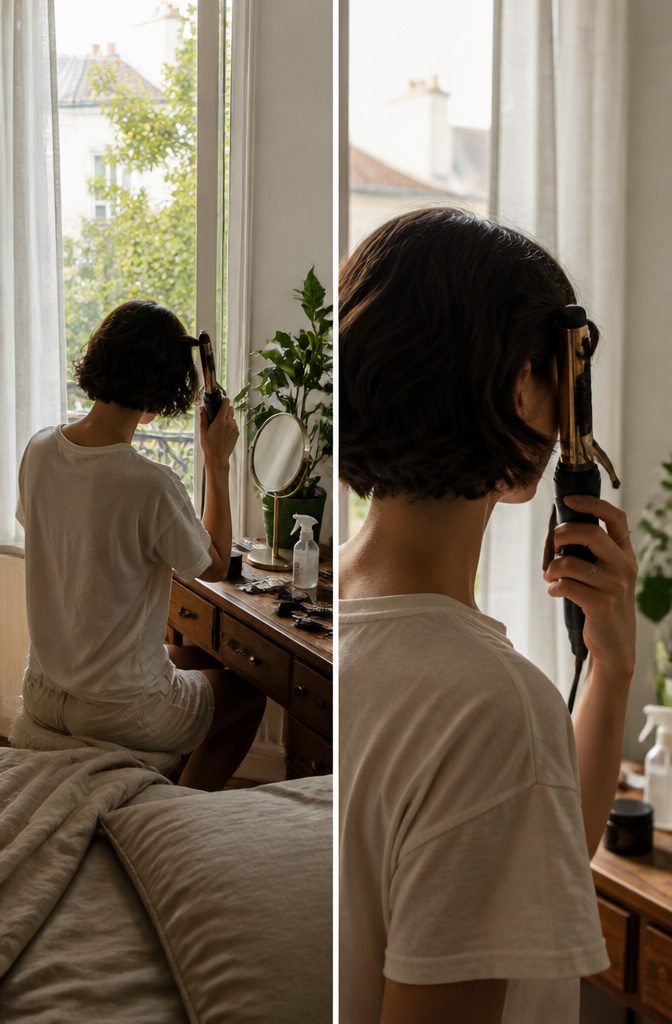
Short hair behaves nothing like long hair, and the first 2–4 weeks feel awkward while you learn what it does. Long hair has weight that holds it in place.
Short hair lifts, flips, and reacts to every pillow crease and humid morning. You notice how light your head feels when you turn, and styling products that worked before may sit too heavy or do nothing at all.
The adjustment is partly physical and partly visual. Without the weight of long hair framing your face, your features read differently.
You see more of your neck, your jawline, your ears. Some mornings the cut looks exactly right, others it sits flat or sticks out at one temple, and figuring out what fixes it takes experimentation.
I find that polished styling and relaxed texture each suit different days. For a sleek look, tuck hair behind your ears or use a styling product to slick it back.
For something more lived-in, add waves with a curling iron or work in a texturizing spray to create movement. Accessories like headbands and clips change the whole shape when you want a break from the cut itself.
Short hair offers more styling range than it first appears to, but only after you spend time learning what each tool does on your specific length and texture.
Face Shape Examples That Work
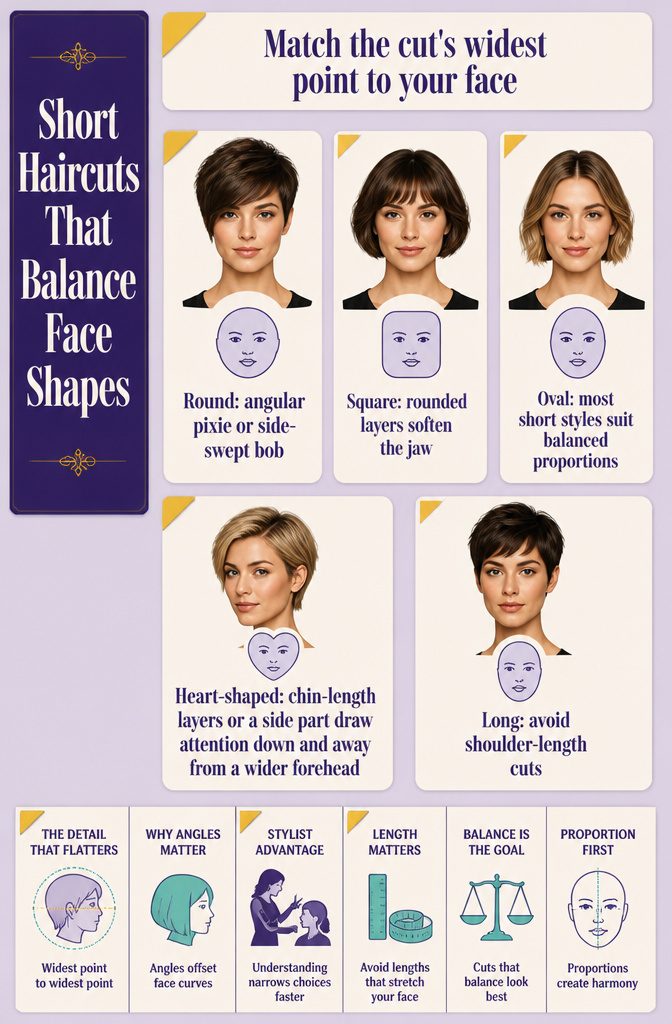
The detail that flatters is where the widest part of your face lines up with the widest part of the cut.
A round face reads rounder with a chin-length bob that swings wide at the jaw; swap in a pixie or a side-swept bob and the angles in the cut offset the curve in your face.
- Round faces: Angular cuts like pixies or side-swept bobs create contrast and keep the fullness from echoing itself.
- Square faces: Rounded layers or a blunt fringe soften the jaw and temples.
- Oval faces: The most forgiving shape. Most short styles work because the proportions already balance.
- Heart-shaped faces: Chin-length layers or a side part draw attention down and away from a wider forehead.
- Long faces: Keep some hair either medium length or cut it much shorter. Shoulder-length or collarbone cuts can stretch the face further; a pixie or a bob that ends above the chin stops the eye from traveling.
A stylist who understands facial symmetry narrows the field faster than trying every option yourself.
Products I Reach for With Short Hair
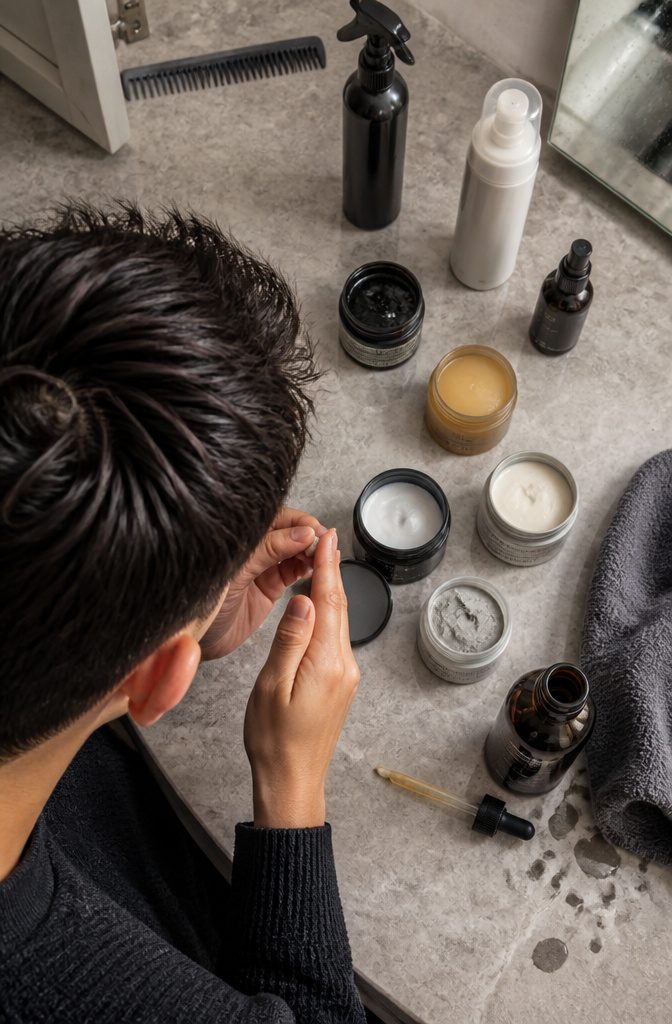
Short hair dries faster and sits closer to the scalp, so the wrong product shows immediately. I stick with formulas that add grip or definition without weight.
Pomades or waxes work for defined, spiky styles where each piece needs to hold its shape. Texturizing sprays give a tousled, natural look without stiffness.
Lightweight mousses build volume and hold at the root. Serums or oils tame frizz and add shine, though a drop or two is enough.
Clays add texture and separation with a matte finish, useful for choppy or piecey cuts.
Skip heavy creams or butters.
They sit on short hair rather than sinking in, and the result reads greasy by mid-morning. Experiment to find what your hair type takes, but start light.
Trim Every 4–6 Weeks to Keep the Shape
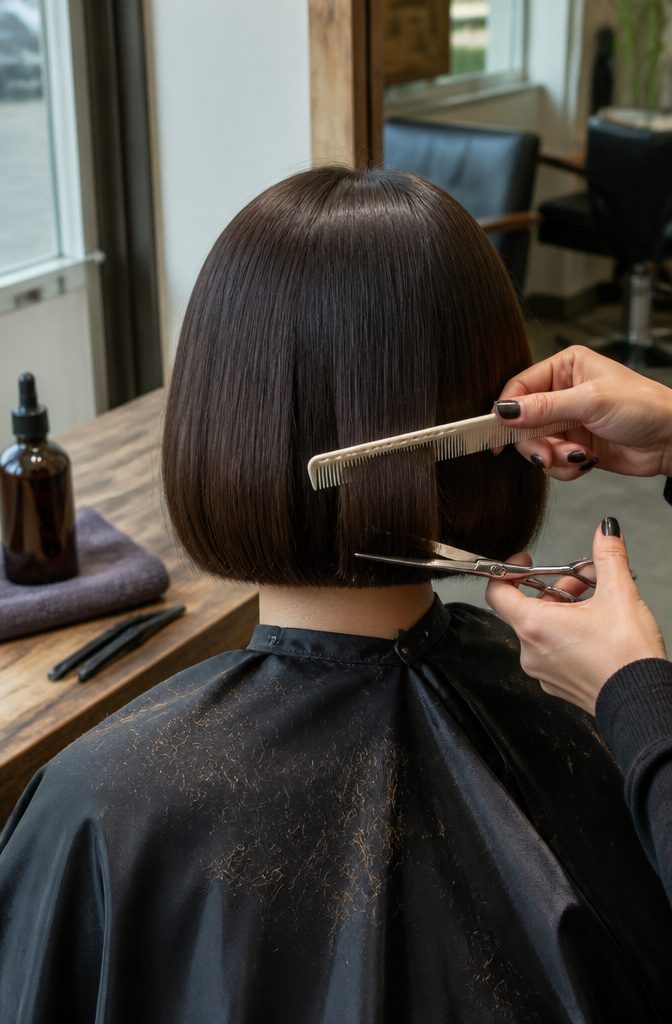
Short hair loses its shape faster than long hair, and that means trim every 4–6 weeks if you want the cut to look the way it did leaving the salon.
Long hair can stretch out between appointments because an extra half inch blends into the length.
Short hair shows that same half inch as overgrown layers, blunt edges that no longer sit clean, and a silhouette that reads more grown-out than styled.
Split ends arrive faster on short hair too, partly because the ends see more heat and product, partly because there is less length to absorb the wear.
Regular trims keep the layers even and the style polished instead of letting it drift into something shapeless.
Between cuts, nourishing oils and scalp treatments keep the hair itself healthy. Short styles put your face front and center, so the condition of the hair matters more than it did when length was doing some of the work.
A blunt cut will show a visible line as it grows back in, which some people like for its sharpness and others find too high-maintenance.
What a Short Haircut Costs
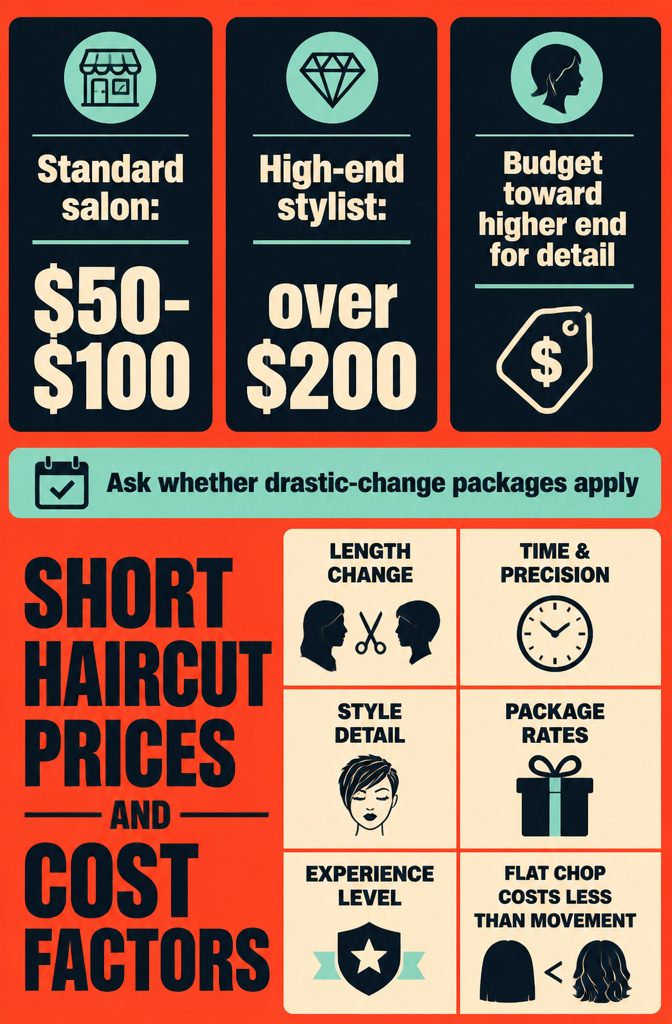
A short haircut at a standard salon runs $50 to $100, and booking at a high-end stylist or celebrity barber pushes that past $200.
If you’re cutting off significant length, the appointment may cost more than a routine trim because the stylist spends additional time shaping and precision-cutting through the transition.
Some salons bundle drastic changes into a package rate, so ask when you book whether that applies to your cut.
I budget toward the higher end of the range when the style has detail that matters: layers that need to hit specific points around the face, a pixie with texture variation, or bangs that frame a particular way.
A flat chop to one length costs less than a cut with movement built in.
Prepare Your Hair 1–2 Days Before
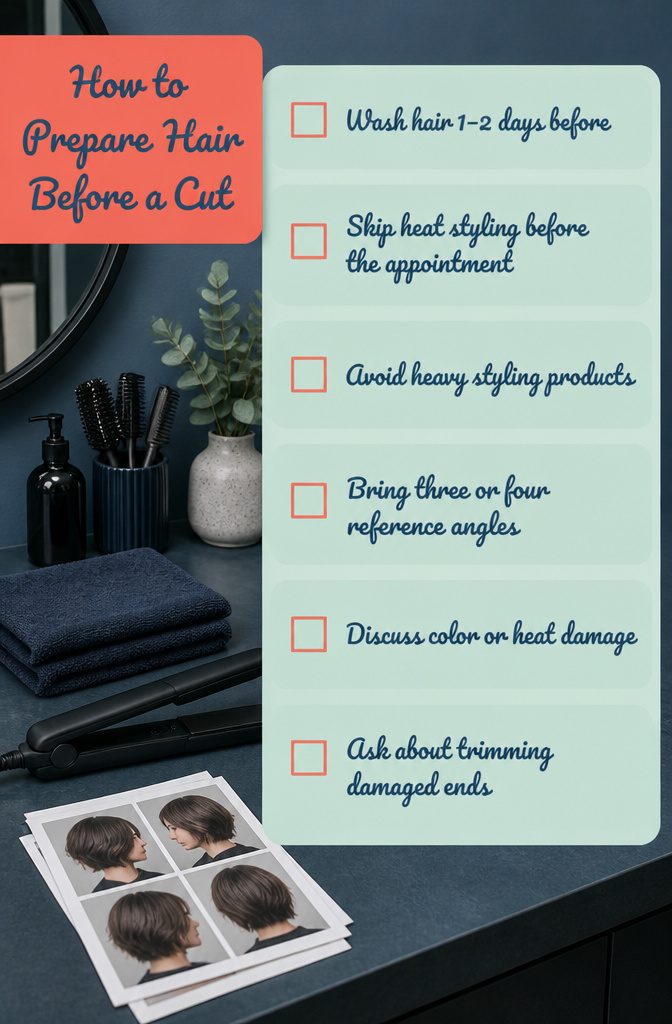
- Wash your hair 1–2 days before the appointment. This timing removes buildup from styling products and oil but leaves enough natural oil for the hair to hold its texture. Hair washed the morning of can be too slippery, and hair that hasn’t been washed in a week can look greasy enough to mislead the stylist about its real behavior.
- Skip heat styling and heavy products in the days leading up to the cut. Flat irons, curling wands and serums weigh hair down and hide how it naturally falls. The stylist needs to see what your hair actually does so the cut works with its real texture, not a styled version of it.
- Bring reference photos of the short styles you want. Photos communicate better than descriptions, and having three or four angles of the same cut gives the stylist a clearer picture of what you’re after.
- Discuss hair health during the consultation. If your hair is damaged from color or heat, mention it. The stylist may recommend a trim to remove the worst of it before taking more length off.
Frequently Asked Questions
How much does it cost to cut long hair into short hair?
A short haircut at a standard salon runs $50 to $100, and booking at a high-end stylist or celebrity barber pushes that past $200.
If you’re cutting off significant length, the appointment may cost more than a routine trim because the stylist spends additional time shaping and precision-cutting through the transition.
Some salons bundle drastic changes into a package rate, so ask when you book whether that applies to your cut.
How do I choose the right short haircut for my face shape?
Round faces tend to look sharper with angular cuts like pixies or side-swept bobs, while square faces soften with rounded layers or a blunt fringe.
Oval faces can handle most short styles, heart-shaped faces often work best with chin-length layers or a side part, and long faces benefit from hair that either falls right at the jawline or stays much shorter.
A stylist who understands facial symmetry narrows the field faster than trying every option yourself.
How long does it take to adjust to short hair?
The first 2 to 4 weeks feel awkward while you learn what short hair does. Long hair has weight that holds it in place, but short hair lifts, flips, and reacts to every pillow crease and humid morning.
The adjustment is partly physical and partly visual, as you see more of your neck, jawline, and ears without the weight of long hair framing your face.
What products should I use to style short hair?
Pomades or waxes work for defined, spiky styles, texturizing sprays give a tousled look without stiffness, and lightweight mousses build volume at the root.
Clays add texture and separation with a matte finish, while serums or oils tame frizz with just a drop or 2. Skip heavy creams or butters, as they sit on short hair rather than sinking in and read greasy by mid-morning.
How often should I get a trim after cutting long hair into short hair?
Trim every 4 to 6 weeks if you want the cut to look the way it did leaving the salon.
Short hair loses its shape faster than long hair because an extra half inch shows as overgrown layers and a silhouette that reads more grown-out than styled.
Regular trims keep the layers even and the style polished instead of letting it drift into something shapeless.
What’s the best way to prepare my hair before cutting it short?
Wash your hair 1 to 2 days before the appointment to remove buildup but leave enough natural oil for the hair to hold its texture.
Skip heat styling and heavy products in the days leading up to the cut so the stylist can see what your hair actually does.
Bring reference photos of the short styles you want and discuss hair health during the consultation if your hair is damaged from color or heat.