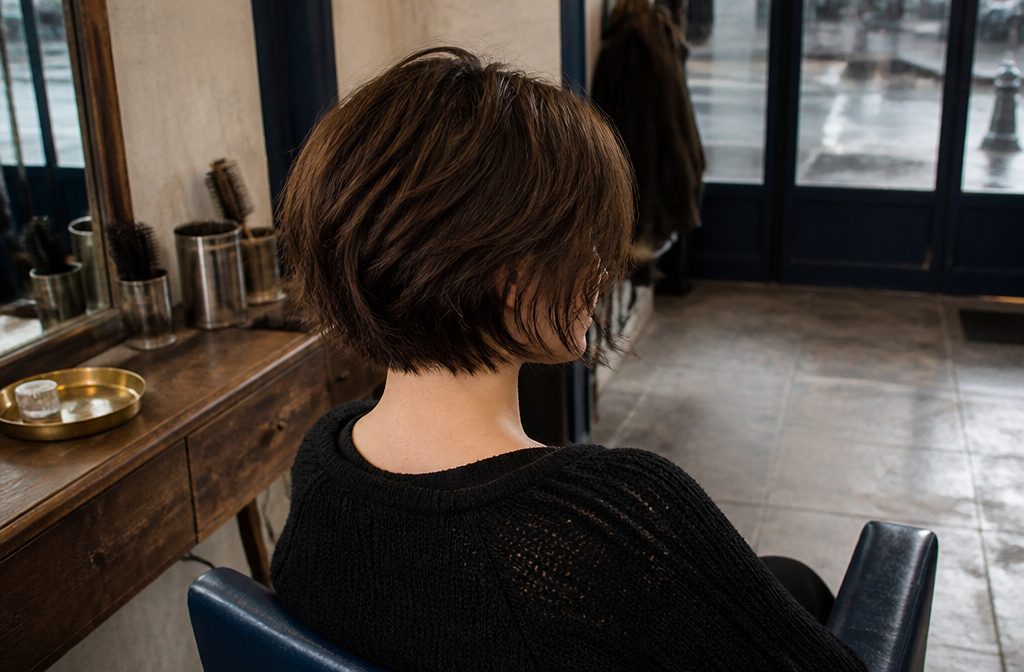
Short cuts can frame your face when the layers around it hit the right spots, usually somewhere between your temples and jawline.
What makes them work is placement: if the shortest pieces land where your face is widest, they carve out dimension; if they sit too high or too low, they disappear or sit flat.
Hairstylist Seamus McKernan notes that curtain bangs falling just below the cheekbones shape the area and create a slimmer silhouette, and the same principle applies across pixies, bobs and textured crops.
1. Shaggy Lob With Face-Framing Layers
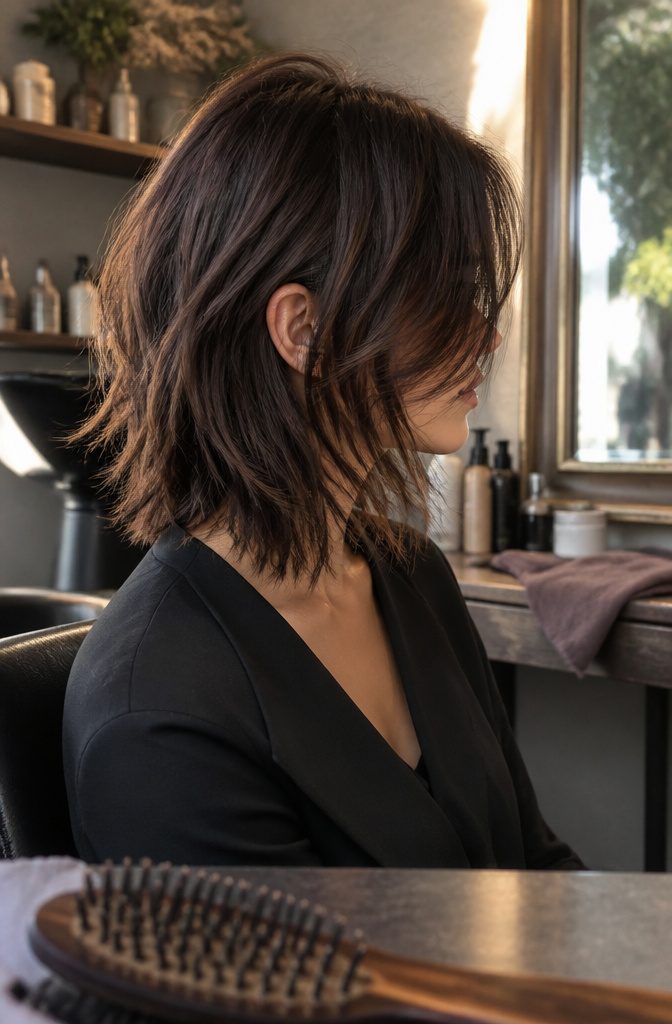
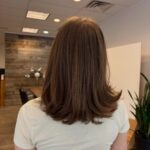
The shaggy lob sits just past the chin or grazing the collarbone, long enough to tuck behind your ear but short enough that the layers around your face don’t disappear into the length.
Those front pieces are cut shorter than the rest, often starting at cheekbone level, and they angle forward to draw the eye toward your features rather than straight down past them.
The bulk of the cut is layered through to keep volume at the crown and prevent the hair from lying flat, which makes the whole thing look deliberate instead of grown out.
What makes this version work as face framing is that the layers graduate inward.
The shortest pieces frame your temples and cheeks, and each layer after that sits a bit longer, so the cut moves with you rather than holding one stiff shape.
When you turn your head or tuck one side back, the layers shift and catch light differently.
That movement keeps the cut from reading as heavy even though the overall length gives you more to work with than a true bob would.
2. Choppy Layered Crop
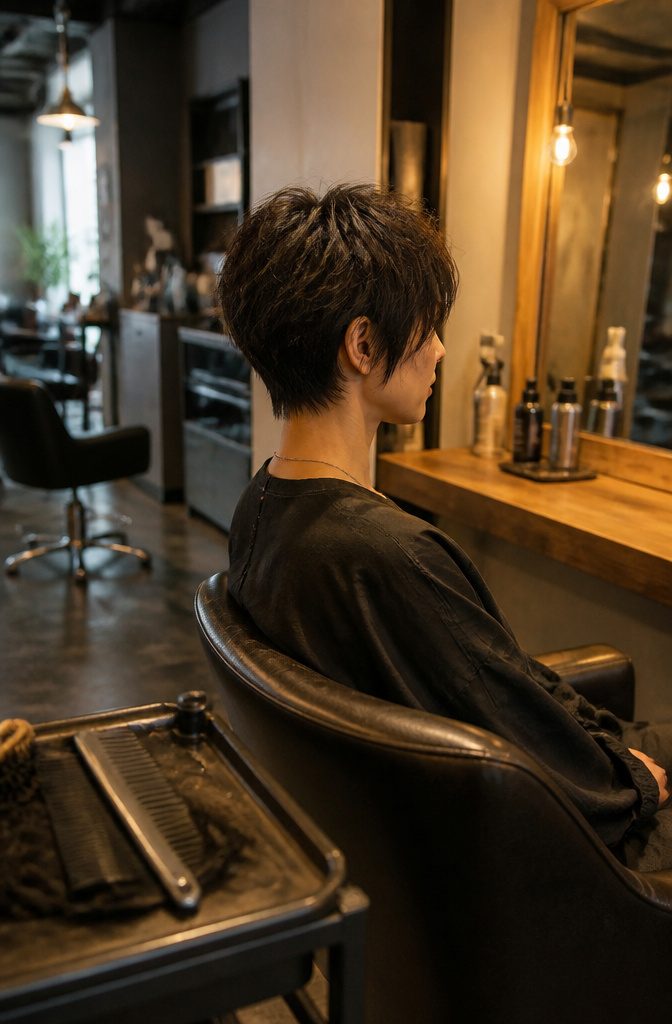
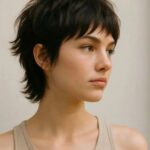
The choppy layered crop runs shorter hair with tighter sides and height on top, creating an elongating effect that pulls the eye upward rather than widening across the face.
The layers are cut inward along the line of the cheekbones, amplifying their natural shape instead of hiding it. That inward direction matters: it carves dimension into the cut rather than letting everything fall flat against the head.
The tight sides keep volume controlled where you don’t want it, while the height on top shifts the balance and adds structure.
The layers along the cheekbones do the framing work, and the choppiness gives the cut movement without requiring much styling.
I like this one for anyone who wants definition and shape without length, and it grows out cleaner than cuts that rely on precision all the way around.
3. Face-Framing Half-Up Style
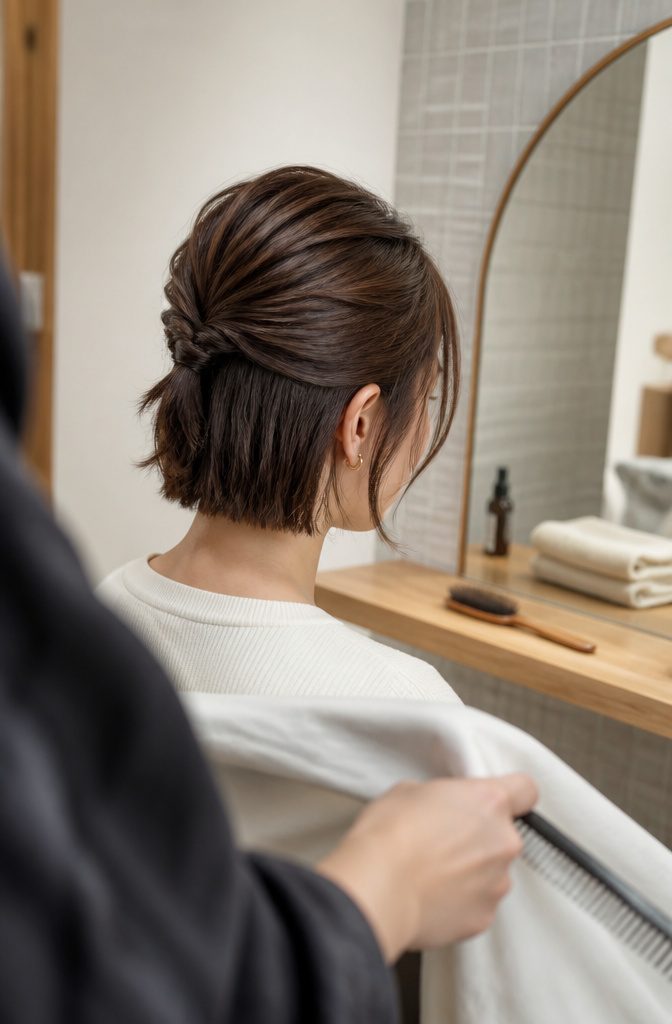
A half-up style pulls hair away from the crown while leaving the sides close to the head, so you get volume and lift where you want it and sleekness where you don’t.
The face frame stays out, doing the actual shaping work around your cheekbones and jawline, while the top section lifts to add height.
This approach works especially well if you want an elongating effect without committing to a full updo or losing the framing detail that makes short hair flattering in the first place.
You can build shape on top and still keep hair directly against the contour of your face, which is hard to pull off with a completely down style.
4. Straight-Edge Short Cut
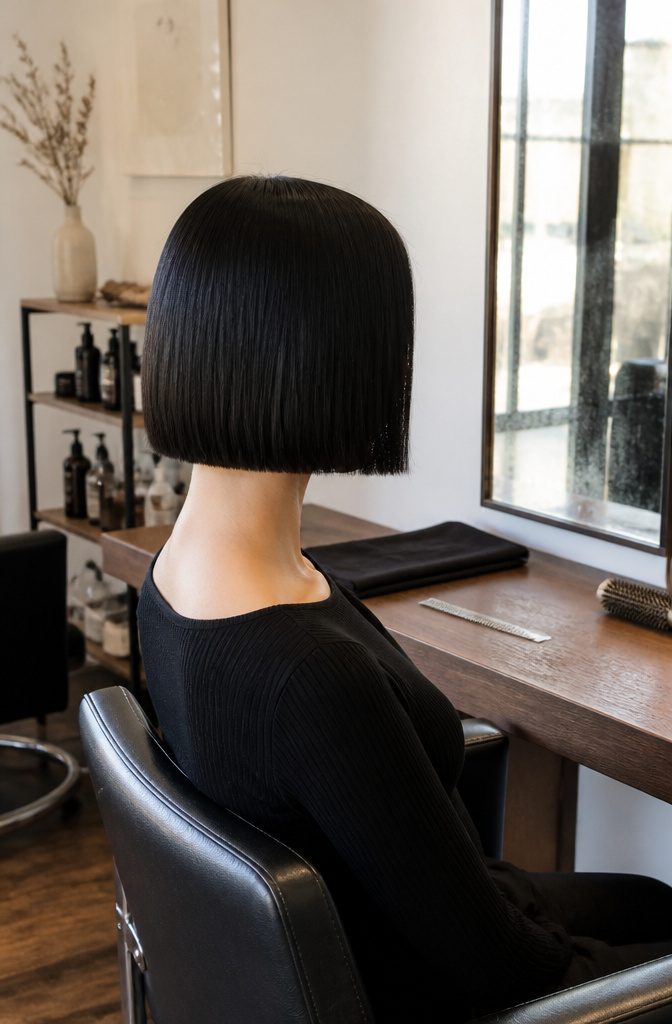
A cut that ends blunt and straight above the chin places the sharpest line right where the cheekbones sit widest, and that edge does real work.
The hair stops cleanly rather than tapering or softening, so the eye lands on the jaw and the bone structure instead of drifting down the neck.
The length matters: above the chin keeps the weight high and the line visible from the side, where a longer blunt cut would fall past the face entirely.
I find this works best on straight or barely waved hair, since curl disrupts the edge and turns what should read as graphic into something gentler.
The cut grows out faster than a layered one shows length, because every hair hits the same point and adds bulk rather than blending in.
5. Tight Pixie
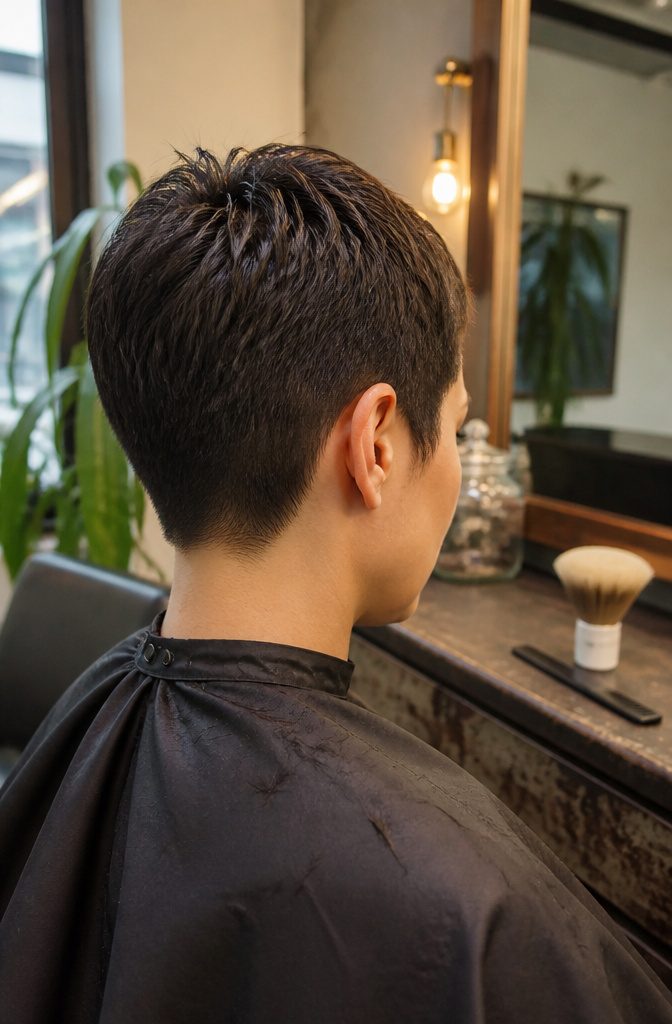
A tightly cropped pixie pulls all the hair away from the face and follows the natural contour of the head, which means cheekbones, jawline and temple shape come forward with nothing to soften or interrupt them.
The cut hugs close at the sides and back, often clipper-tapered to skin or kept under an inch all around, and the result reads as almost architectural. You see the structure of the face first, the hair second.
This works best when you want to emphasize rather than balance. A strong jawline or high cheekbone becomes the feature, and the haircut acts as the frame that directs attention straight to it.
The upkeep is frequent: growth shows fast on a tight crop, and most people book a trim every three to four weeks to keep the line clean.
Styling time is minimal, usually just a pass with pomade or wax to add texture or separation at the crown.
6. Sleek Flip
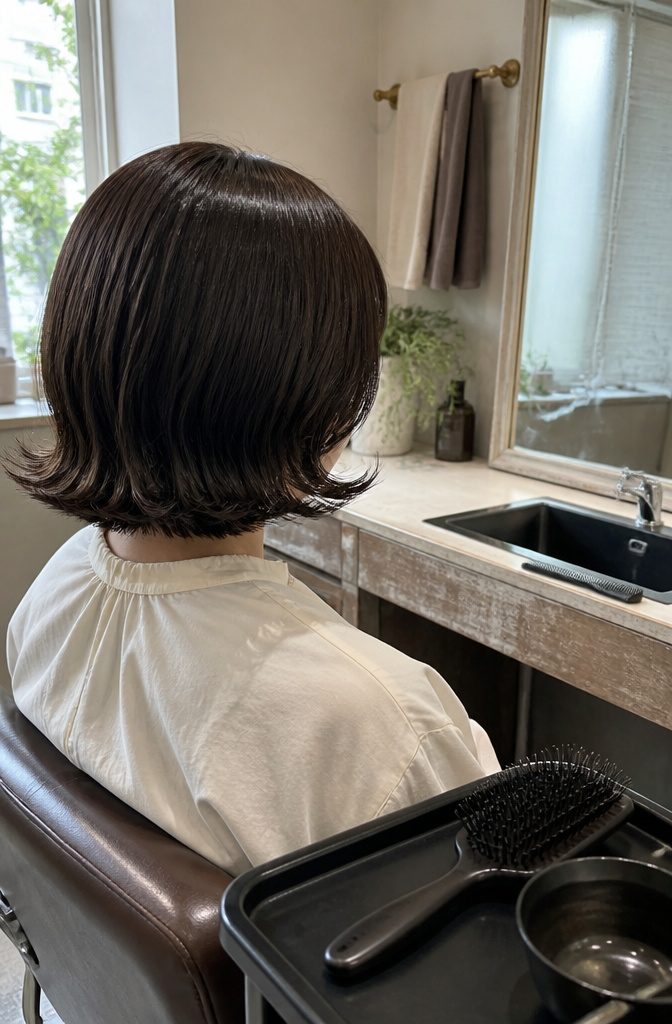
A gelled-down short cut with flipped ends pulls the eye down and away from the crown, placing all the visual weight right at the jaw or just below.
The gel smooths the top and sides flat against the head, so the shape reads as compact and controlled until the hair kicks out in a deliberate curve at the bottom.
That outward flip creates a soft frame that follows the jawline without adding width higher up.
The look works best on hair that sits somewhere between chin and ear length.
Any shorter and there is not enough length to hold the flip; much longer and the flipped section starts to look like a separate event rather than part of the cut.
I find it suits straight or slightly wavy hair better than very curly textures, since the gel does the work of creating one clean line rather than fighting against natural movement.
7. Bouncy or Voluminous Bob
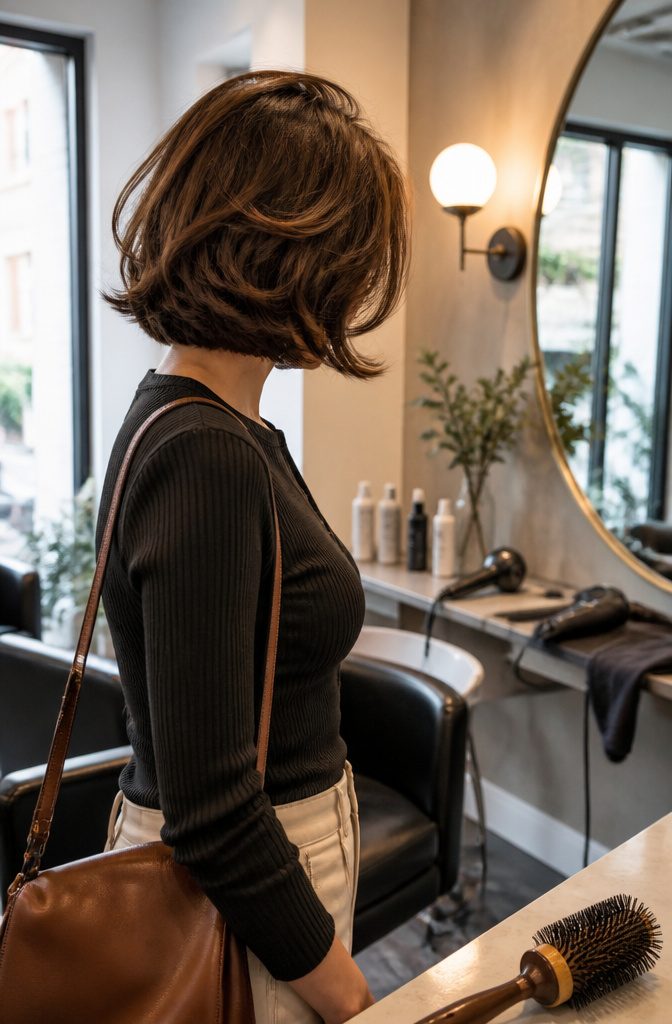
A bob cut with volume concentrated at the crown and roots lifts the top of the head visually, which balances a round or square face by adding vertical dimension where the face is widest.
The volume draws the eye upward rather than outward.
Layers that start around the jawline or higher frame the face without adding bulk at the sides, and those layers also let the hair move instead of sitting flat against the head.
The styling matters as much as the cut itself. A round brush and a blowdryer angled at the roots create lift that lasts through the day, and a light texturizing spray at the crown holds that height without stiffness.
The cut grows out well because the volume placement stays proportional as length increases, though you lose some of the shaping effect if you wait longer than eight weeks between trims.
8. Curtain Bangs That Shape Cheekbones
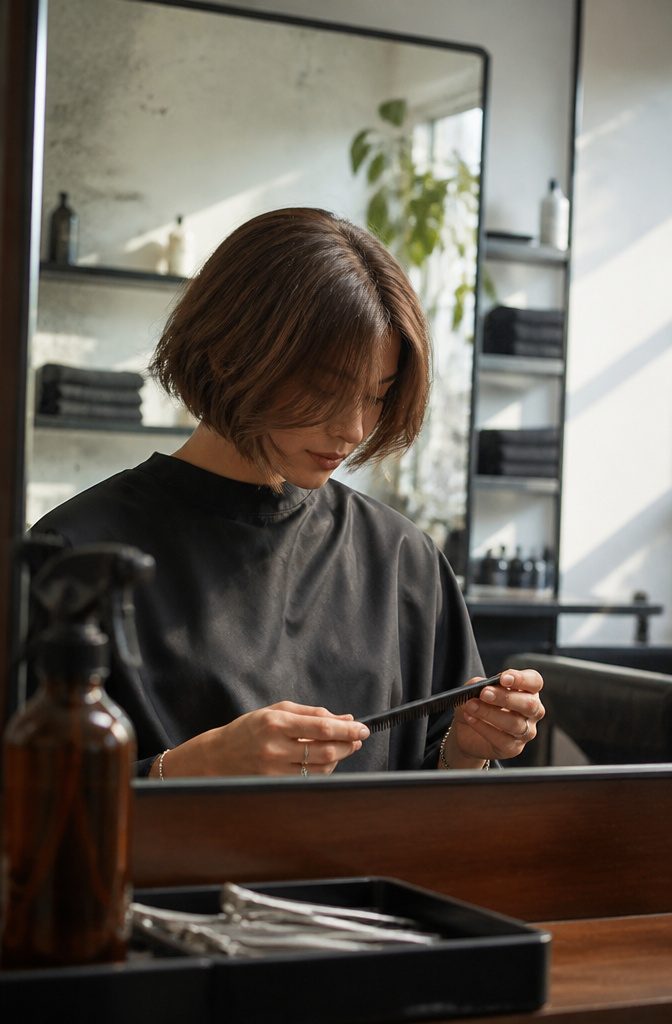
Curtain bangs that fall just below the cheekbones can carve them out and create a slimmer silhouette, according to hairstylist Seamus McKernan.
The fringe curves around the face and shapes the area around both the cheekbones and eyes, giving you a flattering frame without committing to a blunt line straight across.
The cut works because it hits below the widest point of your face. If your cheeks are the fullest part, bangs that sweep past them add definition rather than cutting straight through the middle where your face is already round.
McKernan calls this approach "cool girl" styling, and the fringe pairs well with textured crops or bobs that already have movement.
Curtain bangs grow out more gracefully than straight-across fringe.
As they get longer, they blend into face-framing layers instead of sitting heavily on your forehead. You can part them in the center or sweep them to one side depending on how much coverage you want that day.
9. Curly or Textured Short Cut
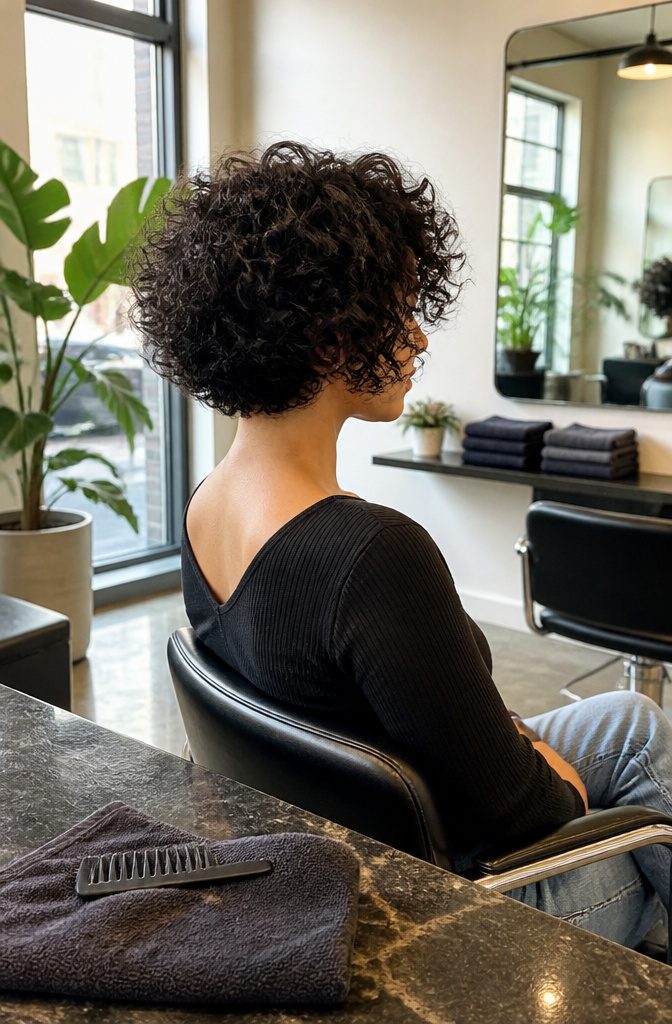
Curly and textured hair responds differently to a short cut because the natural bends can reshape how your face reads.
Hair type matters more than most stylists admit when you go short, and texture gives you options straight hair has to fake with a round brush.
With curly or textured hair, you can take it short and almost create a new head shape, and use the natural bends in the hair to create the best face frame.
— AOL
That head-shape shift is what makes this cut work: instead of relying on layers alone, the curl itself wraps around your jawline or temples and draws the eye where you want it.
A short curly cut can pull volume away from areas that don’t flatter and cluster it where you need structure.
The cut follows the curl pattern rather than fighting it, so upkeep is lower than a straight cut that needs daily heat styling to hold its frame.
10. Voluminous Half-Up or Half-Pony Style
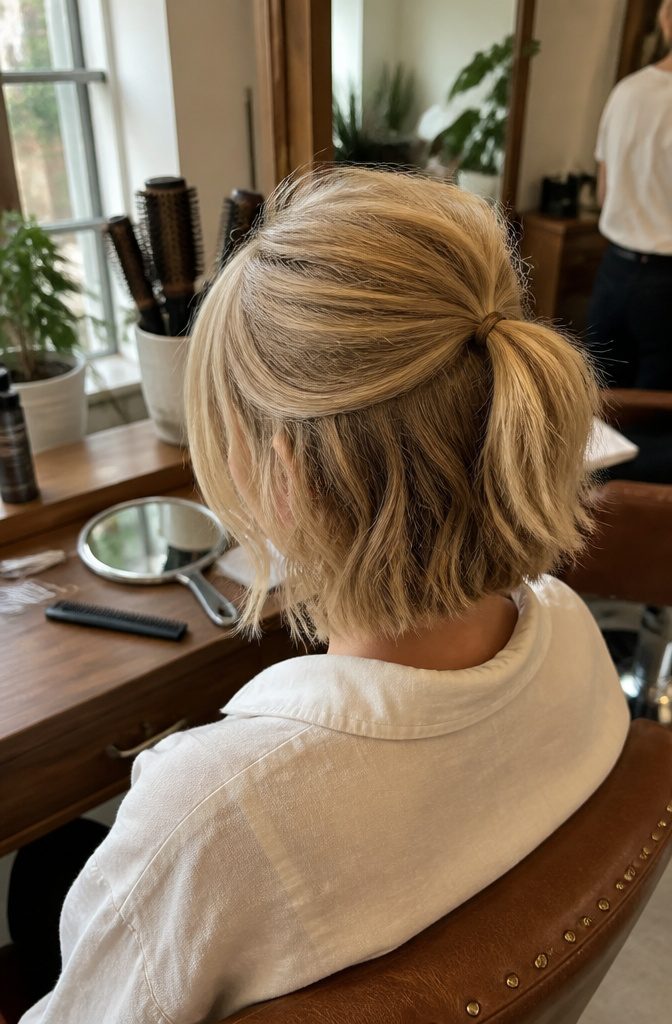
A half-up style with fringe that curves around the face creates both volume and a flattering frame, particularly when you want height on top without pulling everything away from your cheeks.
Jennifer Coolidge pulls this off with a half pony and bangs that follow the line of her face, and the effect is immediately more dimensional than wearing the same cut fully down.
The volume lifts the eye upward while the loose fringe softens the perimeter.
This approach works especially well if you want to keep the sides close to your head but still add shape on top.
You build height where you need it and leave out just enough to frame, which does more than either move alone.
The half-up portion gives you control over proportion without committing to a full updo, and the face-framing pieces stay put to carve out your features.
11. Reverse Blowout or Jaw-Following One-Length Cut
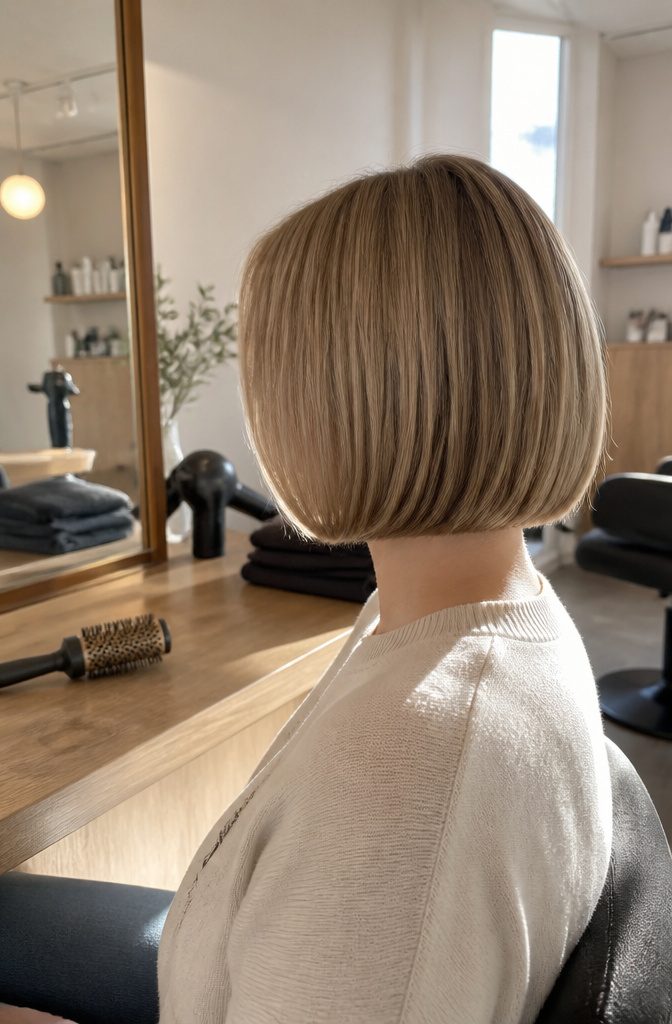
A reverse blowout that follows the jawline takes a one-length bob and curls the ends inward so they trace the bone structure from ear to chin.
The movement pulls the eye along the sharpest part of your profile instead of sitting flat against the face or flipping out past it. Where a standard bob cuts a horizontal line across the jaw, this version bends around it.
The blowout itself requires tension and a round brush pulled under and in as you dry, section by section.
Hair that naturally falls straight or slightly wavy holds the shape longest. Finer hair picks up the curve more easily than thick, coarse strands that want to straighten back out by midday.
The cut still grows out cleanly because the length stays even, but the styled shape needs heat every morning to bend back into place.
12. Beach Waves or Soft Waves

Adding a loose curl or soft wave brings movement that shifts as the face moves, and that movement does what flat texture cannot: it catches light differently on every turn and creates the soft framing edge people mean when they ask for face-framing cuts.
The curl does not need to be tight or structured.
A loose S-wave that starts an inch or two below the crown is enough to break up the weight and let shorter front pieces sit slightly away from the cheek rather than lying flat against it.
The softer the wave, the more forgiving it is on rounder face shapes, because there is no hard line where the hair ends and the skin starts. The two blend.
I find this finish works best on bobs and longer pixies where there is enough length to hold the curl without flipping outward in stiff pieces. On very short crops, the wave can read more like cowlick than intention.
13. Blunt Bob
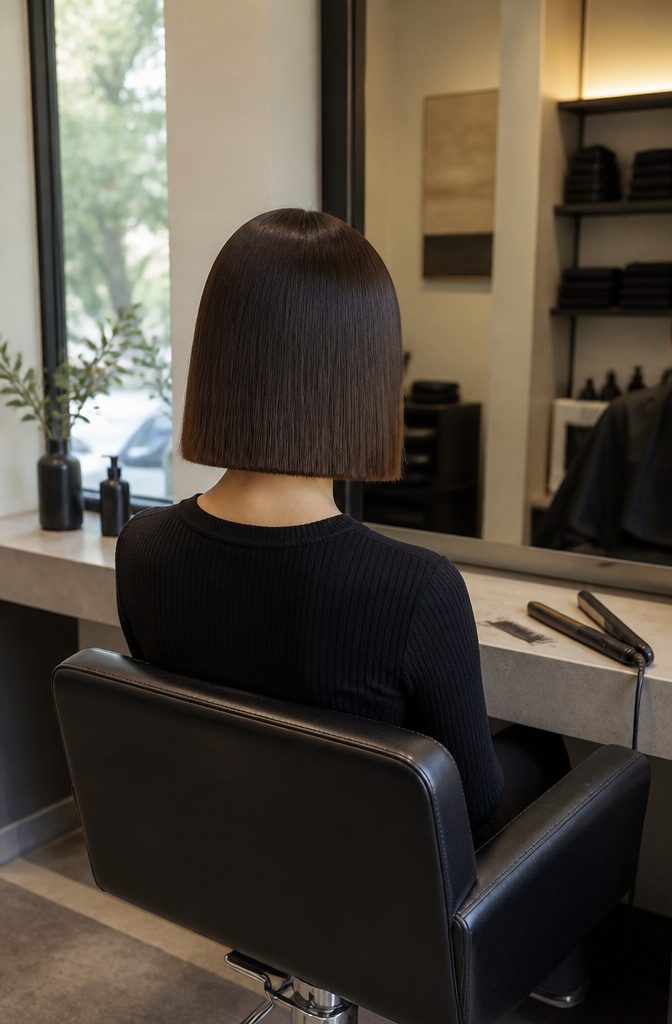
A middle-parted bob cut blunt across the ends sits close to the face and frames it with one clean horizontal line. The weight collects at the bottom, which makes the cut feel solid and structured rather than soft or wispy.
That line can hit anywhere from just below the ears to the jawline, and where it stops changes what the cut does: higher reads graphic and modern, lower feels polished and a bit more traditional.
The middle part keeps everything balanced and pulls the eye straight down the center of the face, which works particularly well for oval and heart-shaped faces.
The blunt edge holds its shape for weeks longer than a layered bob because there are no shorter pieces to stick out as they grow.
You will need a trim every six to eight weeks to keep the line sharp, but daily styling is minimal.
A flat iron or round brush keeps it sleek, or you can let it air-dry if your hair sits straight on its own.
14. Soft Layered Bob
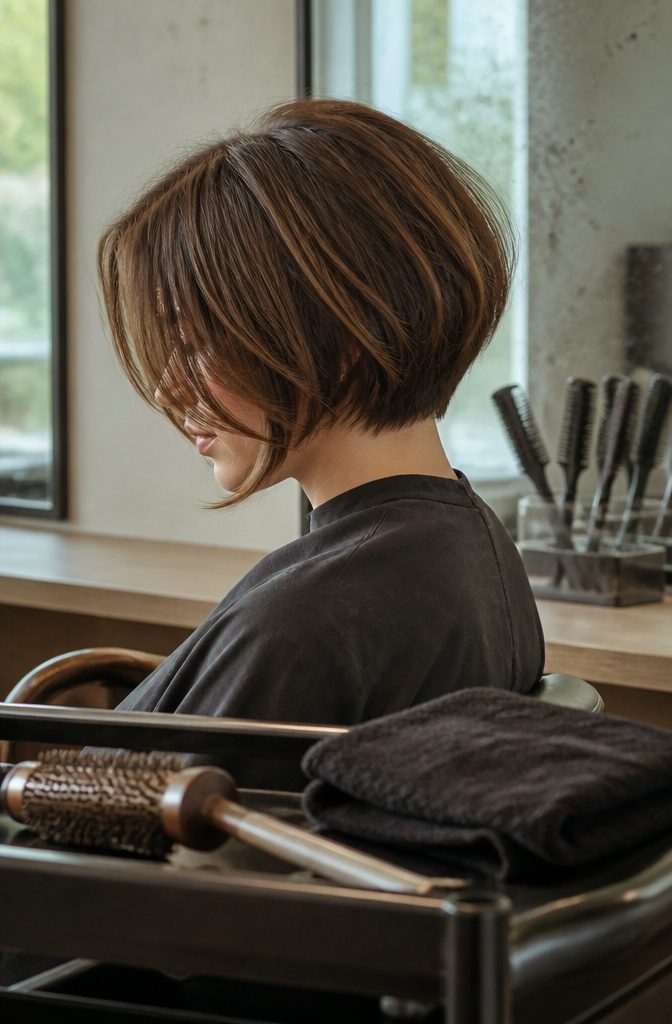
A layered bob cut with wispy face-framing layers keeps all the weight and structure of a classic bob but adds soft, lightweight pieces near the face that catch light and move independently from the rest.
The wispy layers are thin enough that they don’t disturb the overall silhouette, so the cut still reads as a bob from behind but gains texture and natural dimension from the front and sides.
The face-framing layers lift off the jawline instead of sitting flat against it, which gives the impression of movement even when the hair is completely still.
That lightness is what separates wispy layers from heavier, blunt-cut face-framing pieces: they taper to fine ends rather than stopping at a hard line, so they blend back into the rest of the bob without a visible demarcation.
The result is volume that looks like it came from the cut itself rather than from styling products or a round brush.
15. French Bob With Wispy Layers
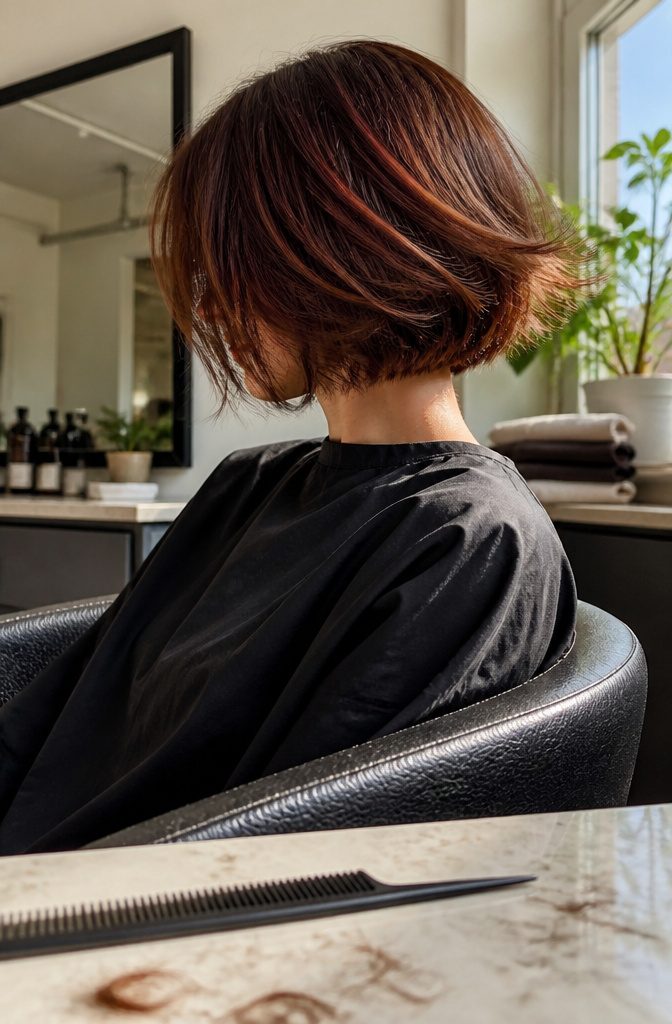
The French bob with wispy layers sits just below the jaw and trades the blunt edge of a classic bob for soft, feathered ends that catch light and move when you turn your head.
The layers are concentrated around the face rather than stacked through the back, so you get definition where it counts without losing the weight that makes a bob look like a bob.
Wispy means the stylist point-cuts or razors the ends instead of cutting straight across, leaving texture that reads as intentional rather than choppy.
The result frames your cheekbones and jawline without clinging to them, and because the layers are subtle, the cut still holds its shape as it grows.
You will need a trim every six to eight weeks to keep the ends from looking scraggly, but day-to-day styling is minimal: a round brush and a few minutes with a blow dryer, or let it air-dry if your hair has any natural wave.
16. Pixie With Wispy Bangs
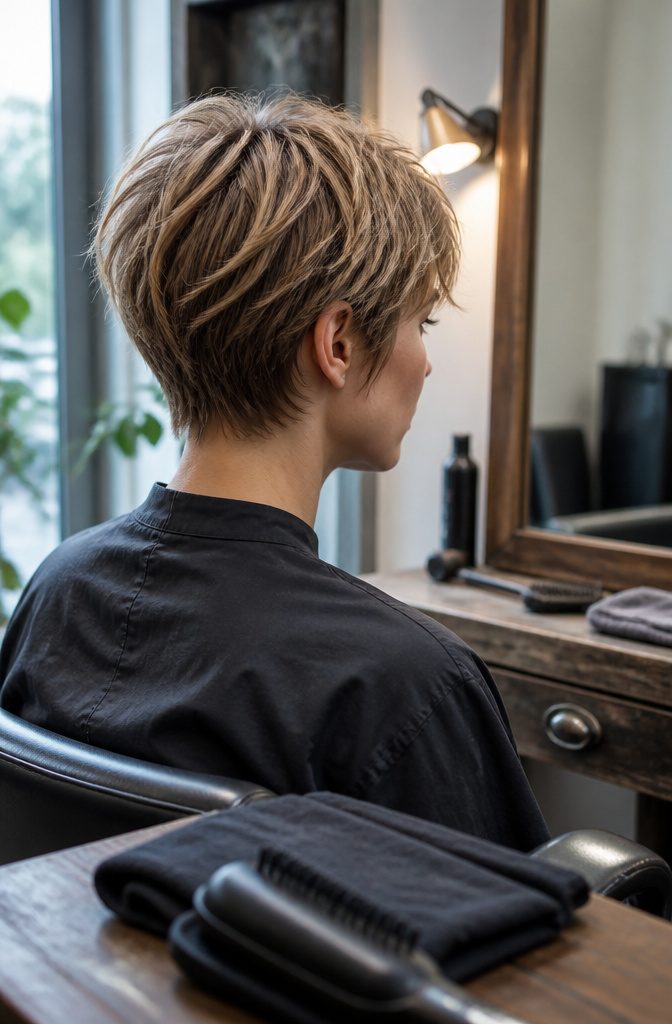
A pixie with wispy bangs brings soft texture right to the face without the weight or bluntness of a heavier fringe.
The bangs stay light and feathered, which means they frame your forehead and temples in a way that feels modern rather than severe.
Face-framing layers cut around the ears and cheekbones add movement and keep the overall shape from reading too blunt or cropped.
This cut works well for everyday wear because the texture is forgiving.
The wispy quality means the bangs don’t need to sit perfectly to look intentional, and the layers give you enough shape that you can skip a full blow-dry most mornings.
I find this version of a pixie hits a sweet spot between structured and soft, giving you an elegant finish without requiring much hands-on styling each day.
17. Feathered Pixie
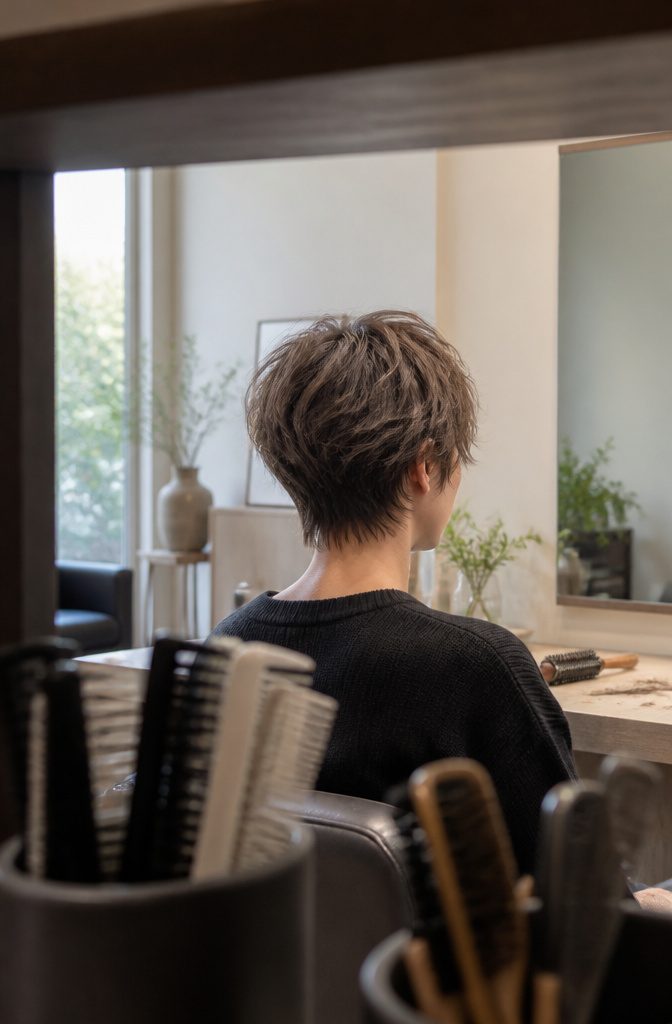
Feathered layers bring soft texture and movement to a pixie without weight.
The wispy, piece-y finish opens up the face and keeps the cut from sitting too tight or severe, which matters when you’re working with very short hair that can otherwise look stark or overly tailored.
The feathering adds volume through the crown and around the temples, so the cut reads light rather than flat.
That lift is what gives a feathered pixie its modern finish, the kind that looks fresh out of the chair but doesn’t demand a blowout every morning.
Most of the movement comes from how the layers are cut, not from styling product or heat, which makes this a practical option if you style at home.
The natural texture also means the cut grows out more gracefully than a tight, blunt pixie. As it lengthens, the feathered ends blend rather than forming a hard line, which buys you a week or two before the next trim.
18. Rounded or Chin-Length Bob and Layered Crop Variations
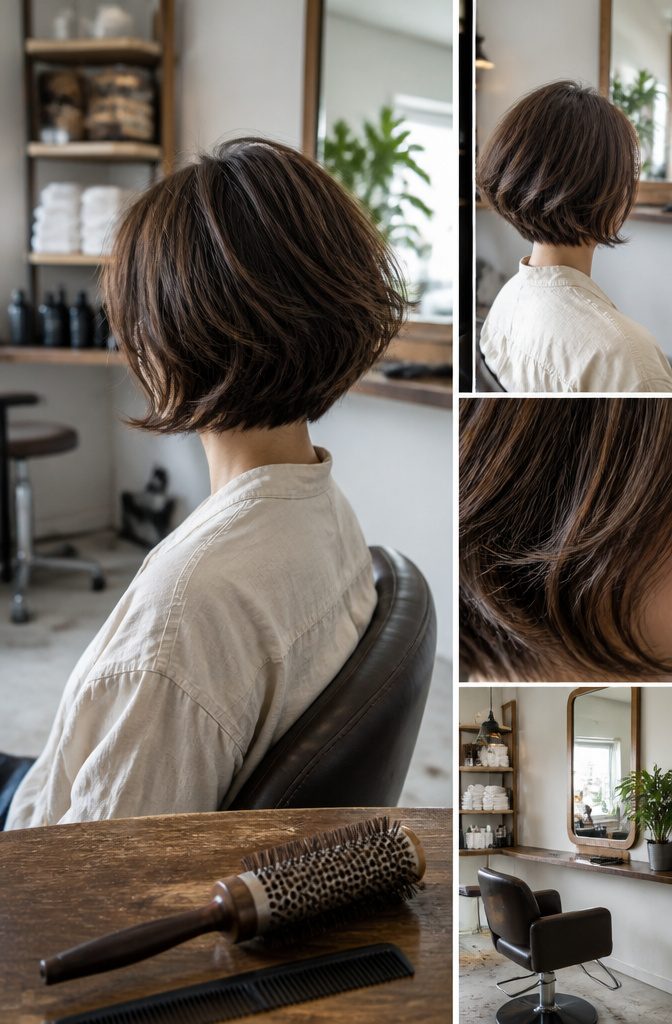
A rounded bob that hits the chin can be cut with soft layers that follow the jawline, giving the style just enough movement to keep it from looking too heavy or flat.
The curve adds width through the sides, which works well if you want to soften a longer or more angular face.
Tousled crops with texture through the crown and sides create a similar effect, where the layers lift away from the head rather than lying tight.
I find a side part helps with this, shifting volume to one side and giving the style more shape than a center part would.
A layered crop with airy fringe that blends into the sides keeps the front soft and light, with no hard line between the bangs and the rest of the cut.
The fringe sits textured rather than blunt, which suits most face shapes without adding bulk. These cuts grow out well because the layers are soft rather than stacked.
How Face-Framing Layers Work as a Contouring Tool
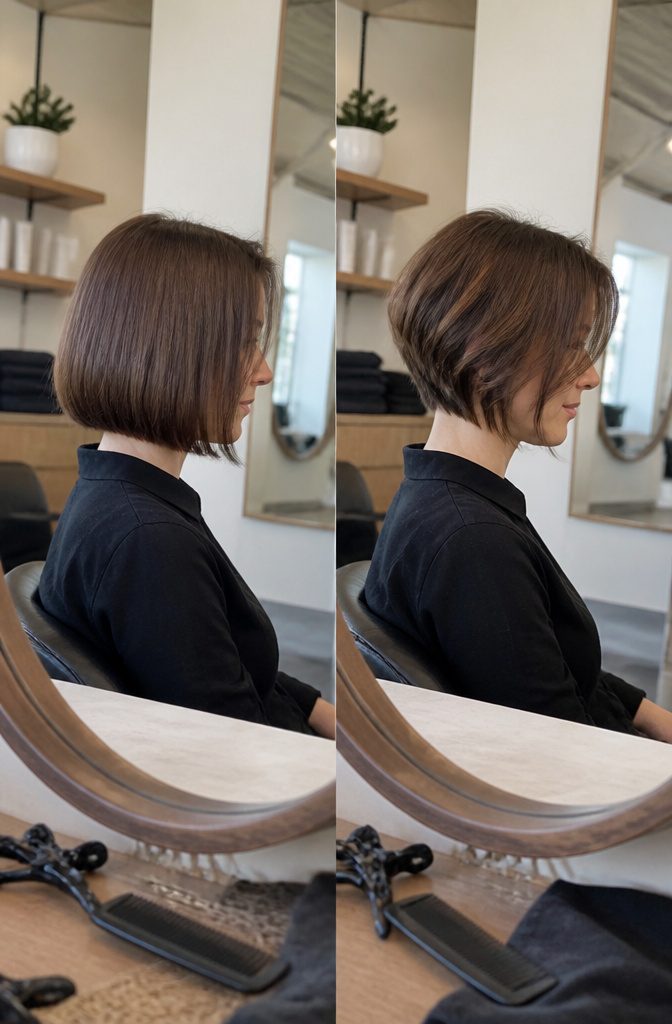
Face-framing layers create a contouring effect that carves out shape around the parts of the face you want to highlight.
The layers work like sculpting: they pull the eye toward cheekbones, jawline, or eyes depending on where the shortest pieces fall.
A layer that sits just below the fullest part of your cheeks, for example, can make them read sharper and more defined.
The effect is strongest when the layers follow the line you want to emphasize rather than cutting straight across it.
Beyond contouring, layers add movement and texture that keep short cuts from looking heavy or flat. The pieces closest to the face move independently when you turn your head, and that dimension makes the whole cut feel less static.
Short hair without any layering tends to sit in one shape all day; face-framing layers give it a built-in shift in weight and volume that reads as intentional rather than grown out.
Choosing Features to Emphasize
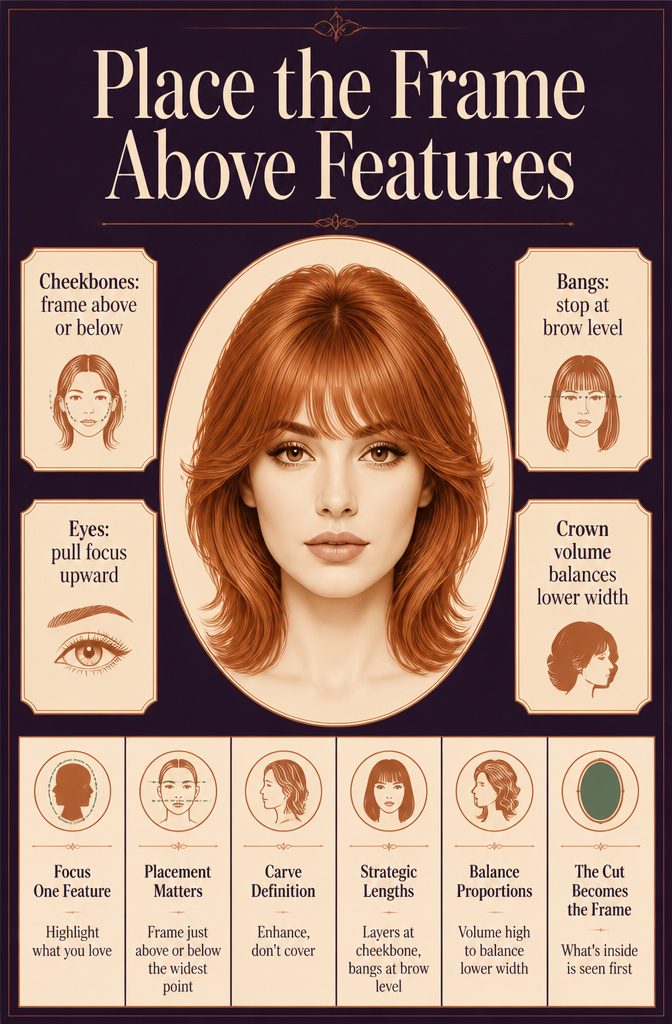
Adam Livermore, an Oribe Global Artist, recommends choosing your strongest or favorite facial feature and letting the cut highlight it.
If you love your cheekbones, the hair should frame just above or below that line. If your eyes are what you want people to notice first, the cut needs to pull focus there.
The placement matters. Livermore notes that hair should highlight areas just above or below the widest point of the face, carving out definition rather than covering it.
That means layers that sit along the cheekbone, bangs that stop at brow level, or volume placed high enough to balance width lower down.
The cut becomes a frame, and what sits inside that frame is what the viewer sees first.
What Works for Round Faces
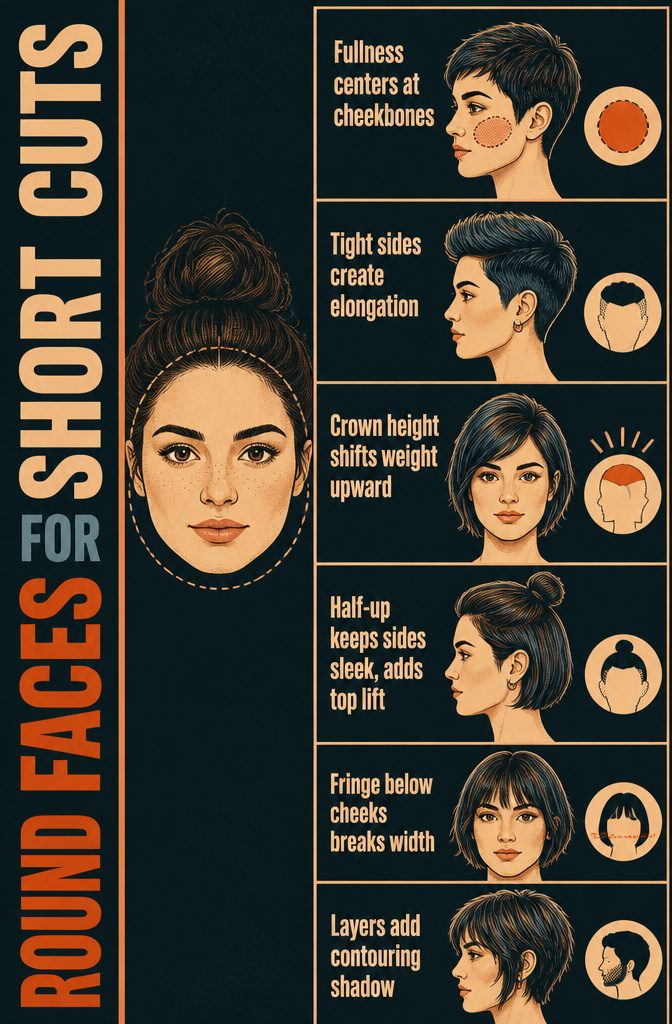
Round faces carry fullness through the cheekbones and a smooth, soft jawline, which means the widest point sits closer to the middle of the face rather than tapering sharply toward the chin.
The right short cut plays to that by either carving definition where the cheeks sit widest or pulling the eye upward.
Tighter sides paired with height on top create an elongating effect that balances the roundness. A pixie cropped close against the contour, or a bob that hugs the sides and builds volume at the crown, shifts the visual weight vertically.
The same principle applies to half-up styling: keeping hair close to the head on the sides while adding lift at the top lets you hold onto a face frame without losing that lengthening effect.
Fringe that lands just below the cheeks carves them out and builds a slimmer silhouette by breaking up the width at its fullest point.
The cut becomes a contouring tool, highlighting the structure you want emphasized and softening what you don’t. Face-framing layers do the same work, creating shadow and dimension that mimics what makeup does with powder.
How Texture and Movement Add Dimension
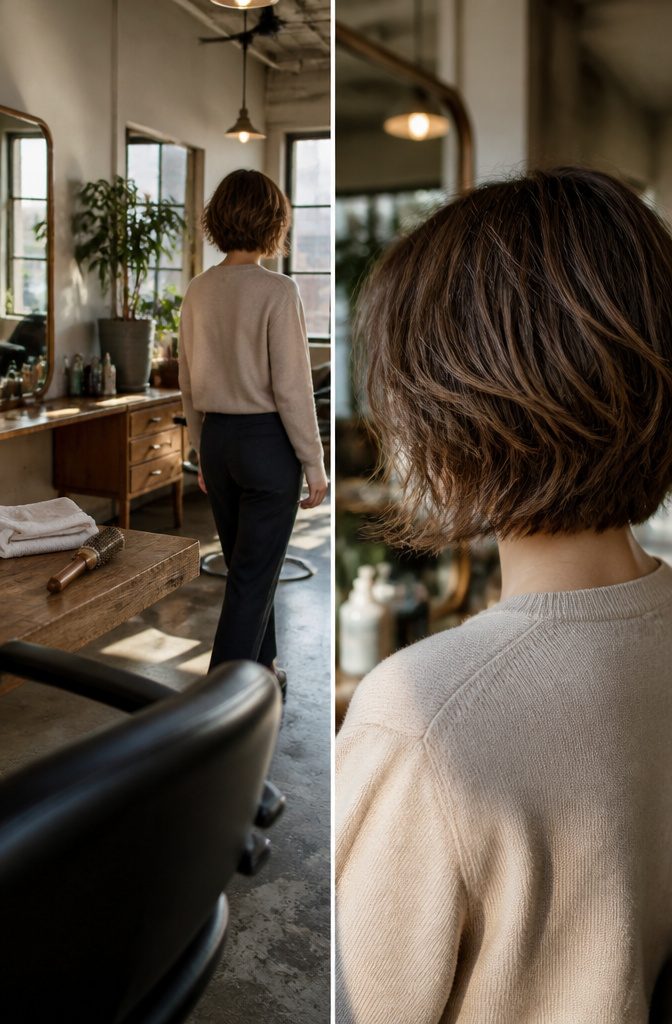
The haircuts that actually flatter rely on soft texture and natural movement rather than a single fixed shape. Wispy face-framing layers add dimension without weight, which means the hair lifts slightly away from the face instead of lying flat.
That lift creates volume at the cheekbone or jawline, and the effect shows whether you air-dry or use a round brush.
Modern short styles work with natural texture instead of demanding you fight it every morning. Pixie cuts, layered bobs, and feathered crops all gain dimension from lightweight layers that move when you do.
The finish can be polished or deliberately undone, but the structure underneath stays the same: enough texture to hold shape, not so much that it looks deliberately styled.
I favor styles built for everyday wear because they hold up through a full day without touch-ups.
A soft layered bob with wispy layers gives you movement and a fresh finish straight out of the shower, and the texture means the cut still looks intentional even as it grows out.
Frequently Asked Questions
What face shape is characterized as soft and romantic?
A round face is soft and romantic, carrying fullness through the cheekbones and a smooth, soft jawline.
The widest point sits closer to the middle of the face rather than tapering sharply toward the chin. The right short cut either carves definition where the cheeks sit widest or pulls the eye upward to balance the roundness.
How can I choose a haircut for my face?
Pick your strongest or favorite facial feature and let the cut highlight it.
If you love your cheekbones, the hair should frame just above or below that line; if your eyes are what you want people to notice first, the cut needs to pull focus there.
Hair should highlight areas just above or below the widest point of the face, carving out definition rather than covering it.
How does hair type and texture affect a short face-framing cut?
Curly and textured hair responds differently to a short cut because the natural bends can reshape how your face reads.
Instead of relying on layers alone, the curl itself wraps around your jawline or temples and draws the eye where you want it.
A short curly cut can pull volume away from areas that don’t flatter and cluster it where you need structure.
What face shape fits short hair?
Short hair suits every face shape when cut to highlight your strongest features. Round faces work well with tighter sides and height on top for an elongating effect, while oval and heart-shaped faces suit middle-parted blunt bobs.
The cut becomes a contouring tool that emphasizes the structure you want highlighted, so placement matters more than shape alone.